

General Motors Wants To Help Build Bombs
Happy Tuesday! It's June 16, 2026, and this is The Morning Shift — your daily roundup of the top automotive headlines from around the world, in one place. This is where you'll find the most important stories that are shaping the way Americans drive and get around.
In this morning's edition, we're looking at GM's goals of working with Lockheed Martin, and car dealers' oil inventories. We'll also look at the USMCA, and American sales of Chinese cars.
1st Gear: GM wants to make parts for Lockheed Martin weapons
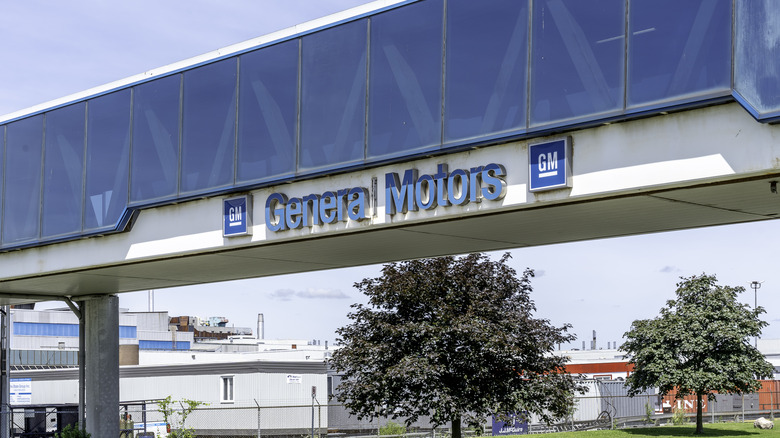
Yesterday, we talked about Renault getting into the war business. Today, General Motors is looking to do the same, by making parts for Lockheed Martin bombs. From the Wall Street Journal:
General Motors is in talks with Lockheed Martin about making parts for the defense contractor's weapons, according to people familiar with the matter.
Under the arrangement, GM would manufacture commonly used parts that could help Lockheed bolster munitions production, the people said. The companies are discussing which components GM could potentially make.
An announcement could be made as soon as today.
Stocks of missiles and other critical weaponry have dropped because of the wars in Ukraine and Iran. To replenish supplies, Trump administration and Pentagon officials have pressed weapons makers to accelerate production, while seeking to enlist other manufacturers, including GM.
GM Chief Executive Mary Barra has met with Trump administration officials to discuss a larger military role for the automaker, which is looking to grow its still-small defense business.
You're telling me the U.S. military doesn't want to use the Hummer EV as its next-generation war-fighting vehicle? A truck the size of the buildings it moves people between? I for one am stunned. Anyway, like we said yesterday, it can only be a good sign for the economy when carmakers that once made affordable vehicles for the masses are pivoting to war.
2nd Gear: Your local dealer probably won't have a full stock of motor oil for another year
Dealerships are running low on oil and other petroleum products, thanks to our foolish, unprompted war with Iran — a war that Iran has largely won. Now that there may be an end in sight, dealers would love to get those petroleum products back, but it may be some time before their inventories return to normal. From Reuters:
Now, while a potential deal between the U.S. and Iran may bring an end to the fighting, industry experts and executives say it is unlikely to deliver immediate relief to the smaller shops that have been squeezed by Tehran's shutdown of the Strait of Hormuz. Closure of the strait has blocked almost a fifth of global oil flows and led to bottlenecks for some petroleum-derived products.
U.S. President Donald Trump said on Monday a preliminary agreement to end the war has been signed both countries although details remain unclear and it may take some time for shipments through the strait to return to normal.
Hiroyuki Nakamura has already spent the last few months trying to ride out a shortage of motor oil, the first he's ever seen in 35 years repairing cars.
"Oil supplies were almost completely wiped out after the war started in March. Since April, nothing has been coming in," said Nakamura, a director at Shin Etsu Denso, a Tokyo-based auto-repair company.
Business has also been hit by a shortage of paint thinner and diesel exhaust fluid, he said. Nakamura, like other mechanics, executives and officials interviewed for this report, spoke to Reuters before the announcement of the proposed deal between Washington and Tehran.
With new costs to move through the Strait of Hormuz, it's entirely possible that oil companies will pass those fees on to consumers. Even when oil supplies return to normal, prices may not.
3rd Gear: The USMCA is up for renegotiation, but Canada doesn't want you to panic
The USMCA, the trade deal that the first Trump administration invented to replace NAFTA, is approaching a renewal date. So far, the countries involved don't seem interested in a straight renewal. That's a scary thought, given that the entire second Trump administration has been the story of trade disruptions, but cooler Canadian heads say not to panic — at least, not yet. From Automotive News:
Canada's ambassador to the United States is trying to lower the temperature around the Canada-U.S.-Mexico agreement with the renewal date for the North American trade pact just a few weeks away.
"Everybody take a deep breath, relax, it's all going to be OK," Ambassador Mark Wiseman told a business crowd in Toronto on Monday.
...
July 1 does not mark the expiration of USMCA. It's the start of a renewal window, he said, which gives the three parties a chance to iron out irritants and the option to renew the pact for another 16-year period.
USMCA is set to expire in 2036 but a renewal would extend that expiration to 2042. If the parties don't agree to a renewal, USMCA will be subject to an annual rolling review for up to 10 years.
Stable international trade is overrated. Soft power, also overrated. We're now a nation that prioritizes hard power over cultural hegemony, so we'll see how that works out for us.
4th Gear: Automakers are looking for approvals to sell their Chinese-built cars
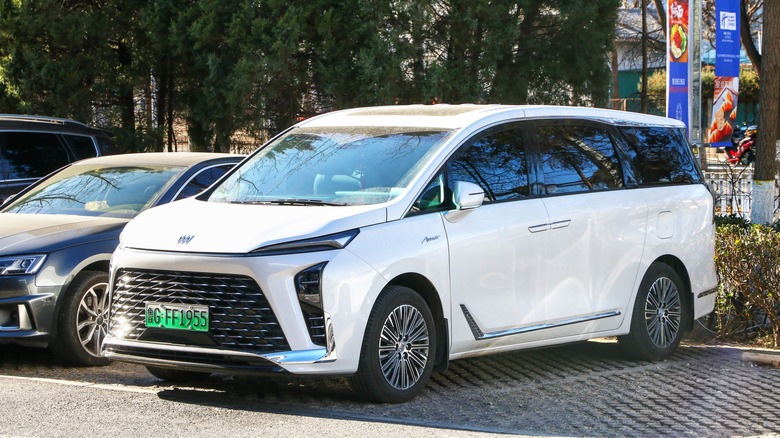
The United States doesn't love China, and that extends to Chinese cars. Even Chinese-built cars from American automakers can't be trusted, according to our government, and are subject to extra regulations. Automakers are now frantically trying to comply with — or get exemptions to — those regulations, particularly where software is involved. From Reuters:
Ford Motor and other automakers are scrambling to obtain U.S. government authorization to continue selling models that have been in U.S. showrooms for years, but have recently come under fire as part of a ban on Chinese software in connected vehicles
Ford has asked the U.S. Commerce Department for authorization to continue importing its China-built Lincoln Nautilus SUV, the company confirmed to Reuters. The model is among a small handful of Chinese imports that automakers already had been selling in the U.S. prior to the government restrictions.
The Nautilus' software is developed in the U.S., but installed into the vehicle in China, requiring government approval to continue selling it in the United States, Ford said.
Everyone loved the idea of the software-defined vehicle until limits started being placed on software. Who's laughing now? That's right, the people who define a vehicle as the physical object we pay money for.
Reverse: Only city in the world
New York or nowhere, baby
The Fuel Up
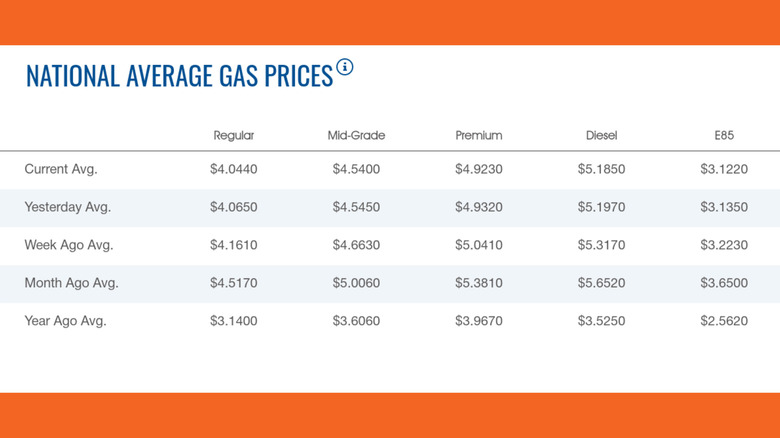
Today would normally be an Andy TMS, so let me do my best Andy impression: Nothing ever happens.
On The Radio: The Front Bottoms - 'Swimming Pool'
I spent last night, after work, slacklining in the park while listening to The Front Bottoms. I might be approaching my final form.