

What Might Be Causing Your Low Engine Oil Pressure, And What Fixes We'd Be Trying First
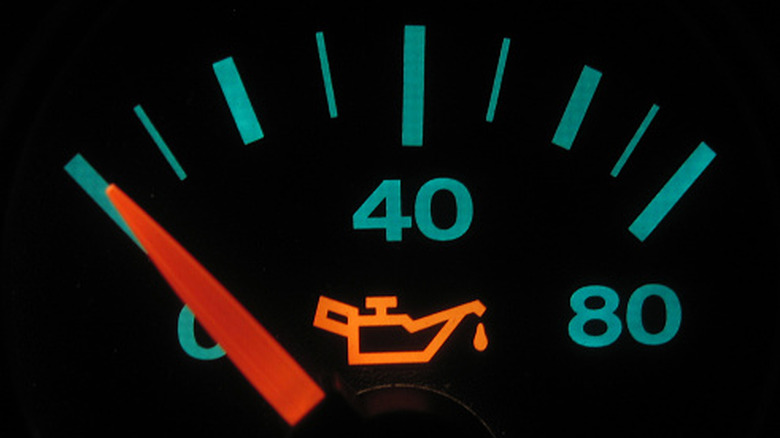
It won't end well if you persistently run an engine with low oil pressure. When the oil light turns on, the best thing to do is to stop driving and turn off the engine immediately. Low oil pressure can be caused by many factors, so it's better to pull over and check a few things before making your next move. The normal oil pressure should be between 25 and 65 psi (depending on the vehicle and the type of engine), but that's hard to figure out in modern vehicles that have no oil pressure gauges.
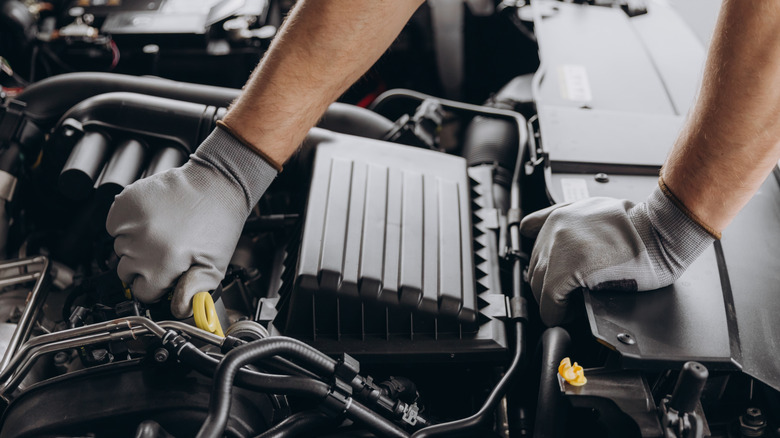
With that in mind, the first thing to inspect is the actual oil level inside the engine. Even if you've been keeping up with regular oil changes, the engine can still lose oil via evaporation or leaks from worn seals, gaskets, or aging oil plugs. Open the hood, pull out the dipstick (if equipped), and check to see whether the oil level falls between the low (L) and high (H) markings. If the level is low, adding more oil will typically solve the problem and turn off the warning light.
As a precaution, make sure you're using the right type of oil with the recommended viscosity. Thinner oil is generally recommended for most modern engines, but using oil that is either too thin (lower viscosity) or too thick (higher viscosity) can trigger the oil warning light in some vehicles. Moreover, a clogged oil filter can also lead to low oil pressure readings, which is one of the reasons why you should never reuse an oil filter.
Leaks can starve the engine of lubrication
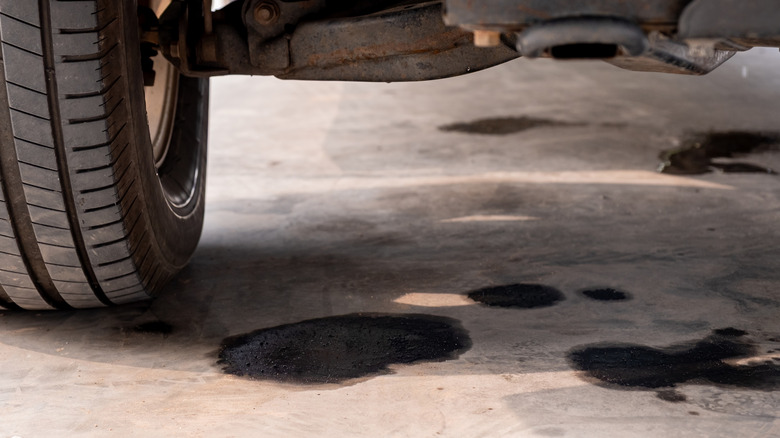
After confirming that the oil level is within the appropriate range, the next thing to do is to look for oil leaks around and under the engine. Let the engine idle for a few minutes after adding oil, and check to see if oil is seeping around the oil pan, drain plug, oil filter, and valve cover, which are some of the most common causes of leaks in a gasoline or diesel car.
Oil can also leak through aging or dried-out seals for the camshaft and crankshaft. Check the floor or pavement (particularly under the engine) for dark, oily stains, or see if there is oily, gunky residue around the engine and valve covers — these are some of the most obvious symptoms of an oil leak. If there are leaks, have them mended immediately. Not doing so means you'll have to be doubly mindful of the oil level and should always bring a quart or two of oil for replenishment, which is not exactly convenient.
Worn engines and defective sensors can trigger the oil light
If the engine continues to suffer from low oil pressure despite adding oil and fixing the leaks, you may be dealing with worn-out or defective parts. A bad oil pressure sensor can deliver faulty readings and inadvertently trigger the oil warning light. If that's the case, replacing the sensor should fix the problem, which should cost $180 to $240 (including labor). The sensor alone costs around $80.
Meanwhile, worn piston rings and engine bearings on older engines can increase oil consumption, which can cause the oil level to drop. A faulty oil pump can also stress the engine with persistently low oil pressure. For reference, watch out for the telltale signs of bad piston rings, including excessively thick, bluish smoke from the tailpipe, poor acceleration, stuttering, excessive oil consumption, and stalling. Moreover, worn bearings will cause excessive vibrations, produce knocking or tapping noises, or cause the motor to overheat.
On a somber note, replacing piston rings, bearings, or an oil pump are not exactly DIY jobs and will most likely require a comprehensive teardown of the motor. This also means allocating thousands for parts and labor.