

Chrysler Tried To Memory-Hole These Muscle Cars, But The Rumors Were True
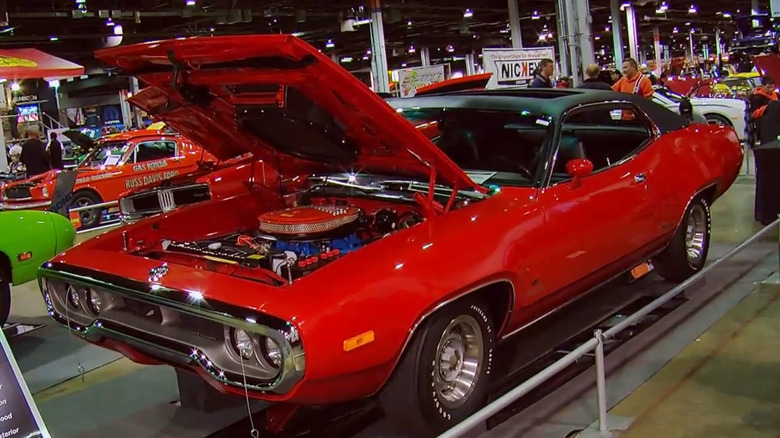
The 1970s were depressing years to be a gearhead. The Clean Air Act of 1970 and the unleaded gasoline mandate put a damper on the peak period of high-performance muscle cars. However, there were rumors of a muscle car being developed by Chrysler. The rumor was that a few rebellious engineers and assembly line workers managed to sneak something special (and illegal) out of the factory doors. For decades, Chrysler denied that it ever built something like it. The corporate stance was that its legendary 440 Six-Pack (or Six-Barrel in Plymouth lingo) was canned by 1972. However, it turns out that the rumors were true.
For generations of Mopar fans, the 1972 "V-Code" was the ultimate urban legend. Chrysler's official dealership literature, printed in the spring of 1971, promised that the triple two-barrel Holley carburetor setup would return for '72 on the Road Runner GTX and Dodge Charger. By August 1971, it faced the corporate axe. The engine couldn't pass the EPA's strict new emissions certification tests, and the program was officially dead.
A decade later, Russel Morgan, a die-hard Mopar hunter, was browsing a salvage yard in North Carolina, where he spotted a beat-up Rallye Red 1972 Plymouth Road Runner. It looked like an ordinary parts car, but it had a bizarre combination of factory options, like an Air Grabber hood and an electric sunroof. When Morgan glanced at the data plate on the dashboard, his jaw hit the floor. The fifth digit of the VIN was a "V." In Chrysler speak, the V-code stood for one thing: a 440 Six-Pack.
The great EPA cover-up
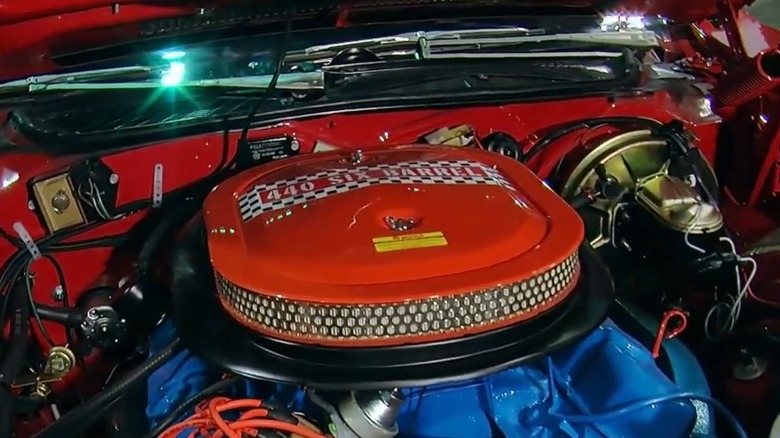
According to many Mopar enthusiasts, experts, and Chrysler itself, a 1972 V-code did not exist. Yet, there it was, coded as an authentic, factory-built St. Louis plant car assembled in early August 1971. Morgan bought the entire car –- with a clean title –- for just $150. When he later contacted a prominent Chrysler official to verify the VIN, he got the cold shoulder. He was told the car was a fake, a mistake that shouldn't be spoken about.
Despite having a fascinating Mopar history, why was Chrysler so terrified of a few red cars? The existence of the 1972 V-code wasn't just a corporate embarrassment — it was a looming federal offence. Because the 440 Six-Pack supposedly failed to receive an EPA certification for the 1972 model year, selling one to the public was a massive compliance violation.
Chrysler ran a thorough memory-hole operation, but the factory paperwork left a trail of breadcrumbs. The cars were built in August 1971, at the start of the 1972 production cycle. The corporate cancellation memo simply arrived at the assembly line a few days too late. By the time the line workers pulled the plug, a handful of V-code cars had already rolled off the assembly line.
The mechanical evidence was undeniable. Decades after the car was pulled from the junkyard, Morgan located a set of 1972-specific Holley carburetors with factory part numbers and date codes specifically intended for the aborted 72' Six-Pack program. The parts existed, the engineering blueprints existed, and against all regulatory odds, the cars existed.
The holy trinity of escaped Mopars.
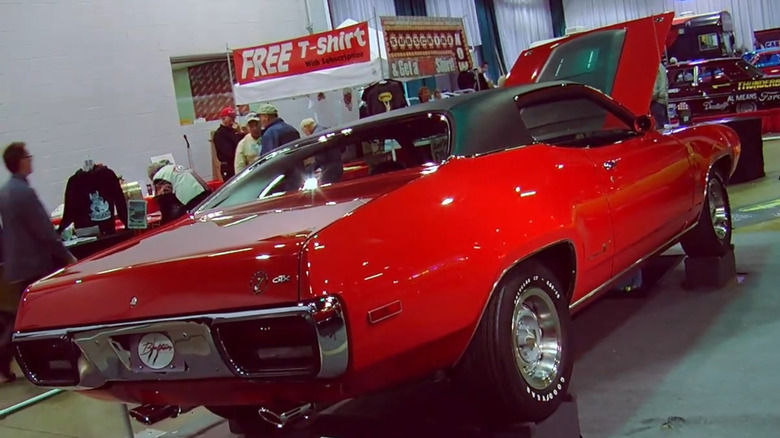
Today, the automotive world has identified three surviving 1972 V-code muscle cars that successfully broke out of Chrysler's factory gates, putting them in the list of the rarest muscle cars ever made. The first is Russell Morgan's legendary $150 junkyard find: the Rallye Red Plymouth Road Runner GTX. By 1972, the GTX was no longer a standalone model but an optional performance package applied automatically if you checked the box for a 440 engine. This specific car, equipped with its numbers-matching 330-horsepower high-lift cam engine, an automatic transmission, and that ultra-rare factory sunroof, eventually underwent a world-class restoration by Magnum Auto Restoration and found its way into the famous Brothers Collection.
The other two survivors wear a Dodge badge, though. Both are 1972 Dodge Charger Rallyes built in that identical early August window. One is a factory Rallye red car that spent years hidden away in Ron Slobe's salvage yard before quietly changing hands within East Coast collector circles. The other is a Top Banana Yellow Charger Rallye that stayed close to home, remaining with a single family in the Detroit area for decades, completely buried under moving boxes in a suburban garage until the Automotive Archaeologist finally documented its survival.
Chrysler spent decades trying to convince the world that the 1972 Six-Pack was nothing more than a paper concept that had dropped before production. But thanks to a few stubborn hunters, attentive collectors, and the absolute truth of a stamped steel VIN tag, the myth turned out to be reality.