

The Strange Beauty Of Soviet Bus Stops
Under the strict, watchful eye of the Soviet Union, there wasn't much creative outlet for talented Eastern Bloc residents. Whether it was music, statues, parks, or architecture, everything was expected to fit in with the state's narrative and uniformity of expression. Western influence, individuality, and beauty simply for its own sake were stymied. The people living under this creative oppression were forced to push through their enthusiastic and "comfortable" inimitability, where it would fall through the cracks. Some smaller architectural projects, including bus shelters, could be pushed through without Soviet oversight. Their progenitors often used this lack of oversight to create small acts of poetic pushback.
Much like a beautiful flower growing up from the cracks of a long-abandoned parking lot, there is an extra level of joy in seeing expression and vision in the midst of bland sameness and urban decay. Canadian photographer Christopher Herwig spent 20 years touring the former Soviet Union, seeking out these beautiful bus benches. He toured Lithuania, Ukraine, Georgia, Belarus, and more in his pursuit of these lonely, long-standing monuments to artistic freedom.
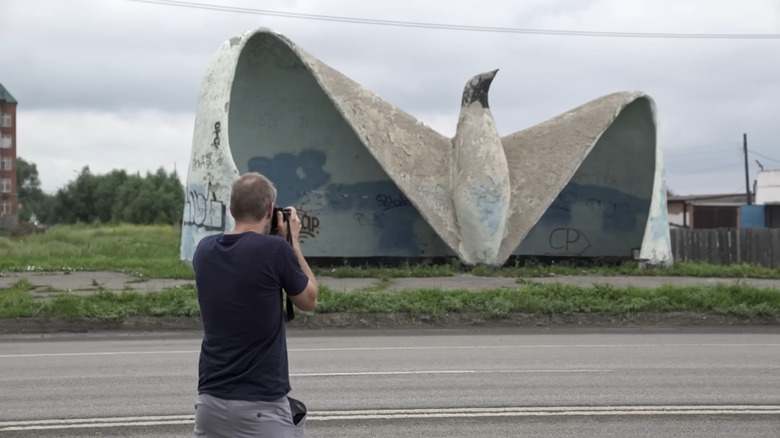
Herwig has since published three separate photography books and, over the course of seven years, filmed a documentary, "Soviet Bus Stops," about his journey to document Soviet bus stops, which is available to watch online. Without the benefit of historical records or knowledge of their original intent, Herwig spent years seeking out the creators of these small structures. As noted on the film's website, "He considers them among the largest and most diverse architectural collections in existence." I tend to agree, and the large bird housing bus riders under its feathers depicted above is the first on my list of favorites he rediscovered.
The spider
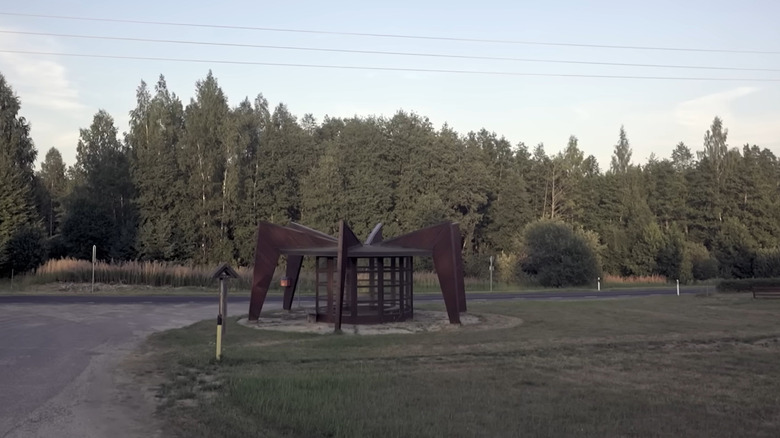
There wasn't really a reason that this bus stop, unofficially referred to as the spider, had to be so artfully created. In close-up, it's clear that this stained wood structure was painstakingly crafted as a love letter to the local community. The center structure could easily have stood alone as a round house with a rudimentary roof to provide a comfortable place to wait for the bus, but each protrusion connects the structure to the ground around it. Maybe this is indicative of a connectivity between this functional art piece and the people who use it. There is a special connection that ties beauty and usefulness, and somehow the bond gets stronger as the two grow together. I can't help but imagine this large many-legged creature attempting to free itself from a central cage, begging to be free and beautiful again.
Or maybe it just meant to look cool, and it doesn't have a deeper meaning. Whatever the case, it's fair to say it is much more aesthetically pleasing than, say, a Los Angeles bus stop in the middle of the freeway.
All aboard
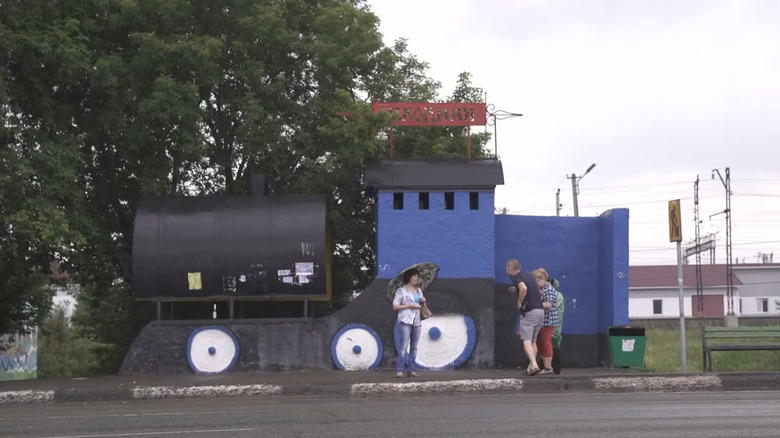
When everything around you is falling into a state of Stalinist red fascist control and economic turmoil, it's important to find the little joys in life. Turning a simple bus stop into architectural whimsy is a stroke of pure genius. There's something uplifting about waiting for the bus inside a choo-choo train engine. The creative combination of brick and iron suggests that, even in the deepest depths of the socio-economic doldrums, it is okay to get a little funky with it. This one is probably aimed more at the kids, and art should often be accessible to children. Maybe we use a bit more artistic renditions of bus benches in America right now, instead of living with examples like LA's La Sombrita bus shelters. It could do us all a little good.
This isn't high-brow, and it doesn't say anything specific, but — like spotting a bright orange Soviet 4x4 rolling through Brooklyn — it adds some fun to your droll workday, and that's statement enough for me.
The rocket
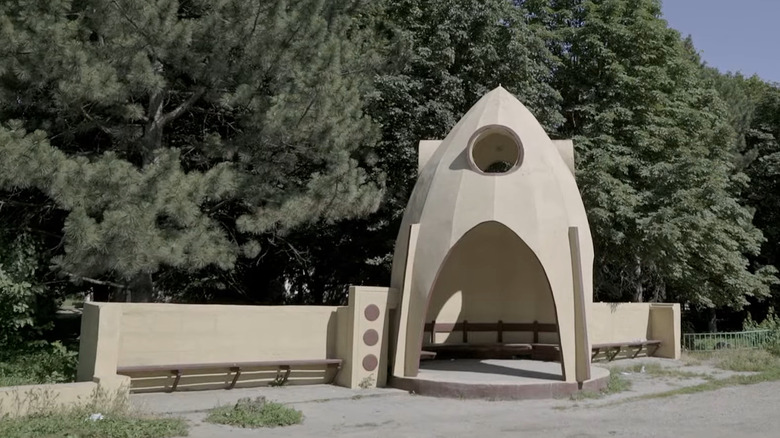
Much like the train, I find this rocket-ship bus bench to be a tremendous use of shape in an otherwise uniform urban environment. In spite of the Union's internal turmoil, its people are still going about their lives, working and traveling and enjoying what they can, because it's simply all that they can do. Though they may take umbrage against their government, they still enjoy the fruits of an international space race and a fascination with the stars that plagued (or inspired) many American citizens at the same time. This is a bus bench where you could sit down and dream about blasting off to the heavens and escaping to worlds unknown.
There's no law against a little escapism from time to time. When you look up at the night sky, you're seeing a very similar view to everyone else on this planet. We're not so different from each other.
The bird
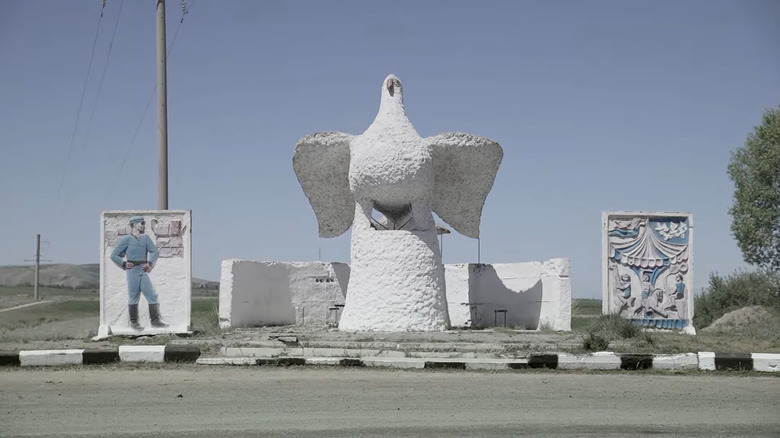
It's difficult to say exactly what this station means, but the strange, arcane beauty exuded by this plump and regal bird, possibly a dove of peace, is overwhelming. While I imagine much of this station's color and eye-catching ability has faded over the decades, there's something about its serenity amongst the surrounding nothingness that gives me an extra sense of appreciation for it. Most so-called civilized nations would have demolished it decades ago in the name of modernism and progress. I appreciate that this piece of strangeness has been allowed to stand, perhaps as a symbol of avuncular human joy and peace.
The texture of the bird on its plinth and demure color fade of the flanking tableaus give this bus stop a sense of decay, a feral feeling of anachronism. Join the children for a carousel ride, why don't you? It never ends. The man in blue, the overseer, demands it.