

How Ford's SVO Gave Way To The SVT We Know And Love
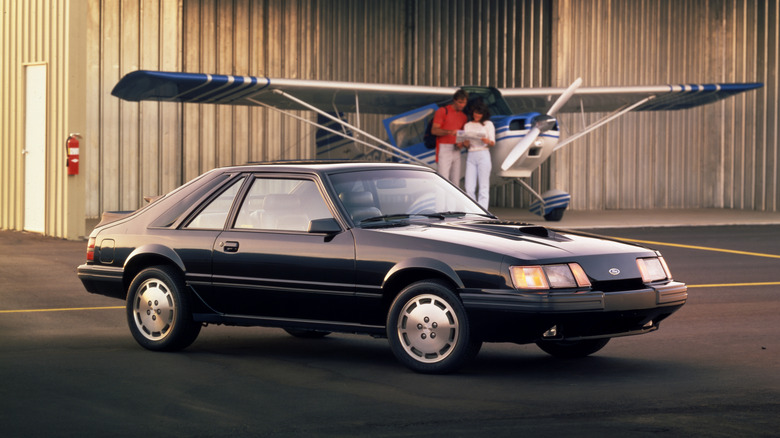
Ford's Special Vehicle Operations division began developing high-tech performance variants of the Blue Oval's best cars, pushing the brand's efforts in motorsport, and developing aftermarket go-fast parts as far back as 1980. Over the course of the next 15 years ,SVO would transition into Ford's Special Vehicles Team, which developed some of the most exciting models to ever cross a Ford assembly line. You know them, you love them, they're an important part of American hot rodding history. But they only exist because a German and a Brit convinced Henry "The Deuce" Ford that the company needed an injection of excitement.
Ford SVO hatched from the brain of Ford of Britain's PR head, Walter Hayes. Hayes was pivotal in the development and public perception of the Ford GT program; he funded the development of the dominant Cosworth DFV Formula One engine, and he kept pushing for motorsport to be a foundation of Ford's marketing efforts. Working with Ford of Germany's racing boss, Michael Kranefuss, the first Mustang SVO launched with a European-style turbocharged four-cylinder engine that outperformed the GT's 5.0-liter V8. The four-cylinder SVO didn't exactly set the public's imagination ablaze, so the SVO project was shelved entirely, but it paved the way for SVT just a few years later.
Every SVO/SVT model brought to market brought focused performance in the form of more power, better handling, and aesthetic mastery. The goal was cheap speed, and to that end, the projects worked swimmingly. While SVT and Europe's RS division were merged under Ford Performance in 2015, the legacy of the sub-brands lives on in every HiPo Mustang and F-150 on the road today.
Mustang SVO
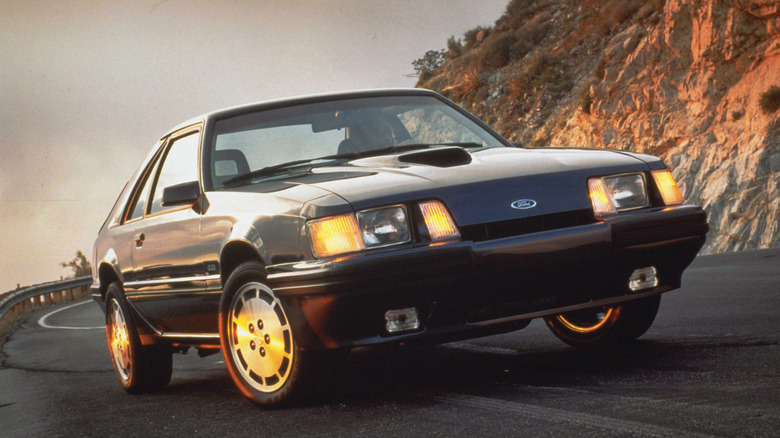
Before we talk about the SVT cars, it's worth talking about the original Ford Mustang SVO. Built between 1984 and 1986, the Mustang SVO was an experiment in building European-style speed by adding a turbocharger to the company's staid Lima-Ohio-built 2.3-liter four-cylinder. Cribbed from the large Thunderbird Turbo Coupe, SVO added an intercooler to pump horsepower to 175 ponies. The Fox Mustang wasn't known for its handling prowess, so SVO worked with TRW and Koni to develop a handling package with beefier sway bars, stiffer springs, and five-lug hubs to fit better brakes.
On the outside, you can tell an SVO from its regular Mustang siblings by its manhole cover wheels, NACA-ducted hood, "aero" grille, unique taillights, sail panels, and bi-plane rear wing. Once inside, you'll see a Hurst shifter, a full bevy of standard power everything, and special bolstered sport seats with pump-up lumbar support. Nothing else from Ford felt like this inside.
The SVO was an instant press and enthusiast darling. Road & Track put the car on its cover, and the review ended with a positively effervescent note: "This may be the best all-around car for the enthusiast driver ever produced by the U.S. industry; we just hope it's the start of an era."
Unfortunately for the SVO crew, the car was significantly more expensive than its V8-powered GT sibling, and American consumers didn't see the point in paying more for a smaller engine — even if it was better to drive. By the end of 1986, the car and SVO were shelved.
Cobra
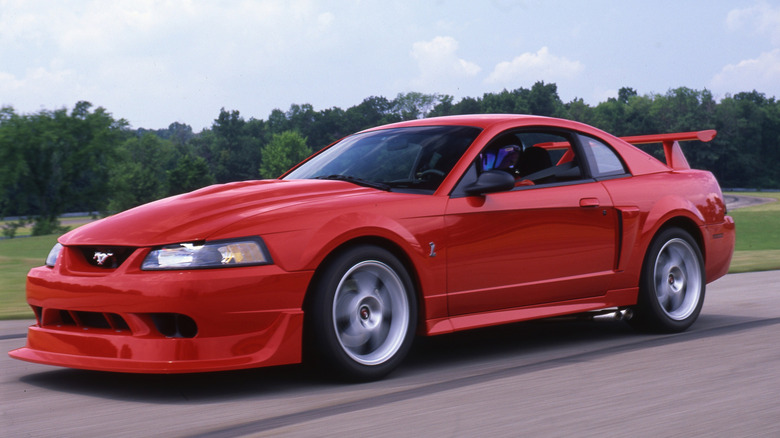
A few things had to come together in the right place at the right time to develop the next high-performance Mustang. First, Janine Bay was tasked with developing next-generation speed tech for the 90s 5.0-liter Mustang. When she developed a package that added over 40 hp to the car's 225-hp output, improved handling with wider tires and uprated suspension, and all the brakes it would need to handle it, that car made the company sit up and take notice. Second, Ford's lawyers confirmed that the company was about to lose the rights to the Cobra name if it didn't do something soon.
Ford Engineer Neil Ressler tells Motor Trend his side of the story: "This was just a loose confederation of enthusiasts. Everybody was still working in his or her home organizations. There was no budget. I was bootlegging money out of my budget to build these cars. We started calling ourselves the Special Vehicle Team to get these cars out, and about a year later, we formalized the organization with John Plant as the team leader."
That initial 5,000-unit run led to a dozen progressively faster Mustang variants over the next thirty years. Without that initial Skunkworks model, we likely wouldn't have the Cobra R, the iconic Terminator, or three generations of the fast and ridiculous Shelby GT500.
Contour and Focus
Across the late 1990s and early 2000s, Ford's SVT group spent a lot of its energy on European-style performance. In addition to the V8-powered Mustangs and pickups it was producing, the SVT crew also developed some high-performance Euro Fords.
First, the Ford Contour—itself based on the European Mondeo model—got the SVT treatment. Fitted with a 200-hp version of Ford's 2.5-liter Duratec V6 (up 30 ponies from standard) and a 5-speed manual transmission, the car was a reasonably powerful sporty sedan for the whole family. Like its Mustang brothers, the SVT Contour received unique suspension, upgraded brakes, and stickier tires for fun driving capacity.
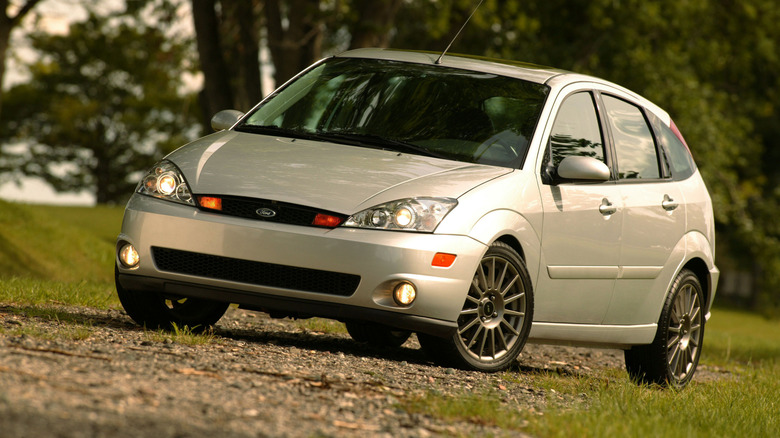
When the Contour was scheduled for production to end in 2000, Ford scrambled to bring the European Focus to the U.S. market that same year, and the SVT version bowed in late 2001. This time, Ford worked with Cosworth to develop a more potent version of the 2.0-liter Zetec engine, pushing power from just 130 to an impressive 170. A special Getrag 6-speed manual was added to the mix. The package was completed with sharper steering, larger brake rotors, stiffer suspension, and a sporty body kit. After moving 14,000 units, the North America-only SVT Focus was discontinued.
SVT's foray into front-wheel drive sport compacts didn't pan out quite the way Ford wanted it to. While they managed to create fun versions of the company's best-sellers, enthusiasts just didn't latch on the way they had hoped. Both the Contour and Focus were overshadowed by masters of the genre like Honda's Civic Si.
GT500
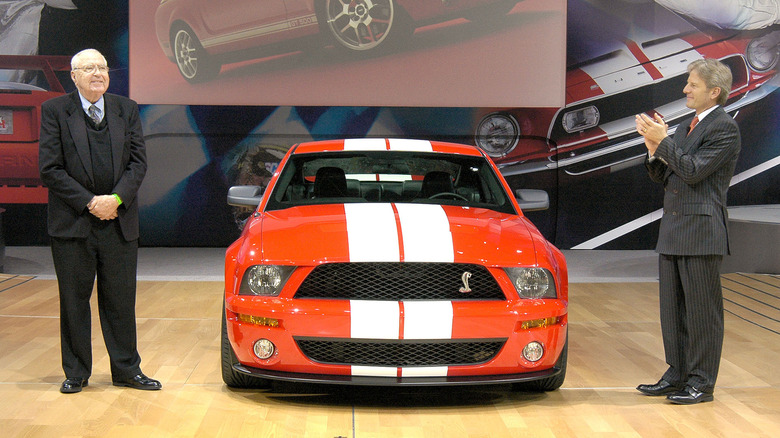
In 2007, Ford's SVT collaborated with Carroll Shelby to introduce a car that was totally and absolutely bonkers. Progressing from what they'd learned with the supercharged "Terminator" New Edge Mustang, the GT500 was a new generation of Mustang performance. The nearly-4,000-pound coupe was imbued with a supercharged 500-hp powerplant, making it a relatively affordable supercar killer. Unfortunately, it was kind of a handling mess, as the heavy supercharged iron-block 5.4-liter contributed to a nearly 60% front axle weight bias.
For 2011, Ford updated the GT500 with an alloy engine block, dropping over 100 pounds from the front of the car to help it handle properly. They also pumped power up to 550 horses and improved fuel economy so much that the car was finally able to skirt a gas guzzler tax. A newly-developed SVT Performance Package included shorter gears, lightweight forged wheels, sticky Goodyear Eagle F1 tires, and firmer suspension tuning.
The best of the breed, however, was the 2013 model, which perfected the formula. Another big jump in power saw the GT500 make 662 ponies, and with some aero tweaks, the car was reportedly capable of 202 miles per hour. This was, perhaps, the Special Vehicle Team's finest work.
Lightning and Raptor
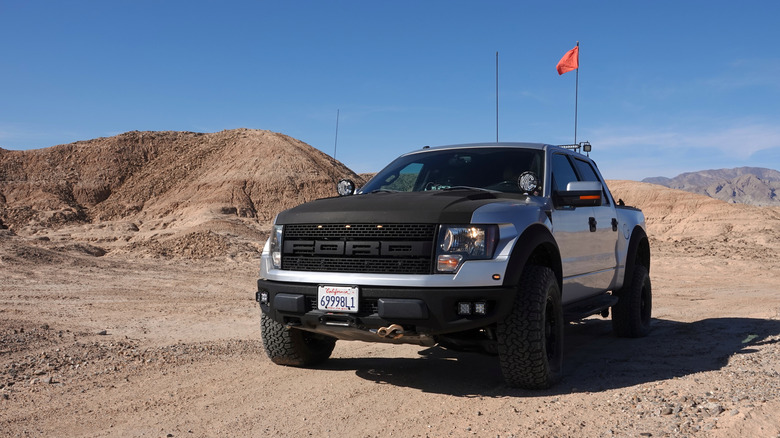
Much of what SVT did with the Mustang over the decades, it also applied to a couple of different formulas for the best-selling F-150. In the 1990s and early 2000s, that formula was decidedly street truck, but the folks at Ford eventually figured out that the key to sales was found in big macho off-road capability. After two generations of the street-focused SVT Lightning came the 2010 SVT Raptor, and Ford never looked back.
In 1993, fresh out of the gate, SVT built the first Lightning based on a single-cab short-bed truck with a 240-hp 5.8-liter V8. At the time, its 7.2-second 0-60 time made it one of the quickest trucks ever built. For 1999, the formula was pushed to the new F-150, this time a regular-cab stepside-bed model with a supercharged 5.4-liter V8 making 360 hp. Both created a bit of a cult following, but neither was a particularly big sales success.
With the performance truck fad basically dead in the mid-2000s, SVT began working on its own factory-built desert pre-runner in the new SVT Raptor. This time, the recipe included an available naturally-aspirated 411-hp 6.2-liter V8, 8-inch fender flares, Fox Racing suspension, and bead-locking 35-inch tires. The original Raptor was built for hauling ass in the desert and not much more.
The argument could be made that SVT is, directly or indirectly, responsible for just about every variant of performance and factory off-road pickup truck on the market today. If that is the division's legacy, it's a pretty influential one to end on.