

America Still Doesn't Have Michelin's CrossClimate3 Tires, How Do CrossClimate2s Compare?
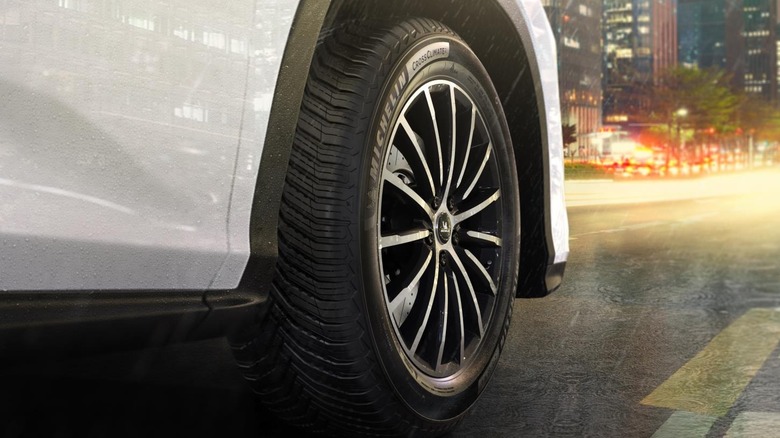
American buyers will have to wait to get their hands on Michelin's next-generation CrossClimate3 tires, despite their being sold in Europe since July 2025. Michelin says the CrossClimate3 tires for Europe "differ in design from those sold in North America," and it has "tailored the tire construction to meet the unique needs of both regions." The tiremaker adds that the CrossClimate2 will continue to serve North American drivers "for the next several years."
With that in mind, you might be wondering how the CrossClimate2 compares to the newer CrossClimate3 tires. British independent tire testing resource Tyre Reviews did a comprehensive rundown of the two Michelin tires and found that the CrossClimate3 offered shorter braking distances in the wet, marginally better handling in the snow, lower rolling resistance for enhanced fuel economy, less road noise, and a comfier ride. That's even though the CrossClimate2 is among the best tires for trucks and SUVs while trouncing other all-weather tires in exhaustive testing to outperform big-name brands like Pirelli, Goodyear, Bridgestone, and Nokian.
The Michelin CrossClimate2 is still a great tire
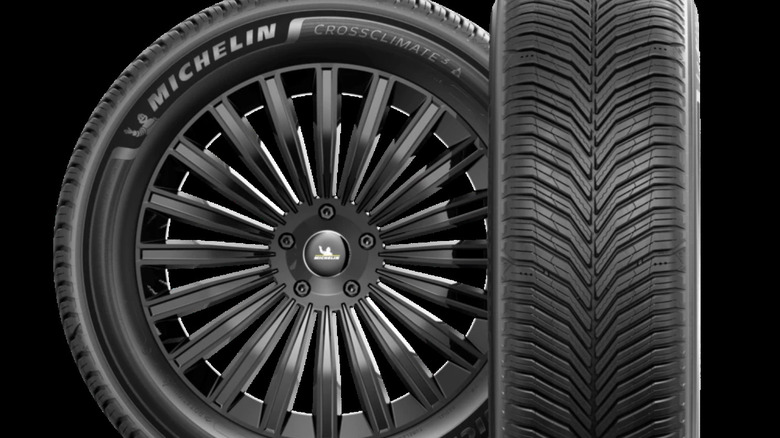
Despite the Michelin CrossClimate3's dominance in attributes that matter most to European drivers (better wet braking performance, lower rolling resistance, and better fuel economy, among others), the CrossClimate2 remains competent. It features a thermal-adaptive all-season tread compound that remains pliable in extreme heat or cold weather, enough for it to earn the three-peak mountain snowflake (3PMSF) symbol and cope adequately with mild snow. And its rubber formula and deeper tread are geared toward lasting for more miles, which tends to be the priority of American drivers.
The CrossClimate2 has a number of strong atributes. Its trademarked V-formation directional tread design features interlocking tread blocks over the center line and 3D SipeLock technology to improve longitudinal grip, while Michelin has optimized the aggressive V-shaped treads to reduce noise. The competition isn't resting on its laurels, as the CrossClimate2 has since bowed down to Continental as the king of all-weather tires in a separate Tyre Reviews test. However, it remains one of the best tires if genuine all-season and mild snow performance is what you want.
On the other hand, the CrossClimate3 has a new thermal adaptive tread compound that, like in the CrossClimate2, adjusts to extreme temperature changes and harsh winters to earn the 3PMSF symbol. And from the looks of it, the CrossClimate3's directional V-tread design has fewer tread overlaps on the center line and is reinforced with Michelin's Max Touch Construction technology to maintain the optimal contact patch and promote even wear.
Europe gets a CrossClimate Sport variant, too
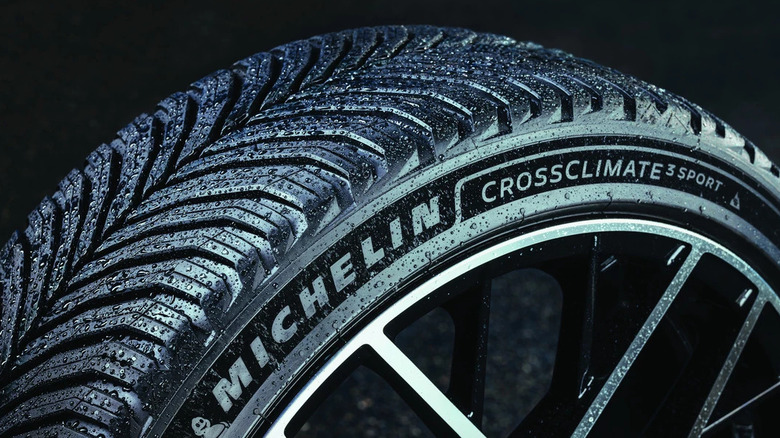
Europe also has a CrossClimate3 Sport variant that Michelin launched together with the standard CrossClimate3. The Sport is a multi-faceted, all-weather tire for sports cars and high-performance vehicles. Despite its sporty moniker, the CrossClimate3 Sport has a Three Peak Mountain Snow Flake (3PMSF) symbol, which means it's highly capable of coping with snow and winter driving. Performance vehicles that require winter certification are important to European drivers. But that segment is insignificant in America, where drivers are more likely to switch to dedicated performance rubber in the summer and snow tires in the winter.
Equipped with a unique V-shaped tread design with grooves that widen from the center to the tire's shoulder, the CrossClimate3 Sport also features a hybrid nylon and aramid belt construction for a sportier driving feel. Meanwhile, Michelin says a new-generation tread compound delivers stronger wet braking while conforming to EU efficiency certifications.