

This 2009 Mercedes Hybrid Was The First To Use This Tech We Now Take For Granted
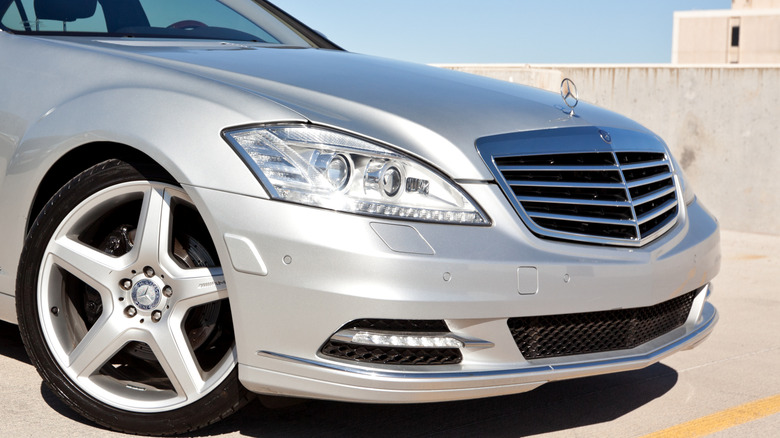
Americans just can't seem to get enough of hybrids, and fully electric cars are being sold in ever-increasing quantities, making up one in four new cars sold globally in 2025, according to the International Energy Agency. As a result, lithium-ion batteries, which serve as a power source for these electrified vehicles, are commonplace and therefore might not sound exciting today. But back in the late 2000s and early 2010s, they were cutting-edge.
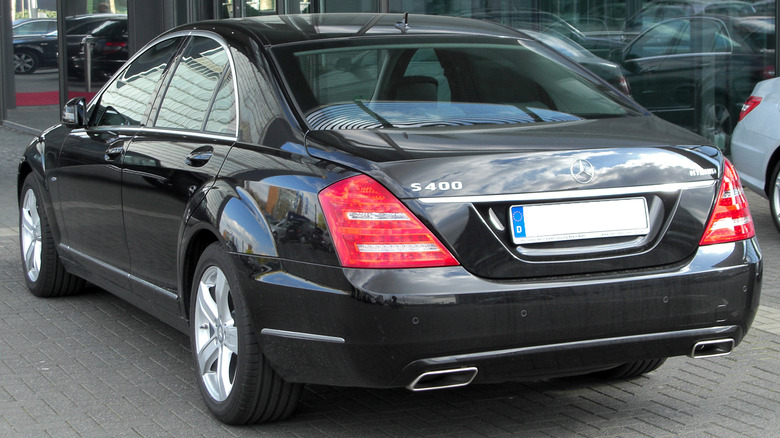
Compared to the nickel-metal hydride (NiMH) batteries that preceded them in automotive applications, lithium-ion batteries are lighter, more compact, have a lower self-discharge rate, and longer life cycles. Despite that, however, they are more energy dense, producing over 270 watt-hours per kilogram (Wh/kg) versus 60-120 Wh/kg for NiMH batteries. But even though these advantages were known for some time for EV use, it wasn't until the Mercedes-Benz S400 BlueHybrid hit the streets in 2009 that they percolated through to hybrid cars, making this the first mass production hybrid car with an electric motor powered by a lithium-ion battery.
One of the biggest problems with lithium batteries is that they are volatile, because they have a liquid electrolyte that can occasionally catch fire. To eliminate this risk, Mercedes-Benz integrated the lithium-ion batteries directly into the cooling system of the car to provide enough cooling capacity to keep the battery at an optimum temperature between 59 and 95 degrees Fahrenheit. That brilliant solution proved lithium-ion could work in automotive temperature conditions and helped the S400 Hybrid burn less fuel and generate less CO2.
Mercedes-Benz S400 BlueHybrid performance and efficiency
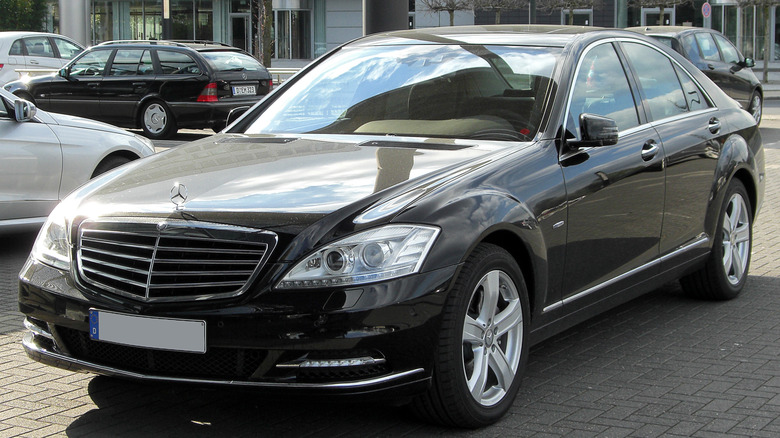
Unlike many of its gasoline-guzzling siblings, which came with either a V8 or V12 at the time, the S400 Hybrid featured a 3.5-liter Atkinson-cycle V6 engine supported by a small electric motor located in the torque converter housing between the engine and the seven-speed automatic transmission. The electric motor added 20 horsepower and 118 lb-ft of torque to the system's combined output of 295 horsepower and 284 lb-ft, resulting in a reported 0-60 mph time of 7.1 seconds and a top speed electronically governed at 155 mph.
During deceleration, such as when braking or coasting, the gasoline engine stops working at speeds below nine mph, and the 15 kW electric motor acts as a generator to recoup lost battery energy. This recaptured energy is then stored in the S400's 120-volt lithium-ion battery, which replaces the conventional starter battery in the engine compartment. Additionally, the system can assist with acceleration, and it also powers the on-board electrical systems through a 12-volt transformer.
The little electric help from the mild-hybrid setup keeps the V6 efficient, allowing the S400 Hybrid to return an EPA-estimated 19 mpg in the city, 25 mpg on the highway, and 21 mpg combined, making it the most fuel-efficient S-Class on offer at the time. For context, the second-best performer, the 5.5-liter V8-powered S550 was rated at 15 mpg city, 23 mpg highway, and 18 mpg combined.
Only two lithium-powered EVs preceded the S400 Hybrid
When the first Mercedes-Benz S400 Hybrids appeared in 2009, lithium-ion-powered cars were already around, but they were all fully electric. The 1998 Nissan Altra EV was the first to feature them. It arrived on the scene about six years after Sony commercialized rechargeable lithium-ion batteries in 1991. But with production limited to just 200 units, the Nissan Altra EV is a vehicle that nobody had ever even heard of, let alone seen. These cars were never sold to the public, but rather leased to commercial fleets and utility companies.
Despite launching about a decade after the Nissan Altra EV, the Tesla Roadster was only the second vehicle to feature lithium-ion batteries. And we're not talking about the frequently touted second-generation model we believe will never actually materialize, but the original Lotus Elise-based Roadster, manufactured from 2008 to 2011 – the first production Tesla, and widely regarded as having popularized lithium-ion technology in EVs. This speaks to the magnitude of the hurdle that automakers have had to overcome in order to bring the technology to production cars.