

Why Automakers Mostly Abandoned Suicide Doors After The 1960s
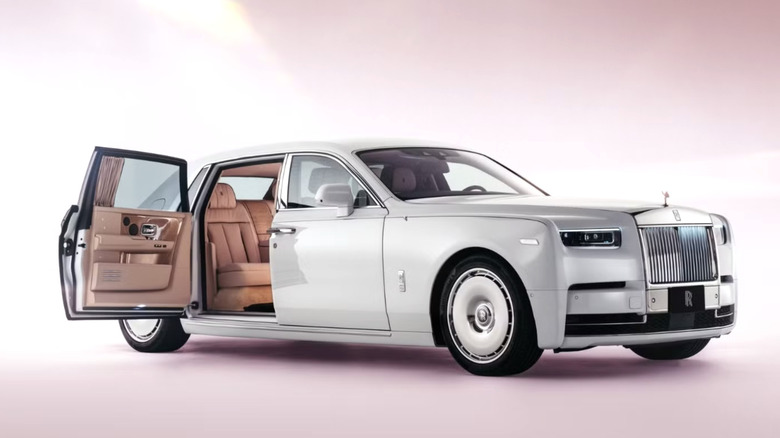
Suicide doors, also known as rear-hinged, clamshell, coach or a whole host of proprietary names, are a holdover from a different era. Car doors that swing open from opposite sides are borrowed from the pre-automotive days of horse-and-carriage coach building, hence the "coach doors" term used by automakers like Rolls-Royce. The style was all the rage in pre-1960s car design, especially with European automakers, though American cars like '60s Lincolns and the Tucker 48 also came with rear-hinged doors. While this style of car door fell out of favor, it wasn't totally left in the past. Rolls-Royce offers coach doors on every model it builds today, which works well considering the door style is especially useful for passengers requiring a dignified or smooth entrance, like royalty. It's a good kind of door for when someone else is opening for you and you are stepping on to red carpet. Ferrari also currently offers coach doors on the Purosangue SUV.
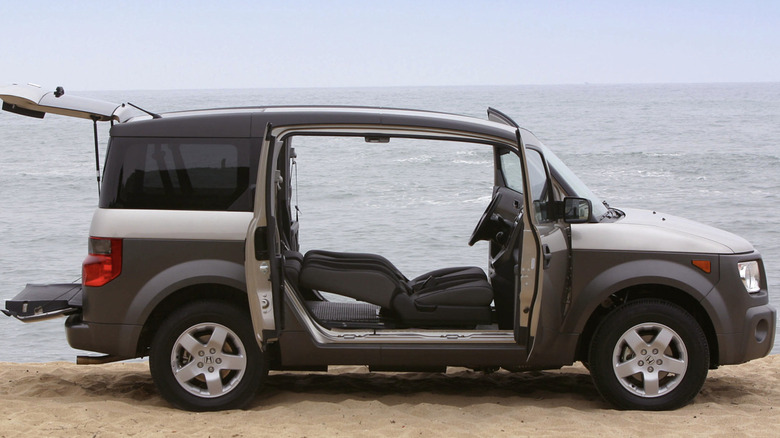
For us normal humans with regular joe jobs, the last car with suicide doors available to us was probably the extremely forgettable Mazda MX-30 SUV with its "Freestyle" doors, which Mazda stopped selling in the U.S. in 2022. In 2021 sale ended of the BMW i3, which really barely had the vestigial organ of a suicide door. The rear-hinged Toyota FJ departed our roads (but not our hearts) in 2014 as well as the Mini Cooper Clubman with the same half-door layout. In 2011, we lost two more half-door clamshell cuties, the Mazda RX-8 and the Honda Element. These days, Rolls reign supreme with cool doors.
But there was a time when rear-hinged doors were all the rage. Where did they go?
Suicide doors for a reason
You might feel a little silly reading the term "suicide doors" and thinking, what a dark name for such a cool car feature! I wonder why automakers don't use them often anymore? Well friends, the door name tells on itself a little here. See, suicide doors earned a reputation as horrifically dangerous especially in the era before seat belts.
The rear facing hinge design meant that even if the door was slightly unlatched, air pressure from the car's forward movement could force the door open, leaving the unsecured occupants with no way to close the door in an emergency. Things weren't much safer when the car was in park, either. If another car clipped the open rear-hinged door, the door would potentially slam back on the occupant rather than being torn off.
There's a much more modern reason those half-door cars have disappeared as well: the lack of a B-pillar. That structural piece of the car that usually stands behind the driver's window and before the rear passenger window is critical for side-impact crash worthiness. As the Los Angeles Times points out, our favorite little toaster-shaped car, the Honda Element, received a poor rating for side-impact crashes from the Institute of Highway Safety specifically over those cool clamshell doors. Current models with coach doors, like the Phantom, have a thick B-pillar that makes ingress and engress not as great as it could be. So as neat as the feature seems to our modern eyes, it's probably a style best left in the past — though some automakers are figuring out how to create coach-door vehicles with no B-pillar that can also pass crash tests, like Genesis' upcoming GV90.