

This Was The First Real Gas Station In The Nation
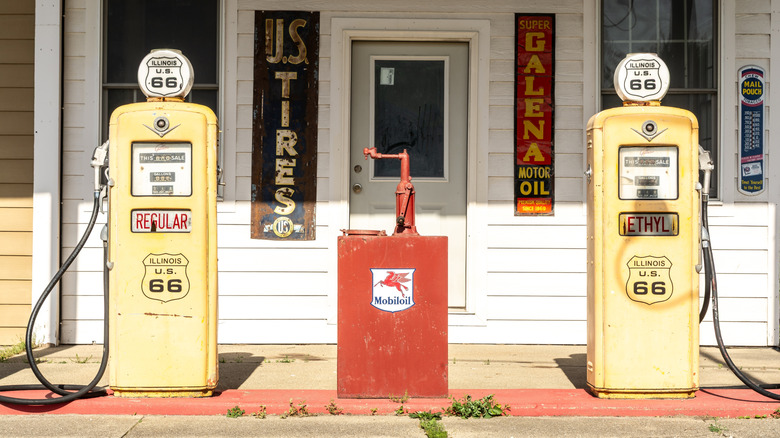
People often take gas stations for granted. Before gas stations existed, buying gasoline meant going on a quest to bring gas — typically in a 5-gallon can – from the local general store or a horse stable. You used a hand operated filter to pour it into your fuel tank, which was an undignified and dangerous process. Then, everything changed.
The first documented attempt at a dedicated fueling site happened around 1905 in St. Louis, Missouri. The Automobile Gasoline Co., founded by Clem Lessing, was basically a gravity-fed tank on a lot, attached to a garden hose. It was a crude and leaky way to dispense gas, but it was the first. However, the first real gas station that actually looks like the ancestors of the modern stations we stop to fill gas today dates back to 1907.
Standard Oil of California (now Chevron) opened what many historians consider to be the first true service station in Seattle. It was a dedicated facility designed to fill cars efficiently. They used a 30-gallon galvanized tank with a hose and a simple glass gauge for the driver to see how much fuel they were pouring into the car. It was a massive shift from just being a customer in a hardware store to going to a dedicated gas station.
Putting the service in a service station
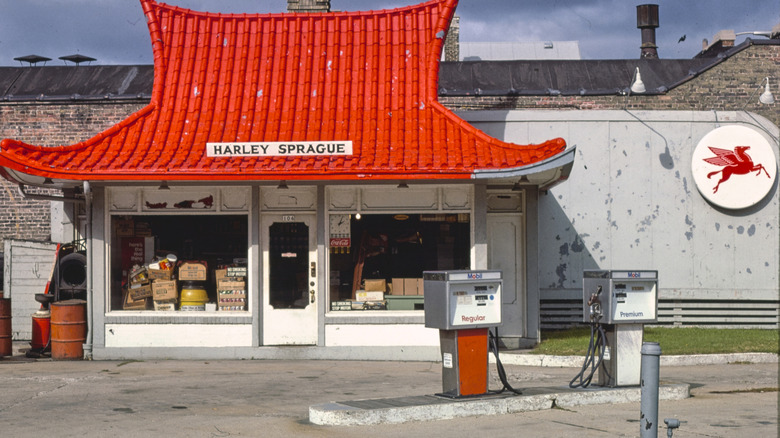
As the 1920s rolled in, the gas station evolved from a shack on a corner to a genuine architectural statement. Oil companies realized that, to gain customer loyalty, they needed to be recognized. They needed to look the part. This era gave us cottage-style stations – quaint little buildings designed to blend into residential neighborhoods. Gulf, Pure Oil, Texaco, and Shell started competing — not just on the quality of their "Fire-Chief" or "Silver Shell" products, but also on how professional their pump attendants looked in their crisp, military-style uniforms.
By the 1940s, we hit the peak of the classic American service station. You didn't pump your own gas. An attendant would pump your gas, top up your radiator, check your oil, and fill up your tires, all while you leisurely sat back in your car seat. It was a high-service environment designed to make even a beat-up Ford owner feel like he was driving a luxury cruiser.
Fuel stations with iconic designs started popping up everywhere. You had the "Art Deco" streamlined stations with rounded corners and neon lights turning into recognizable landmarks. Some stations even went full quirky architecture, building stations shaped like giant teapots, or the cowboy hat and boots one in Seattle, Washington.
From full-service to self-service convenience
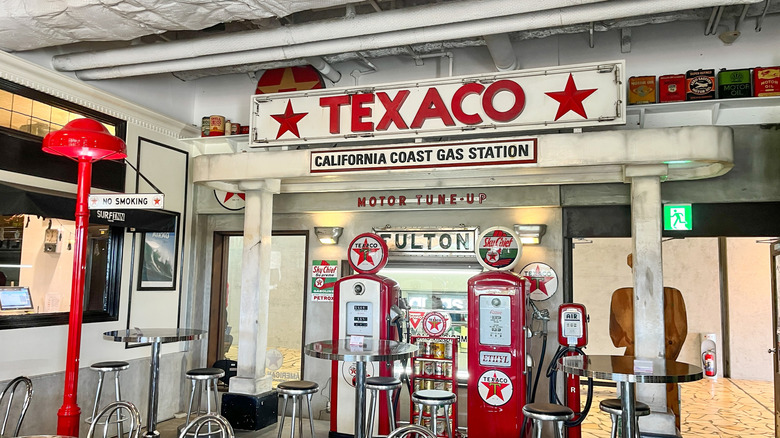
Post World War II, the fuel station landscape shifted again. The 1930s brought us the first "Self-Service" stations, most notably Frank Ulrich's station in 1947 Los Angeles. Frank cut the price of gas by 5 cents a gallon (roughly $76 when adjusted for inflation) by making customers do the filling themselves. It was controversial, competitors hated it, and some states even tried to ban it to save full-service gas station profits. Because of those bans, self-service stations did not become popular till the 1960s.
As the interstate Highway System expanded in the 1950s, gas stations started merging with grocery stores to become the modern travel plaza. Companies like Sunoco and Esso (now ExxonMobil) started focusing on the "one-stop shop" business model. The convenience was undeniable. As time rolled into the 1970s and 1980s, the transformation was complete. The service station had died, and the convenience store with pumps had taken its place.
Instead of the fuel attendant with the bow tie checking our oil, we settled for our favorite gas station products, like a 64-ounce soda or lottery tickets. Looking back at those vintage photos of the 1920s Shell stations or the 1940s Amoco fuel stops, it does feel surprisingly nostalgic. We might have lost the service, but we gained the ability to drive across the country without worrying if the next town has a bucket of fuel waiting for us. Therefore, the first gas station didn't just make refueling easier, but also the freedom to keep moving.