

What Are The Pros And Cons Of HEPA Cabin Air Filters?
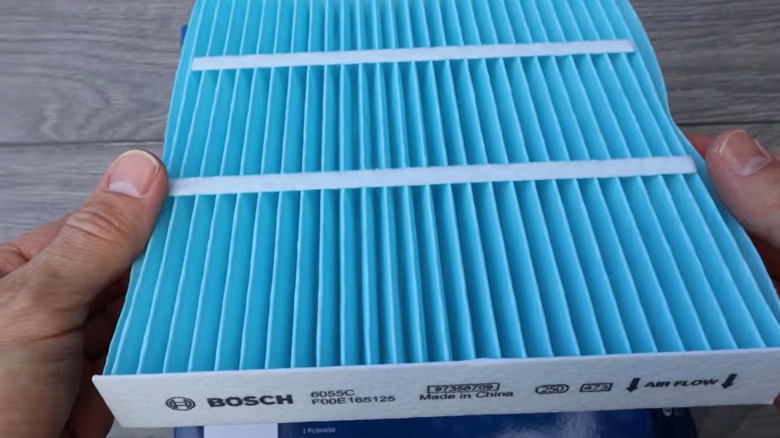
Some cars come with HEPA cabin air filters now, and you might have seen a lot of marketing around them lately. They provide the cleanest cabin air and have been proven to filter out allergens, mold, pollutants, bacteria, viruses, dust mites, and all manner of nasty, tiny particles you wouldn't want to breathe in. In fact, for every 10,000 0.3-micron particles that hit a HEPA filter, only three will get through. This is the main advantage over the other two kinds of cabin air filters. That's great news if you suffer from allergies or have breathing problems, or if you live in an area beset by air pollution or seasonal wildfires. But while there's no doubt a HEPA air filter makes the cabin air cleaner, there is a trade-off — several, actually.
For one thing, HEPA filters are pretty expensive, and mechanics regularly charge more for changing built-in HEPA filters than they do for standard air filters. A HEPA filter can also negatively impact the performance of your car's climate control system. Lastly, there are some things that these filters can't filter out, including those that a standard cabin air filter can handle just fine. So the reasonable question to ask is, should you get a HEPA filter for your car, and is it worth the hype?
What is a HEPA filter?
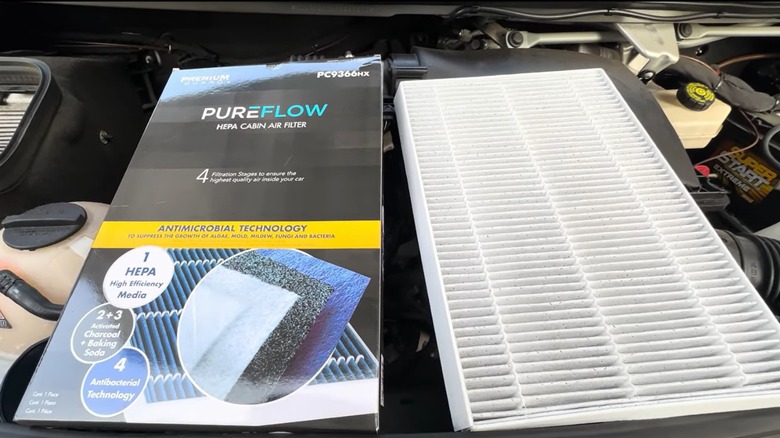
"HEPA" stands for "high efficiency particulate air." To meet the definition of a HEPA filter set by the U.S. Environmental Protection Agency (EPA), the filter must remove at least 99.97% of dust, pollen, mold, bacteria, and other airborne particles with a size of 0.3 microns. HEPA filters can generally block both smaller and larger particulates even more efficiently. They do that in a couple of ways: Particles either get impacted or embedded in the filter's maze of fibers, or they are knocked off course by other particles trying to make their way through the filter.
HEPA filters may seem like a fairly new technology, but they've been around for decades. While the idea stems from World War II gas masks, HEPA filters as we know them now popped up in the 1950s. Since then, they've been used in sanitation-intensive areas such as hospitals, healthcare facilities, and cleanrooms to protect sensitive equipment. They were even used to mitigate the spread of COVID-19.
However, not every filter that says "HEPA" on the packaging is a true HEPA filter and can pass testing defined by one of the major global standards. According to Camfil, a true HEPA filter should have a label on it indicating that it has undergone this testing. Be wary of filters with packaging that uses terms like "HEPA-like" and "HEPA-style."
The advantages of HEPA cabin air filters
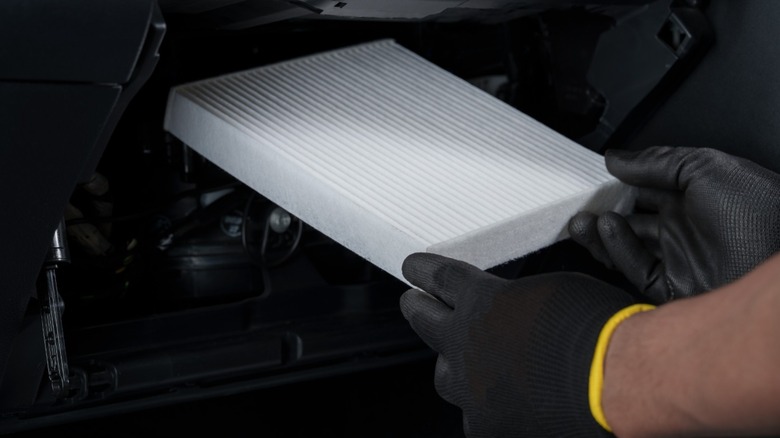
If a HEPA filter works as it's supposed to, it should have several advantages, especially for those with allergies or respiratory problems. As we said, a true HEPA filter can block particles that are 0.3 microns in diameter. That's 300 times smaller than the width of a human hair. And according to tests done by NASA, HEPA filters can capture up to 100% of nanoparticulate contaminants, such as viruses and smoke. That's largely because these filters usually contain five layers, compared to just two layers found in standard filters.
Pollen allergies are pretty common when the weather starts to get warm, causing many of us a whole lot of misery. Fortunately, HEPA filters are also pretty adept at catching pollen, along with other allergens. Wildfire smoke is also pretty common during the summer in certain parts of the U.S., and HEPA filters are good at blocking that as well, especially when used in conjunction with your recirculate button.
HEPA filters work on smog, too, and are also good at trapping mold spores, dust mites, bacteria, and volatile organic compounds (VOCs). The dense fiberglass mat can even stop viruses. They are ideal for people with chronic bronchitis or emphysema. That said, HEPA filters aren't just good for your health — they can technically provide benefits for your car, as well, since they help keep more dust and other particles from fouling up your car's HVAC ductwork and components.
The disadvantages of HEPA cabin air filters
Those benefits for the car's climate control that we mentioned? Well, they can be easily counteracted by the fact that HEPA filters work a little too well. Because, you know what else has trouble getting through something that can filter out 99.97% of particulates? Air. Using a HEPA filter can cause your car's climate control system to work harder and make things less comfortable for you and your passengers, especially in hot weather. Owners have remarked that they feel the air pressure has decreased by 50% since installing HEPA filters in their cars.
Then there's the cost involved. Standard cabin air filters can range from $10 to $20, while HEPA filters can cost $20 to $50 or more. That's just the price of the filters themselves. Having a HEPA filter installed by a professional can set you back as much as $150–$200, compared to $78–$106 for a standard cabin air filter. It gets really expensive for built-in filters that pretty much require you to have the job done by the dealership.
The limitations of HEPA filters
HEPA air filters cannot stop odors, gases, or microbes. That's not a bug; they're just not designed for that. One solution for this is to add a carbon or charcoal layer to the filter or add a pre-filter, which excels in those areas. There are premium HEPA air filters that do, in fact, have either a carbon layer or a UV layer for this very reason.
HEPA filters and standard filters actually complement each other nicely in this regard. Standard filters work well for chemical fumes, industrial gases, and smoke-related gases, while HEPA filters are effective against dust, pollen, mold spores, pet dander, bacteria, some viruses, and smoke particulates. One study found that adding a pre-filter to a HEPA filter system blocks more contaminants, but makes it even harder for air to be passed through.
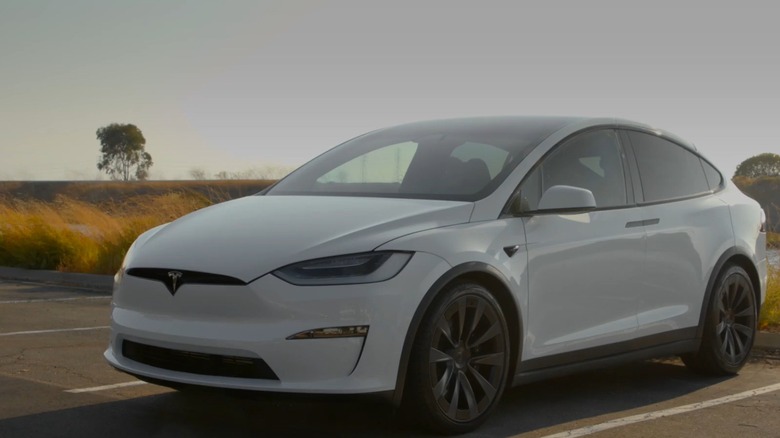
Tesla combines a medical-grade HEPA filter with a secondary filter-, both containing an activated charcoal layer, in its Model X. Its air purification system is so aggressive that the vehicle features a "Bioweapon Defense Mode." Tesla tested the car in 2016 by putting it in a bubble and filling the bubble with air that was 83 times more toxic than is considered safe. According to Tesla, not only did the system almost totally eradicate the contaminants inside the cabin, but it cleaned the air outside the car by 40%, all within two minutes.
Why a HEPA air filter may be more important than you think
According to research conducted by AAA, the average American spends 293 hours in their car. Imagine the amount of bacteria and maybe even viral material you can accumulate in that period of time, especially if the air is not cleaned. Your car's cabin is also a hotspot for microplastics, and the hazard is real because any particle smaller than 2.5 microns can enter the bloodstream. For perspective, the Influenza A virus is only 0.08-0.12 microns. Mycobacterium tuberculosis is just 1 micron, as are clusters of common staphylococci, and COVID‑2019, MERS‑CoV, and SARS‑CoV are all just 0.06 to 0.2 microns.
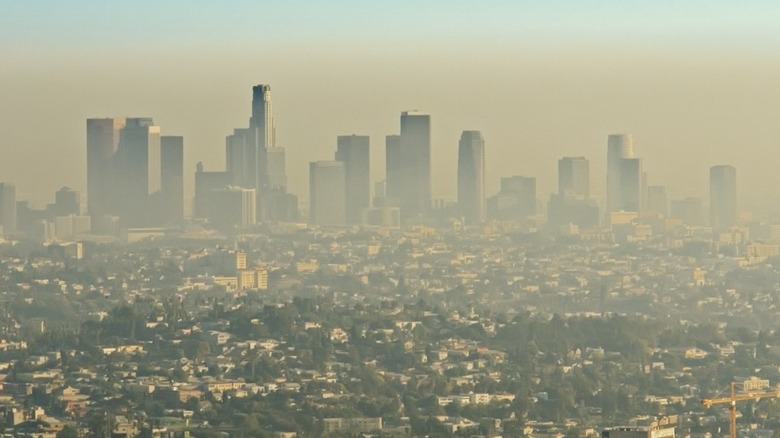
Then there's the danger of pollution. Cars aren't airtight, which means that the air outside is going to get inside. Considering that pollution has been shown to cause inflammation or the swelling of lungs, that is something that should be taken seriously if you live in an urban area where air quality is low.
As we've explained, true HEPA filters are designed to block tiny particles, including bacteria, viruses, and pollutants. That makes them not just a comfort feature, but also a matter of health. The price and performance tradeoff is also worth taking into consideration, but if you live where there is a lot of smog, have respiratory issues, or suffer from severe hay fever, a HEPA filter may be worth it.