

Before Most People Even Owned A Car, This Couple Was Amassing An Impressive Auto Collection
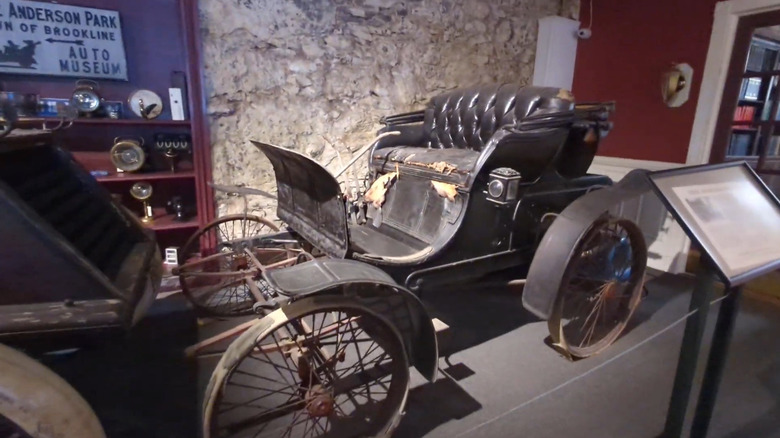
In the modern world, car collecting is considered a high-stakes sport involving climate-controlled bunkers, six-figure restoration bills, and numbers-matching parts. Things were different a century back, though. In the late 1890s, when the automobile, or horseless carriage, was considered a noisy, terrifying contraption that would never replace a reliable horse-drawn carriage, Larz and Isabel Anderson were playing a game that had not yet been invented. The couple were not early adopters — they were the pioneers of the expensive hobby of car collection. Today, their legacy lives on as America's oldest car collection, still in the very same place where they parked their cars a century ago.
The story of the Anderson collection starts in the streets of Paris in 1898, where Larz Anderson, a high-flying diplomat, and his wife Isabel, an heiress, who, at one point, was the wealthiest woman in America, fell in love with the primitive cars driving around the French capital. Upon returning to the States, they immediately ordered their first car, a 1899 Winton Phaeton. A year later, they added a Rochet-Schneider from France to their collection. It featured a bizarre seating arrangement where passengers faced the driver. While the rest of the world was skeptical about these newfangled wagons, the Andersons were already building America's first ever car collection.
A temple of wheels
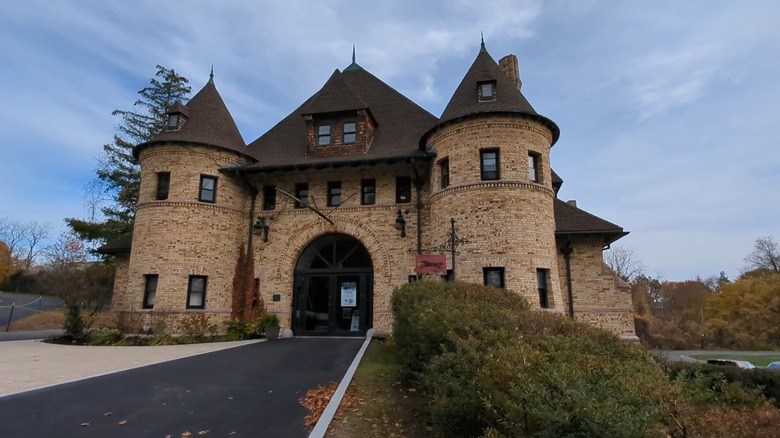
Like the cars, the Anderson's Weld estate in Brookline, Massachusetts, is just as impressive. Built in 1888, the massive two-story brick carriage house was inspired by the Château de Chaumont-sur-Loire in France. Originally designed for horses, the building featured wood-paneled interiors and marble-divided stalls. Soon, the cars moved in.
The transition from stable to garage is a pivotal moment in the history of car collecting. Unlike other wealthy individuals of the era who viewed their cars as appliances and traded in their old cars for the latest models, the Andersons kept almost everything. They maintained a rigorous schedule, treating their retired vehicles as artifacts. When a car reached the end of its practical service life, it wasn't discarded. It was cleaned, serviced, and pushed into a permanent spot in the carriage house.
By the early 1910s, the stalls were occupied not by thoroughbred horses but by the finest automobiles from around the world. The carriage house became a living museum before the term "classic car" was even introduced in the automotive dictionary.
An eclectic fleet
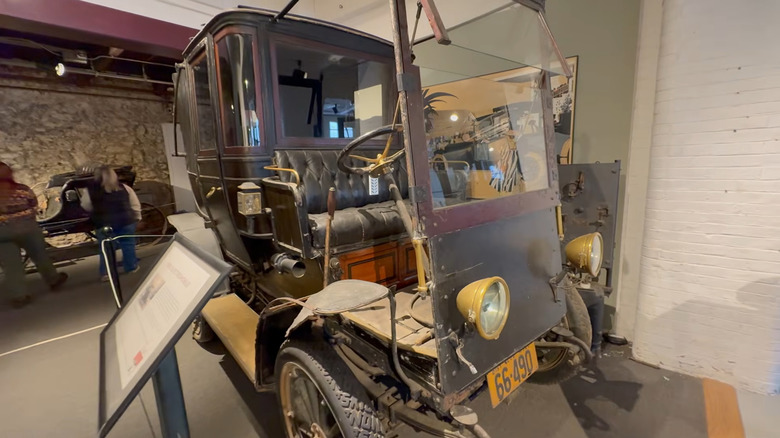
The Anderson collection was one of a kind. The sheer mechanical diversity of the collection comes thanks to the Andersons' interest in everything that moved. They even owned steam cars, including a 1903 Gardner-Serpollet. Steam cars were heavy, fickle machines that required a long start-up period before they could be driven.
On the opposite end of the spectrum were electric cars like the 1908 Bailey Electric Phaeton Victoria, which Isabel famously drove herself (she was the first woman in Massachusetts with a driver's license). The collection also catered to Larz's penchant for performance. The 1901 Winton Bullet was a 40-horsepower racer and one of four ever built. In fact, Larz even raced in this car that same year. Then there was the 1907 Fiat, a 65-horsepower Italian automobile which can be called the supercar of the Edwardian era. These cars were acquired through direct relationships with manufacturers and importers and often customized to the Andersons' specifications. They also owned a 1905 Electromobile, an English-made luxury brougham that looked more like a royal carriage than a motorcar. Each vehicle was assigned a motto. For example, the Fiat's was "No hill can stop me." This personalization showed that the Andersons treated their cars like companions rather than machines.
The bespoke era of European elegance
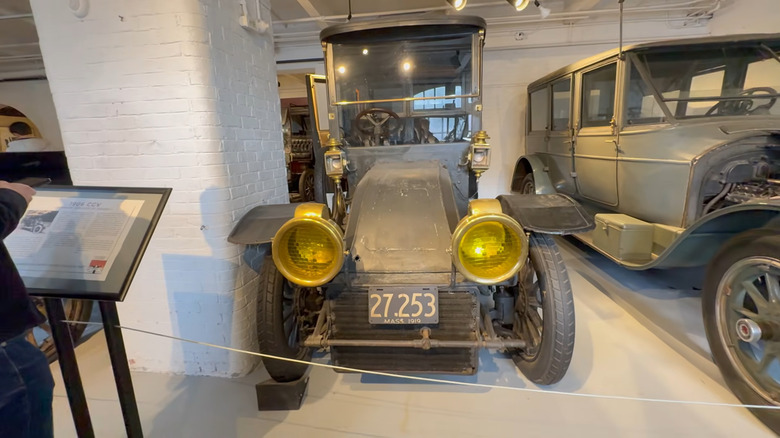
As the 20th century progressed, the collection expanded to include the pinnacle of European luxury. The Andersons were frequent travelers, and their cars reflected their exotic tastes. Perhaps the most extravagant piece in their collection was the 1906 Charron-Girodot et Voigt. This French land yacht was essentially a private railcar for the road. It featured a roof-mounted luggage rack for long-distance tours and, most famously, an onboard toilet –- a feature that remains a fascinating detail for museum visitors today.
Another standout car was the 1912 Renault 40CV. With its massive alligator nose hood and radiator positioned behind the engine, the Renault was a masterpiece of French engineering. A similar model famously was lost with the Titanic. Another cool car was their 1915 Packard Twin Six, which was the first mass production car to feature a 12-cylinder engine. In case you are inspired, Haggerty recommends these collector cars to buy in 2025.
This era of bespoke motoring is perfectly preserved in the Brookline Carriage House. It shows a level of craftsmanship and detail, like the coachwork, that has largely vanished from the modern, assembly-line-built automobile.
The first car collector
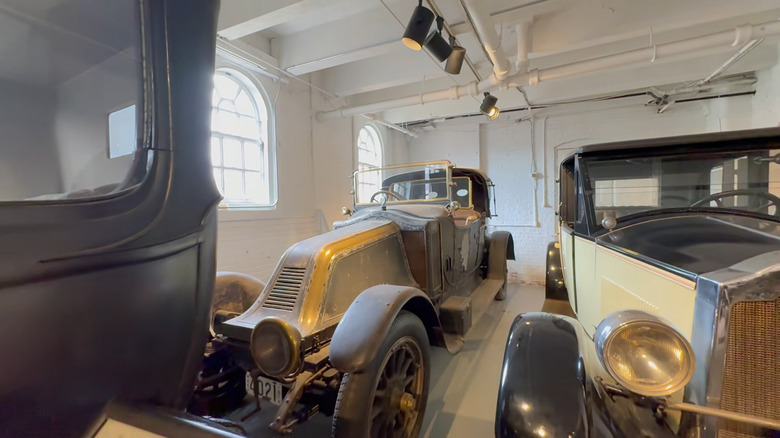
While many people believe car collecting started in the 1950s with the post-war boom, the Andersons were doing it in the early 1900s. Most of their older cars were already ancient by the standards of a rapidly evolving industry. Yet, they refused to sell most of it. To their credit, though, some of these pre-war cars can be daily drivers even today.
By 1918, while the world was grappling with the Great War, the Andersons had close to a dozen significant vehicles, each of which was regularly maintained. Every car in the collection had a nickname, a story, and a dedicated place in the Andersons' hearts.
They weren't just storing these machines — they meticulously cared for them, too. Their car collection went beyond hoarding — it was curating. The Andersons even opened their museum to the public during their lifetimes. They would open the doors of the Carriage House and allow locals to wander through and see the cars. It was arguably the first Cars and Coffee in history, sans the coffee.
The Andersons were essentially running a private museum 20 years before anyone even thought of the idea. Today, the Anderson museum collection is as cool as 10 of the largest private car collections in the world.
A living legacy in Brookline
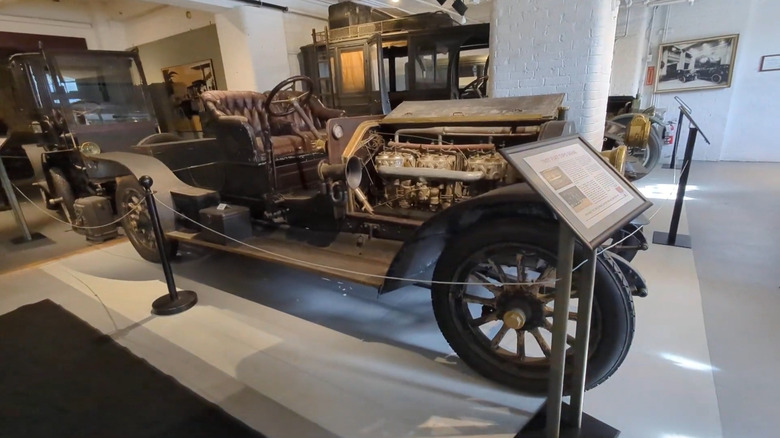
What makes the Anderson collection a true Mecca for automotive enthusiasts is that it has never moved. Most great collections are dispersed at auctions, scattered to various corners of the Earth by heirs looking for a payday. However, when Isabel Anderson passed away in 1948, she left the estate, the carriage house, and the car collection to the town of Brookline, with the stipulation that they remain together for the public to enjoy.
Today, the Larz Anderson Museum is a time capsule. Unlike most museums that feel like sterile corporate galleries, the Larz Anderson Museum feels like a lived-in garage. Stepping into the museum today feels like stepping back into 1930. The cars are still parked in there. You can see the 1926 Lincoln Seven and the 1900 Rochet Schneider sitting side by side, representing the leap from the horseless carriage to modern luxury. The walls are covered in vintage badges, trophies, and memorabilia that Larz and Isabel collected during their 70-plus trips abroad.
The museum has evolved into a hub for New England car culture, hosting lawn events for everything from microcars to Italian exotics. However, the core of the experience remains the Andersons' original 14 vehicles of the 32 they collected over the course of their lives. The Andersons were among the first to recognize that the automobile was the most important invention of their century and preserved the pioneer era so that we won't forget where our modern cars actually came from.