

How A Pontiac Muscle Car That Didn't Get Made Became Performance Car Of The Year
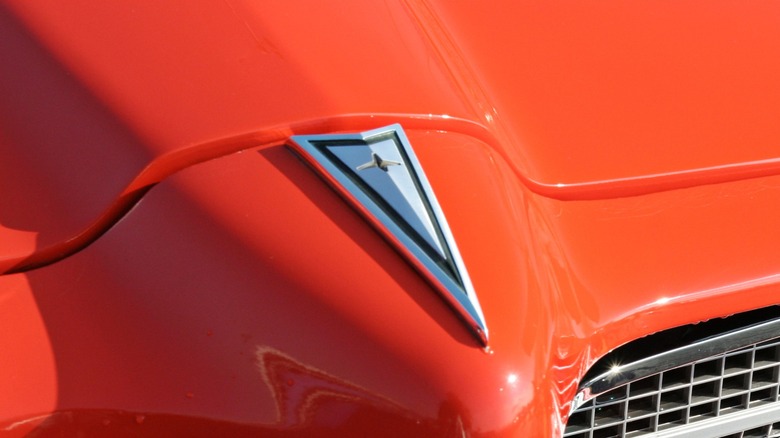
The muscle car era was already in its final days in 1973, but Pontiac wasn't quite done pushing the performance envelope. Backed by its new 455-cubic-inch Super Duty V-8, the brand was showing off a new variant of the 1973 Pontiac GTO that garnered the title of Performance Car of the Year from Hi-Performance Cars magazine. The only problem? Pontiac canceled the SD-455 version of the GTO at the very last minute, and it never actually went into production.
How could a car that didn't exist win anything? Well, it's a function of how the old-school magazine industry worked. In the pre-computer days, publishing a single issue of a magazine often required an intensive outlay of time and effort that could include waiting four to six weeks for the actual printing process to be completed.
So, for publications to cover the new GTO SD-455 — and have the stories published in April 1973, when the car was expected to hit the streets — they needed early examples well before then. When Pontiac decided to drop the GTO SD-455, for reasons we'll discuss below, the decision came after the team at Hi-Performance Cars had already published the magazine. Whoops!
Another Pontiac with the same Super Duty 455 engine did go into production for 1973: the Firebird SD-455. Only 295 such Firebirds were built in total that year, however, with 1,000 more manufactured in 1974. Some of these rare Pontiac Trans Ams came with vinyl roofs, too.
Why did Pontiac pull the plug on the SD-455 GTO?
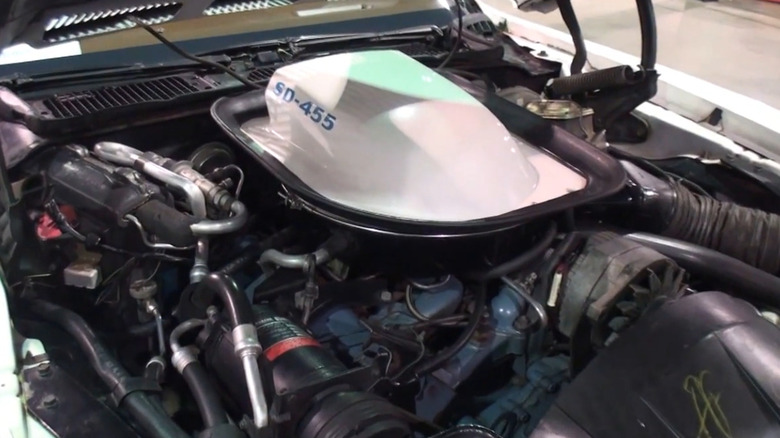
The Super Duty V-8 itself was a key factor in both the GTO's muscle and its cancellation: Hi-Performance Cars reported the engine could make 310 horsepower while drinking its preferred 91-octane fuel, thanks in part to go-fast goodies such as forged aluminum pistons, the latest Rochester 4-barrel Quadrajet carburetor for better breathing, and a heavy-duty oil pump to keep the engine well lubricated even under extreme usage.
The problem was that while the SD-455 was great at making power, it wasn't so good at controlling emissions. Indeed, Pontiac originally tried to get the Super Duty certified by the U.S. Environmental Protection Agency watchdogs by activating an exhaust gas recirculation system that would only run long enough for the car to pass testing. The setup was a nonstarter with the government and led to a significant delay in development. Of course, it might not have been a problem today, since emissions cheating devices are no longer a criminal offense in America.
At about the same time, changes were happening at Pontiac. The original exec who approved the GTO SD-455, James MacDonald, was promoted and replaced by a new top dog, Martin Caserio, who was committed to dialing down Pontiac excitement to chase higher sales. One of his first moves at Pontiac was to cut the Super Duty project from the division's budget. A kind of malaise settled over the industry shortly afterward and wouldn't begin to fade for another decade or so.
One Pontiac Grand Am SD-455 was built as well
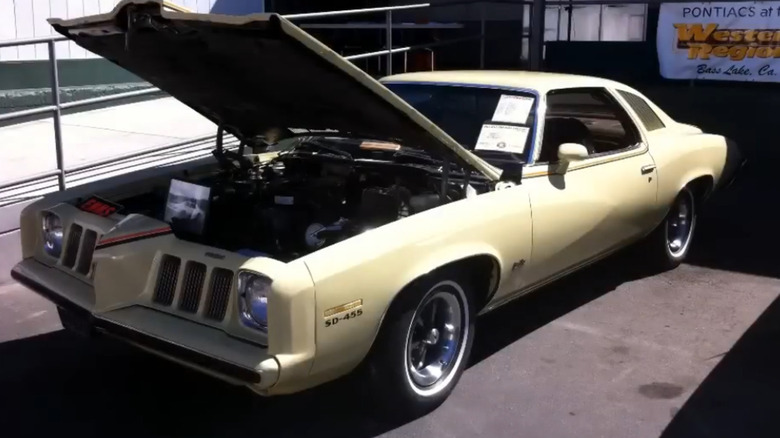
The mighty Super Duty V-8 was at one time destined for — but never actually used in — the Pontiac Le Mans, Grand Prix, and Grand Am models as well. And that last machine went through much the same situation as the GTO.
Exactly one Pontiac Grand Am is known to have been built with the engine, and it promptly went into the brand's press-review fleet and then to Road Test magazine. The publication put the Grand Am through its paces — posting a quarter-mile time of 14.8 seconds at 96 mph despite the car's 4,200 pounds of curb weight — then sent it back to Pontiac. Again, like the SD-455 GTO, the outcome was a published review of a car that would never see production.
What happened instead was that the Grand Am's engine and body went their separate ways once the car was returned to Pontiac. The body was lost (likely destroyed in testing), but the engine was kept and used for further testing at GM's Desert Proving Grounds in Arizona. It was there that it was discovered by Rick Annis during his career as a GM engineer.
A long-time Pontiac enthusiast, Annis recognized the engine and was ready to move when GM had decided to send it to the crusher in the 1980s. Things get a little hazy after that, but it appears that Annis eventually sold the motor to another Pontiac fanatic named Michael Scicluna. While that's the last we've heard of that engine, we can leave it to another passionate Pontiac lover, Ron Berglund, to see what might have been: His restored Grand Am cosplaying as a Super Duty with the correct paint and badging (pictured above) may be the next best thing.