

For Better Or Worse, The Tiptronic Transmission Was Revolutionary
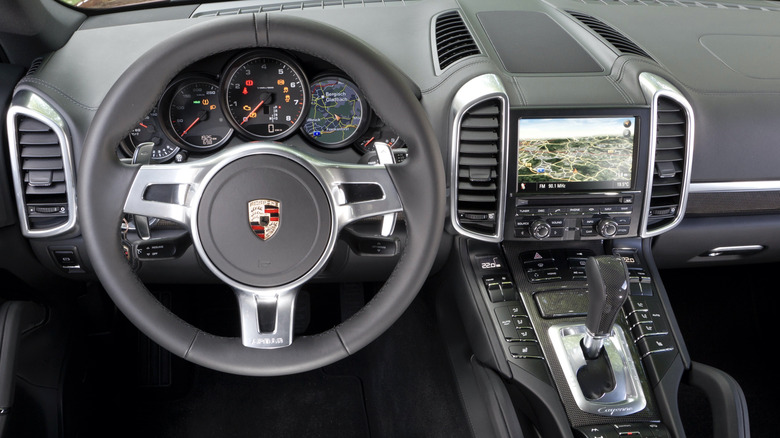
Porsche spent decades trying to solve the same problem: how do you sell a 911 — or any Porsche for that matter — to people who don't want a third pedal, but ensure it still feels engaging? The Sportomatic was the early compromise. This oddball setup let drivers avoid a traditional clutch, but still shifted like a manual with a torque converter substituting the flywheel. The Sportomatic would be phased out in 1980.
With the demise of the Sportomatic, Porsche ran into their initial problem once more — this time for the upcoming 964-generation 911. The Tiptronic was developed ahead of the 1990 model year and was more similar to a traditional automatic transmission than its predecessor. However, it still allowed drivers to rattle through the ratios sequentially, like a modern paddle-shift system. Despite the arrival of the more modern PDK in Porsche production models in the 2000s, a more modern eight-speed Tiptronic gearbox is still offered in today's Porsche Cayenne. The transmission has even ended up in some pretty unique vehicles outside of the Porsche realm. So what ultimately made Porsche's Tiptronic "revolutionary"?
Porsche's Tiptronic kicked off the manumatic boom
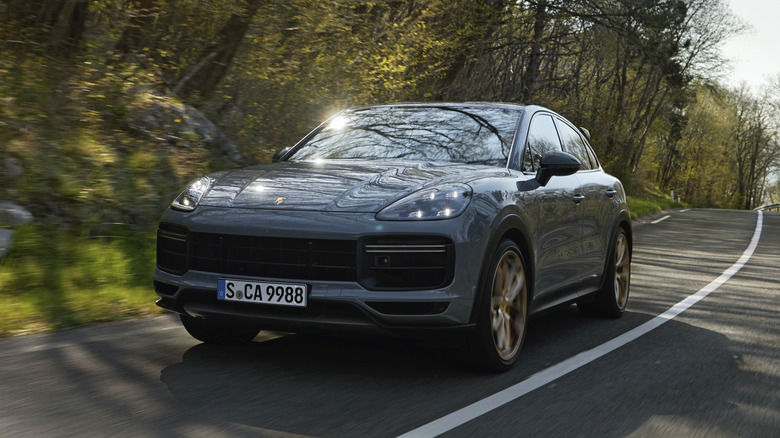
Although the Tiptronic didn't invent manual control in an automatic, it sure made the functionality something practical that people would opt for when daily driving. In it's default mode, the Tiptronic behaved like any other automatic and handled shifts on its own. But once you push the lever into manual mode, you could tap up or down for manual gear selection. Additionally, the transmission could choose between a range of shift maps to suit a driver's approach. The "automatic-first, manual on demand" ethos is why the Tiptronic has become shorthand for an entire era of "manumatic" transmissions across the industry.
Drivers know the Tiptronic is far from a true manual, but the fundamental automatic architecture with a torque converter keeps the transmission safe from missed shifts and helps in high-torque applications. Those high-torque scenarios like towing is what has kept the Tiptronic around longer than many would've ever imagined. Today's Porsche Cayenne and the adjacent SUVs with which it shares a platform (the Audi Q7 and VW Atlas) all use a modern eight-speed Tiptronic-branded transmission. The towing capacity of the Tiptronic Porsche Cayenne trumps that of the smaller, PDK Macan by nearly 3,000 lbs.
So was the Tiptronic really revolutionary? The short answer is absolutely. It normalized the idea that an automatic transmission could give drivers meaningful control over an automatic and made performance-oriented cars more accessible to people who weren't interested in three pedals. The Tiptronic highlighted a moment the industry learned that "manual control" could be a button you press, not a lifestyle you commit to.