

Can You Mod Your Muscle Car To Perform Like A Sports Car When The Roads Get Twisty?
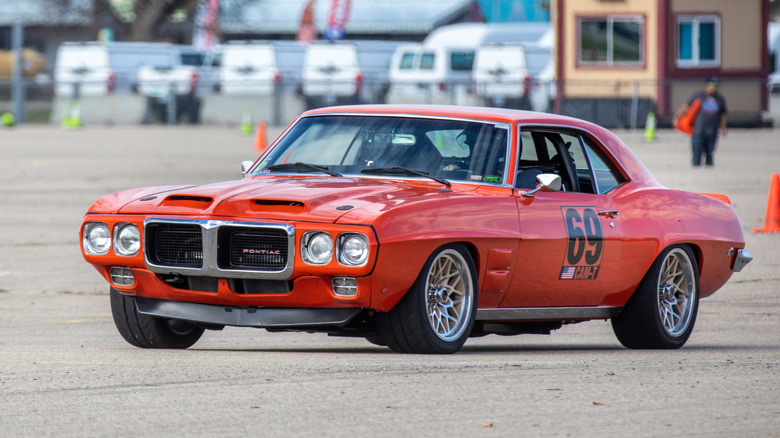
Imagine spending a fortune building a big-block muscle car that can warp time in a straight line, but as soon as the road turns into a squiggly line, you end up fighting for your life, trying to keep your expensive toy on the road. It's an American tragedy. Traditionally, classic muscle cars – not to be confused with pony cars – have been blunt-force instruments that are more at home on a drag strip than on a mountain road. However, it's possible to make your muscle car handle almost as well as a sports car.
The fundamental hurdle in making a muscle car handle is its archaic suspension geometry. Most classic — and even many modern — muscle cars were designed with a nose-heavy weight bias due to the large block sitting over the front wheels with their live rear axles held in place by leaf springs. To make a muscle car turn properly, you have to address the roll center and front suspension camber curve.
On a stock classic muscle car, the front suspension gains positive camber as it compresses. So when you take a corner, the outside tire leans away from the turn, reducing the tire contact patch and causing the car to understeer. A great way to fix this is a set of tubular upper control arms. These arms come with increased caster for better high-speed stability and provide a negative camber during suspension compression.
A live axle with leaf springs can result in axle wrap and lateral movement, which can cause the wheels to hop during acceleration and make handling unpredictable. Using a Watt's link keeps the rear axle centered under the car, regardless of suspension travel. Add adjustable coilovers with compression and rebound tunability, and you can transform the pogo stick ride into a more stable one.
Improving stopping power and grip
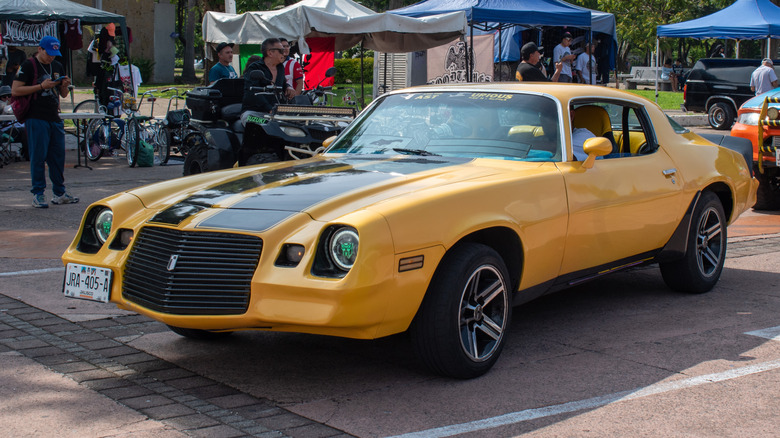
Improved handling isn't just about turning well — it also includes better stopping power. Most classic muscle cars came from the factory with drum brakes or primitive single-piston discs. The first step in improving braking performance is switching to multi-piston calipers and large rotors, such as 13- or 14-inch rotors with six-piston calipers up front. It's not only about stopping power, but it's also about sustained braking. Vented and slotted rotors increase the brake cooling surface area, preventing the brake fluid from boiling. When brake fluid boils, gas bubbles form, causing your brake pedal to feel spongy and reducing braking power. A switch to a better high-temperature tolerance DOT 4 to DOT 5.1 brake fluid is recommended.
Then there are the tires. You can have the best performance and the best suspension, but if you are running hard-compound all-season tires that are designed for longevity, you're missing out on a lot of grip. For your muscle car to perform like a sports car, you need extreme-performance summer tires. These tires utilize sticky silica compounds that offer superior lateral grip in dry conditions.
While drag racers love skinny front and fat rear tires, a handling-focused muscle car needs more rubber in the front to combat understeer, which usually means a square setup: equal-width tires in the front and rear. This could require rolling your fenders, but fatter front tires ensure the front end bites well when you turn the wheel at high speeds.
A stiff steering and a stiffer frame
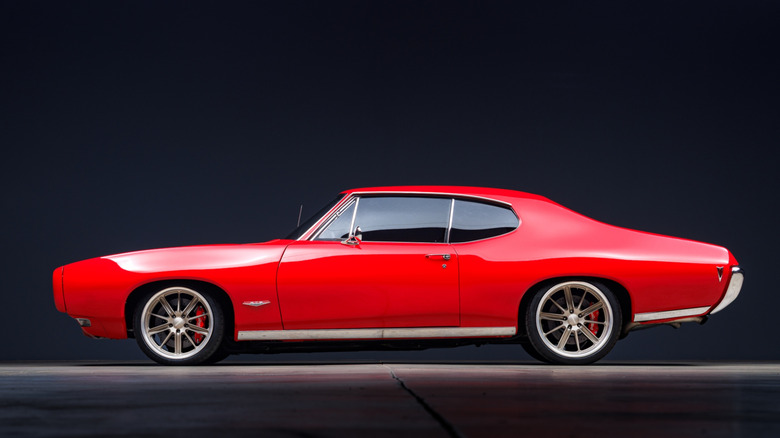
The "Saginaw" steering boxes found in many classic muscle cars have a very slow and unresponsive steering ratio, often requiring close to four turns lock to lock. That's why, to make your muscle car handle more like a sports car, you need a quick-ratio rack and pinion steering or a modern 12.7:1 steering box. This tightens the on-center steering feel and allows for micro adjustments mid-corner, without the need for sawing at the wheel like a bus driver.
The unibody or body-on-frame designs of '60s and '70s muscle cars — the era where the muscle car segment peaked – often flex under load. When the chassis flexes, it acts like a giant spring, storing and releasing energy in the corners and completely undermining your expensive suspension. To solve this, you need to tie the front and rear of the car together with subframe connectors. These steel rails weld into the floor pan, helping turn the car into a rigid box.
The final piece of the puzzle is the weight distribution. Sports cars handle well owing to their light designs and balanced mass. You can reduce your muscle car's front-end weight bias by moving the battery to the trunk and swapping the cast-iron intake manifold for a lightweight aluminum one. Every pound you move from the front of the axle to between the wheels reduces the polar moment of inertia and makes the car more willing to rotate. Do these mods, and you no longer have a muscle car in the traditional sense, but a Pro Touring machine that combines the soul of an American muscle car with the reflexes of a European sports car. And if these pointers make you itch for a restomod project, here are some great deserving cars.