

Before You Buy A Used 996 Porsche 911, Check If This Has Been Fixed First
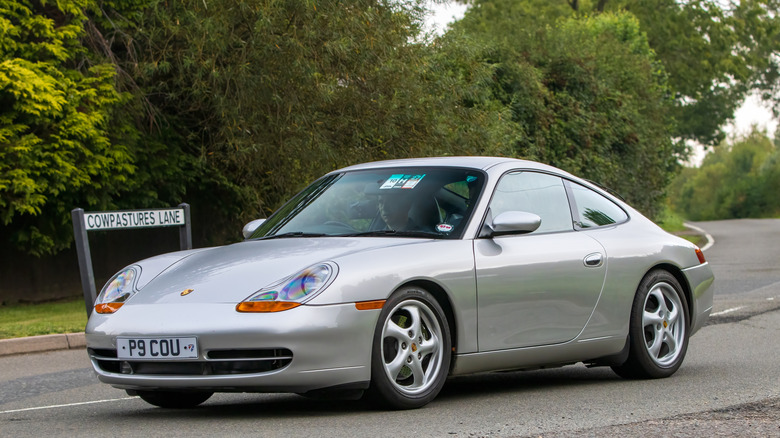
Sometimes, the desire to preserve automotive tradition can propel radical change. Take the 1997-2005 996 generation of the venerable Porsche 911, for example. To save the lineage of its quintessential icon from safety- and emissions-mandated extinction, all Porsche had to do was change almost everything about it. Notably, the new models switched from air- to water-cooled engines dubbed the M96, but it still performed and was instantly identifiable as a 911. There were, however, some hiccups.
The most notable problem is a well-known mechanical gremlin that sits at the heart of the M96: intermediate shaft (IMS) bearing failure. IMS failure happened to enough 986 and 996 engines to earn a class action lawsuit that Porsche settled. Porsche fans likely know this already, but if this is your first foray into buying a used 996, check if it's been fixed. It can provide absolutely no warning beyond minuscule metal shavings in the oil filter, or maybe a leak by the rear main seal — both of which could be caused by other problems.
The part wasn't designed to be serviced, so there's no official maintenance interval. Very nice examples of cars with over 100,000 miles and no documented IMS service exist, but other examples with under 25,000 miles have went through IMS replacement. The good news is that even if it wasn't fixed, there are proven preventative IMS bearing remedies on the market — as well as unaffected 996 variants.
What's an intermediate shaft for, anyway?
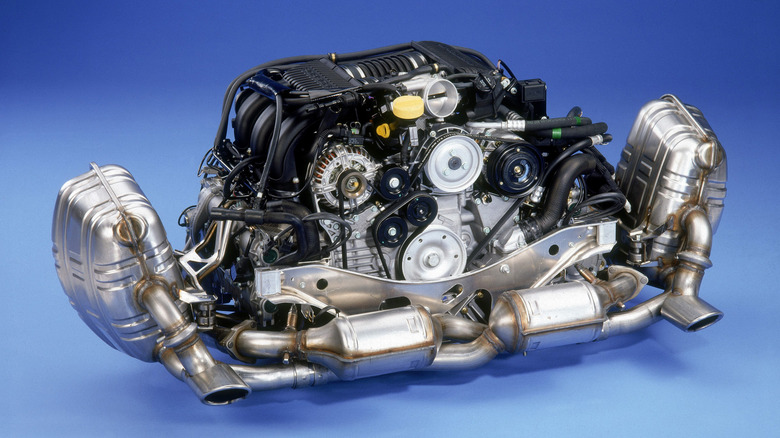
The flat-six engine hanging out over a Porsche 911's rump features horizontally-opposed combustion chambers — three per side — in an East-West orientation. Each side has its own timing chain at opposite ends of the motor. To synchronize them, Porsche uses an intermediate shaft, with sprockets on either end, running North-South down the centerline of the engine. It drives the camshafts indirectly off the crankshaft.
Porsche had used this component for decades. In fact, the 996 Turbo, GT2, and GT3 engines all feature an IMS design that, critically, retained internals from the previous generation 964 engine — the competition-proven Mezger unit. In that robust design, the IMS rotates on one big plain bearing, happily and reliably pressure-fed by engine oil. In the M96 engines of lesser 996s however, the IMS bearing is a sealed unit, packed with grease and fitted at the flywheel end of things. If (or rather, when) that seal fails, guess where the bearings can go? Careening off the inside of the engine like BBs on a bender, causing potentially catastrophic, five-figure doom.
2001-2005 996s (and 986 Boxsters/Caymans) with the M96 featured two different, single-row bearing designs that suffered a 10% failure rate, according to the 2013 class action lawsuit that covered just shy of 58,000 cars. Early models rolling off the line between 1997 and 1999 featured a dual-row bearing design that has proven comparatively stout, but not immune to failure.
The the fix, the fuss, and the clues
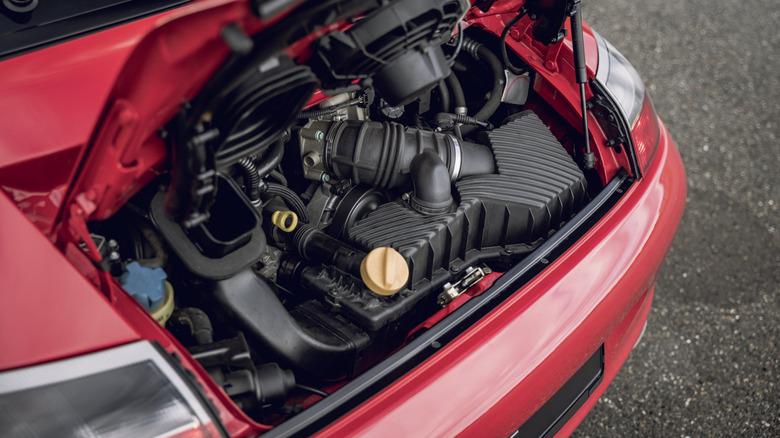
You can avoid these issues by buying a 996 Turbo instead, which is arguably already the perfect car. Otherwise, hunt for IMS bearing service or replacement receipts in the service history — even if the engine was replaced. Alone, the service cost averages around $3,500-$4,000 including labor, so it would likely have been replaced around the time of a clutch job to save some dough. After all, you need to pull the gearbox out to do the service in the first place.
Porsche released its own IMS upgrade in 2017, and companies like LN Engineering offer upgraded replacement bearing solutions to purchase for yourself. LN products range from cartridge units that house ceramic bearings — designed to be replaced every six years or 75,000 miles — to lifetime components based on the original, plain bearing design, pressure-fed by oil. The company keeps an active registry of serial numbers for verification, since you can't visually inspect the part without taking things apart.
Given the numbers, even LN Engineering acknowledges that many of the 179,163 M96-equipped 996 gen cars produced may never suffer IMS bearing failure. A handful of late 2005 cars will have a different non-serviceable updated bearing design, and some forums land on the issue being overblown. Then again, the manufacturer acknowledged these problems enough to settle a lawsuit. Four grand isn't cheap, but peace of mind is priceless. And dropping $15,000 on a new engine (plus labor) will surely wreck the fun — especially since getting a great budget Porsche is part of what a used 996 is all about.