

NASA Completes The Nancy Grace Roman Space Telescope, Ahead Of Schedule And Under-Budget
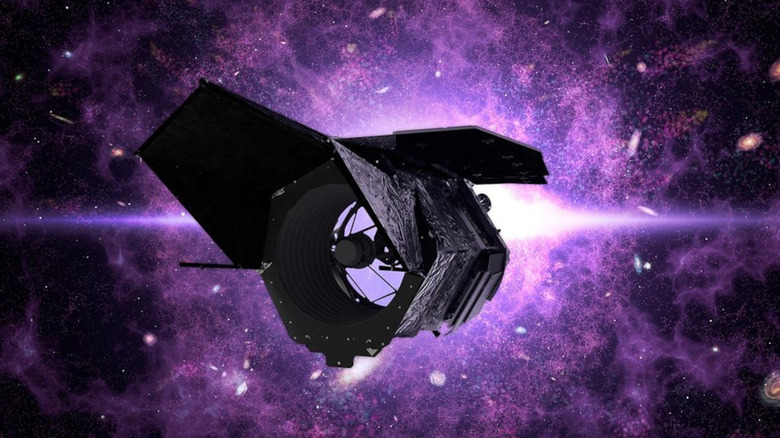
NASA is on a roll getting spaceborne telescopes out into the universe. Just four years after the James Webb Space Telescope was deployed, the space agency's next big observatory has finished construction. It may be a wonder of technology and engineering, but here is the real miracle: it can legitimately claim titles like "ahead of schedule" and "under budget," words NASA doesn't get to say very often. The Nancy Grace Roman Space Telescope, named after NASA's first chief astronomer, will be headed out to space in September aboard a SpaceX Falcon Heavy, months ahead of its originally planned May 2027 launch.
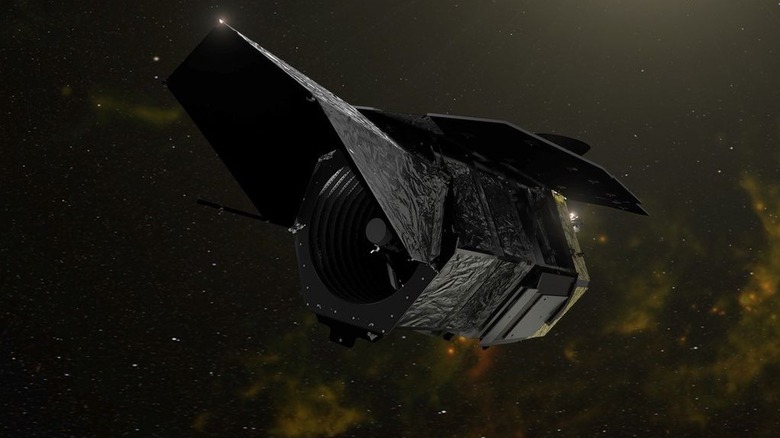
Let's not forget that "wonder of technology" bit though. Roman's primary mirror is 7.9 feet across, which is the same size as Hubble's but at only one-quarter the weight. That mirror will be sending visible and infrared light to two different sensors. The first is called the Wide Field Instrument, a 300-megapixel camera. The second is called the Roman Coronagraph, which you can think of as the most powerfully polarized sunglasses ever. This will allow it to actually reduce the light that Roman is taking in from distant stars, but in such a way that it reveals the planets orbiting them. This system will actively adjust itself to the light of whatever star it's looking at, the first such system ever to do this in space.
We all know that the Webb telescope has taken some of the greatest pictures of all time. But here's the thing: Webb is designed to take ultra-high-resolution photos of the things we already know about. Roman, by contrast, is an explorer, scanning across the sky at such a high level of detail that it will discover entirely new things never before observed by human eyes (or human-made lenses). Think of it as the difference between peering really closely at something (Webb) versus looking around (Roman). That should mean finding billions of new galaxies — yes, billions of new galaxies, which would mean tens of billions of new stars. The mind reels. Of course, it might just find a few things scientists don't expect, maybe even some phenomena they don't even know exist.
A marvel designed to discover marvels
Impressed yet? Don't worry, there's more. Compared to its older sibling Hubble, Roman can survey 1,000 times faster, observe 200 times more sky in a single image, and process data 2,000 times faster. Hubble's first 30 years gave scientists 172 TB of data; Roman will do the same in around six months. In five years, that number ought to go up to 2,500 TB. It is just an insanely powerful tool.
Like Webb, Roman is destined for Earth's Lagrange Point 2, or L2. This is a distant spot, almost a billion miles from Earth directly away from the Sun. Lagrange points are where centripetal forces from orbiting are exactly canceled out by gravitational forces, allowing the object to "park" itself in space. This is great, because it requires little fuel to stay in position. It's also a very dark place to be, so far removed from the Earth's glare. And as we all know, glare is the enemy of cameras.
Once there, Roman will begin its mission. And then our understanding of our universe will grow in bounds and, very likely, change forever.