

Why Did Ram Switch Back To The CP3 Pump?
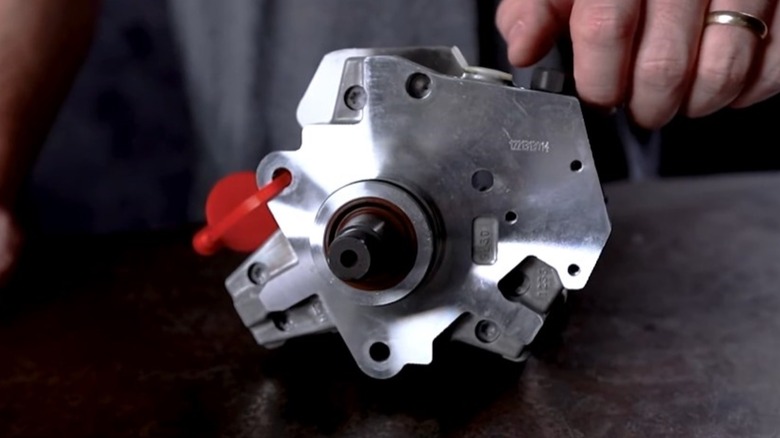
When the fifth-generation Ram HD pickup debuted for the 2019 model year, it brought with it a raft of updates, including a revamped Cummins 6.7-liter inline-six diesel engine offering the Ram a massive 1,000 pound-feet of torque in high-output guise. The engine itself featured plenty of new parts, among them a compacted graphite iron (CGI) engine block, a new cast-iron cylinder head, a new alloy crankshaft, stronger connecting rods, and a larger Cummins-Holset variable-geometry turbocharger that forces up to 33 pounds per square inch (psi) of fresh air into the engine.
All of these changes would seem to suggest that the new 6.7L was improved dramatically compared to its predecessor, and rightly so. But Cummins' decision to swap out the long-serving Bosch CP3 common rail injection pump for the Bosch CP4.2 high-pressure injection pump meant it also picked up a bit of a dent. By the time it launched on the 6.7L Cummins engine in January 2019, the CP4.2 design had already developed a reputation for failing, from its appearances on the 6.6 Duramax LML and 6.7L Power Stroke.
Unfortunately for early adopters of diesel-powered fifth-generation Ram HD trucks, the Cummins-equipped CP4.2 pumps saw the exact same issues as the earlier versions. It took it two model years (2019 and 2020) but Ram eventually recognized the high failure rate of the CP4 pump and temporarily switched back to the CP3 pump for the 2021 model year as a stopgap solution. The returning tried and true CP3 injection pump remained in use until 2024, when it was again replaced by a new Bosch CP8 high-pressure fuel pump as part of updates to the 2025 Ram Heavy Trucks. The CP3 was also retrofitted to 2019-2020 Ram HD trucks already built with the CP4 in a recall that affected over 200,000 vehicles.
What causes CP4 injection pump failure?
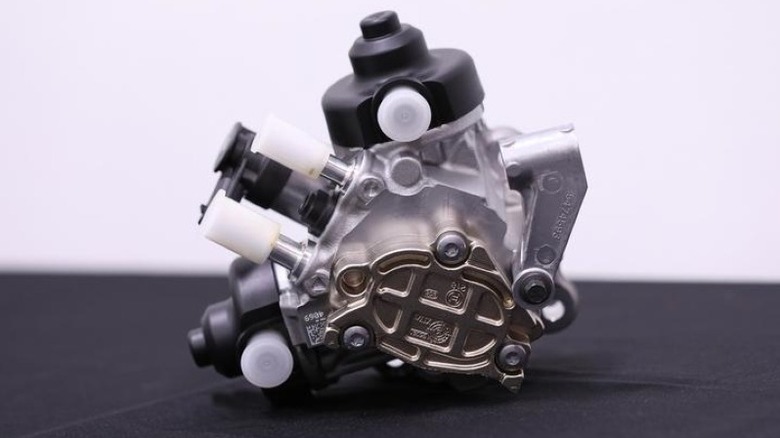
Perhaps unsurprisingly given the increasing demand for vehicles to become more efficient, Bosch designed the CP4 injection pump with a focus on weight saving and tighter fuel control to ensure better compliance with stricter emissions standards. Overall, the CP4 is about 25% smaller than the CP3. Yet, it pressurizes fuel to a whopping 29,000 pounds per square inch (psi) before it is delivered to the common rail system, which feeds fuel to the individual injectors. For context, the old CP3 tops out at 26,000 psi.
This benefit comes at the expense of reliability, however. The tighter internal tolerances needed to generate the higher fuel pressures mean that the CP4 design is less forgiving of low lubricity ultra-low sulfur diesel (ULSD), air intrusion, and fuel contamination by water and debris. Since diesel fuel acts as a lubricant for the CP4 injection pump, problems can arise if air finds its way into fuel from the outside atmosphere through a leak in the system or because of improper filter installation, as this creates air pockets that break down the fuel's lubricating film.
Without enough lubricant to prevent friction and wear, the roller tappet on the bottom of the piston hits against the camshaft, and soon enough, all that metal-on-metal action would cause rapid wear of both parts. Eventually, the hardened metal particles that are created as the parts grind down are pumped through the entire fuel system, impacting the injectors, high-pressure fuel lines, fuel rails, fuel tank, and fuel filters, leading to a widespread fuel system contamination that necessitates a full fuel system repair which can wind up costing over $10,000, depending on contamination and parts required.
Why the CP3 tends to be favored over the stock CP4 injection pump
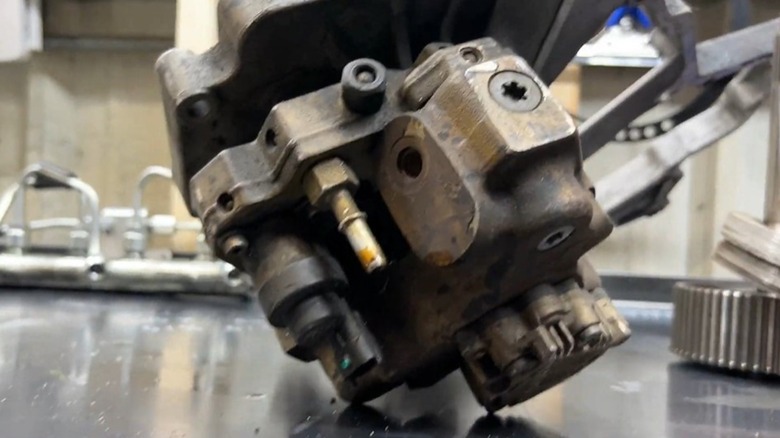
While the CP3 is slightly less efficient than the CP4 pump in terms of pumping power, it performs reliably in real-world use and this reliability is a key reason why it is so widely used. The CP3's relatively generous internal clearances basically mean that it is less sensitive to fuel quality, and its camshaft design allows it to have a much smoother movement pattern that reduces wear. As a result, the pump can last anywhere between 300,000-400,000 miles with proper maintenance.
With the CP3, the failure form is gradual and commensurate with the pump's age and mileage rather than sudden and catastrophic as is unfortunately often the case with the CP4. When the Bosch CP3 injection pump starts to fail, you might notice that the engine suddenly loses power when accelerating. A struggling CP3 pump is also often accompanied by signs such hard starts, poor throttle response, and low fuel rail pressure, among others.