

Car Seat Manufacturers Face New Testing Regulations To Keep Kids Safer
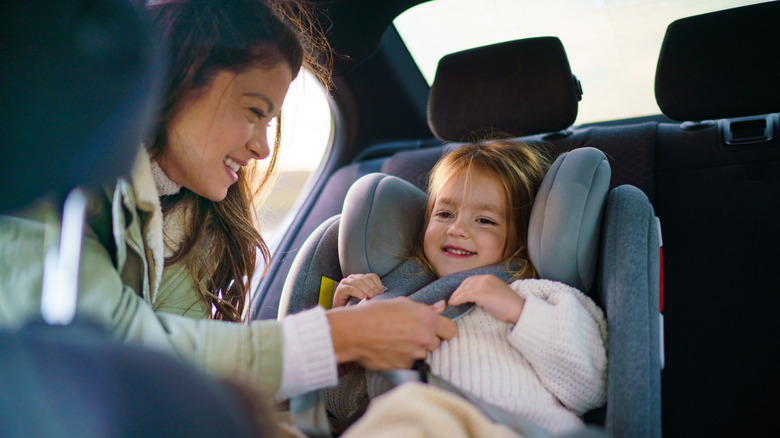
Child car seats make car travel so much safer for little ones they're legally required by all 50 states in the U.S. and controlled by federal law. New rules governing them go into effect this December, adding standards for side impact protection to updated rules for frontal impacts.
Many child seats available in the U.S. already offer some form of side impact protection to meet existing European Union standards. However, the current rules, spelled out in Federal Motor Vehicle Safety Standard (FMVSS) 213, set no standards or requirements for such requirements, nor spell out any specific testing benchmarks as they do for frontal impacts.
The National Highway Traffic Safety Administration first proposed such rules back in 2014, but it has taken a long time to put them into effect. That's where FMVSS 213a comes in, finally. Consumer Reports summarizes it well:
Under the new regulations, manufacturers are required to test car seats for children up to 40 pounds for side-impact protection using an updated standard. The new testing includes a simulation in which a door hit from the side "intrudes" into the car, better mimicking what happens in a real side-impact crash. The updated standard reduces the risk of a child's head hitting a vehicle door or other structure during a crash, causing injury. It also helps limit forces to the chest. "This regulation aims to provide side impact protection for harnessed kids who won't benefit as much from the vehicle's side impact crash interventions, such as the side curtain airbag," [Emily A.] Thomas [PhD, associate director of auto safety at CR] says.
The safest location for a child seat is in the center of the back seat, away from the doors. However, this is often not possible, especially for families that have more than one child. It's also easier to reach a seat that's right next to the door rather than the center of the car.
Updated standards and test equipment
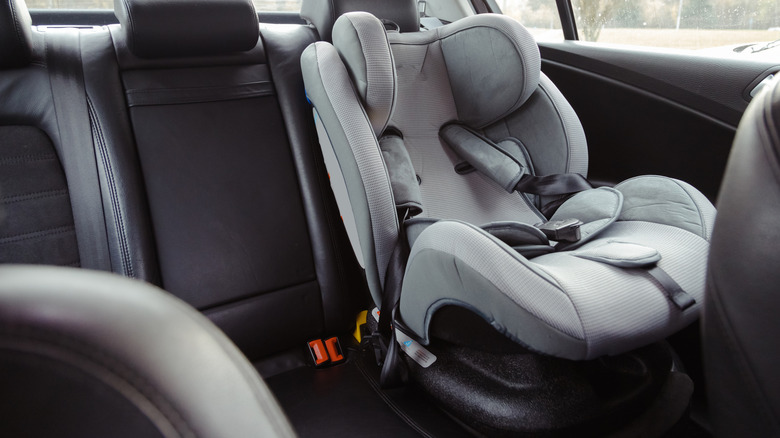
While the new side impact standards are the most significant addition, FMVSS 213b updates and replaces the existing FMVSS 213 rules. These are split into two sections because the side impact standards were supposed to take effect in June 2025, but were delayed to give manufacturers time to implement the necessary changes. FMVSS 213b was already scheduled for December 2026, so 213a was delayed until the same date to keep it simple.
One notable change in the new rules are that children now need to be a little bit bigger to move from one type of restraint to the next. Children must now weigh at least 26.5 pounds, rather than 20, before switching from a rear-facing to front-facing seat. Booster seats now require a minimum weight of 40 pounds instead of 30.
Another significant change is that the simulated back seat used for testing is no longer stuck in the 1970s, requiring it to simulate a modern vehicle. Lap-and-shoulder belts must be used, as the old lap-only belts have all but disappeared (the LATCH system is tested as well). Size and weight standards for crash test dummies for several age categories have been updated and revised as well.
I grew up in the front seat of a VW Super Beetle, with nothing but a gas tank and some tin foil between me and oblivion. That wouldn't fly today, and we're all safer for it. Though updated several times over the years, FMVSS 213 is about as old as the Super Beetle itself. Replacing it with new regulations and new tests appropriate for modern cars is long overdue.