

Can You Reuse Automotive Gaskets And How Long Do They Last?
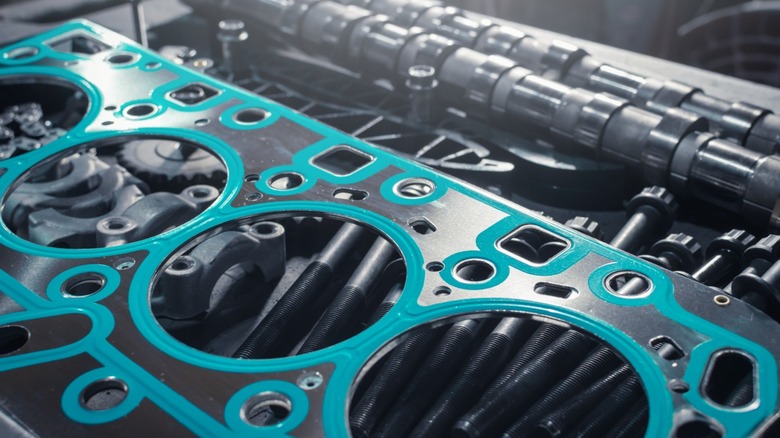
"As a trusted gasket material supplier, our recommendation is that you never reuse a gasket," MTI Gasket says on its website. Sounds pretty cut and dry, right? And it makes sense. Nothing made of rubber is permanent, and it is bound to wear out at some point. In fact, bad gaskets are one of the common causes of car oil leaks. Still, there will be some who will insist it's okay to re-use a gasket because their buddy re-used one once and it turned out alright.
But MTI isn't the only manufacturer who says not to reuse a gasket. Garlock says: "We are frequently asked about reusing gaskets. We do not recommend this practice." And Gallagher Seals, a manufacturer of industrial gaskets says: "For safety reasons, never re-use a gasket." Expert Gasket & Seal, LLC, a custom gasket manufacturer, is even more emphatic, stating: "Never reuse old gaskets. An old gasket can never be relied on." However, there may be some exceptions to the rule, especially if a manufacturer says it's okay to reuse a specific gasket.
How long should you expect a gasket to last? Head gaskets are supposed to last around 200,000 miles. A valve cover gasket typically lasts 60,000 to 100,000 miles. An intake manifold gasket is meant to last around 50,000 to 75,000 miles. An oil pan gasket might last from 10-15 years, and that little washer for the drain plug should be replaced with each oil change.
Why not reuse a gasket?
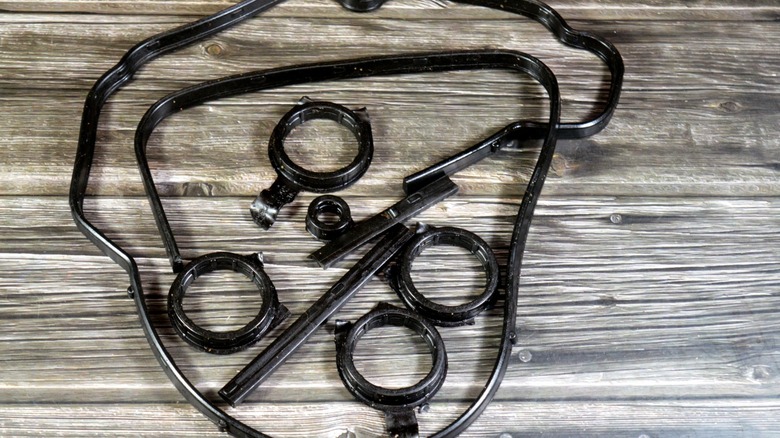
Do you really need to go out and buy a new gasket every time you take one off? It is really so bad to reuse a gasket, or is that just something "Big Gasket" wants you to think? No less than the American Society of Engineers has said of gaskets in general, in its Guideline for Pressure Boundary Bolted Flange Joint Assembly, that reuse of gaskets "is not recommended." Sure, you might be thinking, but you've inspected your used gasket and it looks fine to you. But the document also says: "Visual or physical inspection of a used gasket for apparent damage is not sufficient..."
Think about what happens to a rubber gasket once it's installed. Once it comes in contact with heat, it goes through all kinds of changes. It can dry up, get stiffer, or saturate. It's not the same gasket it was brand-new, even if it looks the same, and it won't be able to repeat that seating phase once it's taken off. The fluids that contact it can also cause it to swell and saturate. A gasket that has gone through that process of swelling is in no condition to be reused.
We've already written about why you should never reuse a head gasket. But bad things can happen if your other gaskets fail as well, including oil leaks and an overheating engine block. Surely, a new gasket is cheaper than the cost of repairs.
Cases where you might be able to get away with reusing a gasket
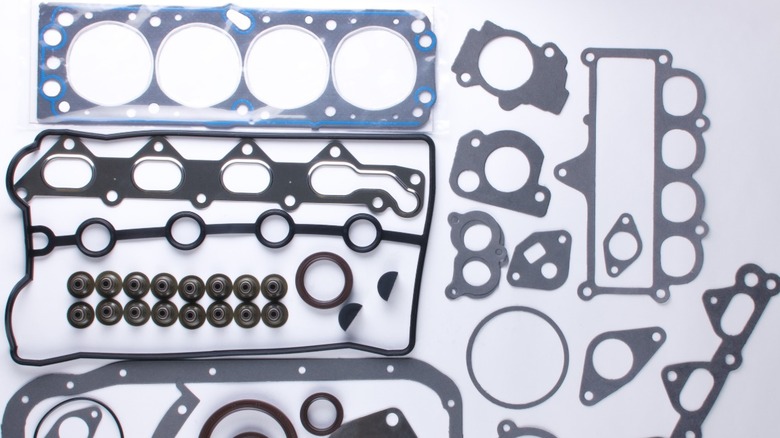
Like we said, there may be exceptions where you might get away with reusing a gasket. Specialist Sealing Products says, "Gaskets may be suitable for reusing if the gasket hasn't been exposed to extreme heat, the gasket hasn't been exposed or suffered from swelling or fluid exposure, and the thickness of the gasket is still intact, so compressibility is high, enabling the achievement of a strong seal." The document we quoted earlier from the American Society of Engineers says pretty much the same thing. For a vehicle's gaskets not to have been exposed to extreme heat or fluids, though, it can't really have been driven very far, if at all.
You should also check with your car's manufacturer. A 2016 GM technical service bulletin regarding multiple Cadillac models states that the transmission fluid pan gasket in use at the time can, in fact, be reused. This is probably the only kind of circumstance under which we would reuse a gasket. Of course, in some cases, you can use RTV as a gasket instead.
Really, if you already have your cylinder head, valve cover or oil pan bottom off, or you've disconnected your water pump, or anything else that involves removing a gasket, you might as well replace that gasket. There's no real economic advantage to reusing it, since you could be doing some costly repairs down the road as a result.