

Modern Cars Have More Than One Oxygen Sensor: Here's Why
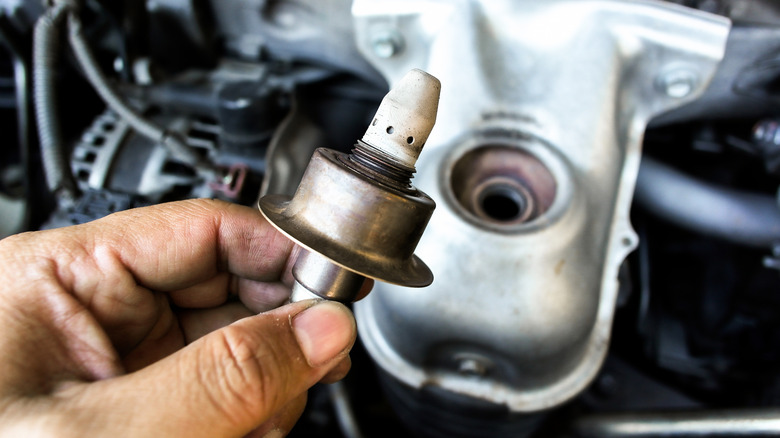
Let's begin with the basics here: An automotive oxygen sensor is part of the exhaust system and does what its name implies, sensing how much oxygen is in the exhaust gases. And that's important for at least two key reasons.
First, there's a sort of magic ratio between how much air and how much fuel should go together in a car's engine to achieve the most efficient combustion — it's called the stoichiometric air/fuel mixture and works out to 14.7 parts air to 1 part fuel. Getting it right is tricky, too, since the amount of oxygen in the air can be affected by not only engine conditions but also the altitude, ambient temperature, barometric pressure, and more.
Too little fuel, a "lean" ratio, cuts engine output and increases the likelihood of detonation, while also boosting the amount of nitrogen-oxide emissions. If the mix runs rich — meaning it has too much gasoline — you can get more power out of the motor, but some of the fuel can remain unburned, pass through the exhaust system, and then find its way into the environment as more dangerous emissions.
So one role oxygen sensors play is determining how close the air/fuel mixture is to its ideal ratio by directly measuring the amount of oxygen left in the exhaust before reaching the catalytic converter. Then, putting a second sensor in place, located downstream of the catalytic converter, can verify how well the latter is doing its job by determining how much oxygen remains at that point in the process. (Our catalytic converter deep dive can explain what's going on inside that component.)
How to tell if an oxygen sensor is going bad
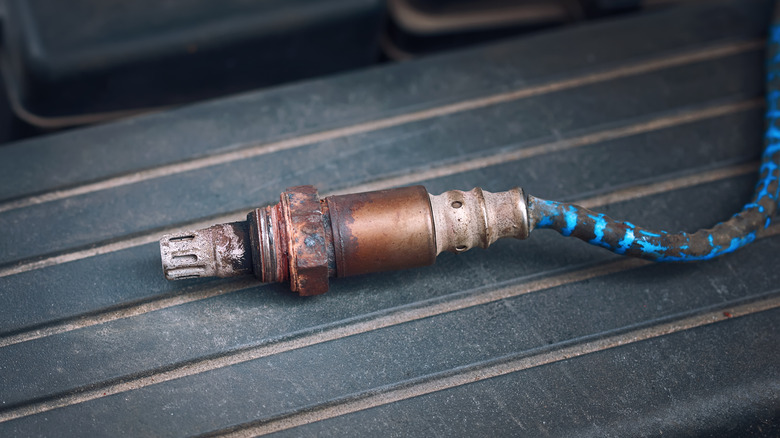
To be clear, the standard setup is actually two oxygen sensors per cylinder bank, because each bank produces its own exhaust. The outcome is that cars with V6 and V8 engines often have four oxygen sensors, giving them four potential failure points to keep an eye on; in fact, a faulty sensor is among the four reasons engine cylinders misfire. Your check-engine light can help with the monitoring, of course, and resetting it is only a short-term solution — it might keep coming back after it's cleared unless you solve the root issue.
There can also be noticeable problems with how your car is running, especially if an upstream sensor is damaged. The downstream sensor, remember, primarily checks on the catalytic converter operation, and the primary problem with a failure here is that your car will produce more emissions — not something you're likely to notice right away. A concern with an upstream sensor, on the other hand, is usually more obvious.
One oft-cited upstream issue is that a sensor can get contaminated or dirty and become unable to properly sense the amount of oxygen — often leading the system to add too much fuel to the mix. The results can include a rough-idling engine and sub-par acceleration. As unburned fuel remains in the exhaust system in this scenario, you may notice black, foul-smelling smoke from your tailpipe as well. Yet while having to replace your oxygen sensors stinks, it's a lot cheaper than replacing a catalytic converter — which could also be damaged by failing oxygen sensors.