

Consumer Reports Says EV Reliability Is Still A Problem For These Reasons
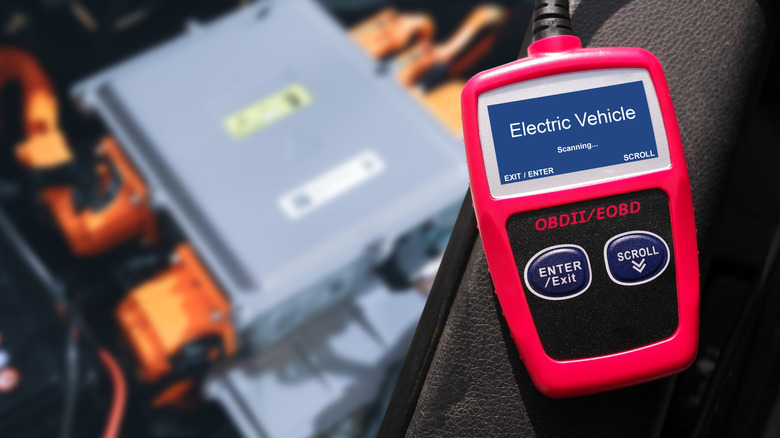
Consumer Reports has been putting product claims to the test for 90 years. The organization has seen a thing or two when it comes to cars, including the growing pains that come with technical innovation. Which is why we should pay attention when CR says that EVs are feeling those pains right now.
In the December 4, 2025, episode of the Consumer Reports podcast "Talking Cars", the crew broke down why new EVs and PHEVs are still plagued by reliability issues, relative to cars that rely on traditional hybrid or combustion engines. Although we're summarizing some key points here, it's well worth a listen, as the conversation reveals a lot of the nuanced considerations behind the bar charts and test data that millions of people consult each year.
Building any car is not easy. When you remove a transmission, engine, and all those associated parts, one would think things should become less complicated. Not so. EVs may not burn gas — or as much, in the case of PHEVs — but they're no different from their combustion-powered counterparts in that they rely on a lot of components working together to function properly.
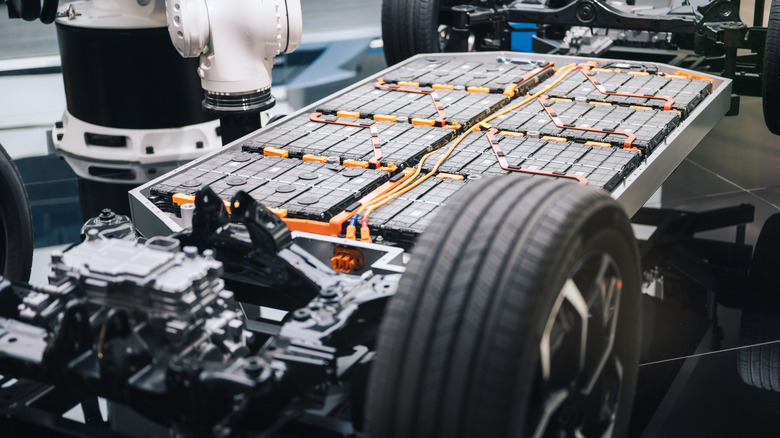
And as the CR team points out, many of those parts and systems on EVs are still in their infancy. New batteries. New charging systems. New heating and climate systems. That's compounded by the fact that putting them together is also still a relatively new process, even for the most experienced automakers. These are CR's reasons behind new EV reliability problems. What's interesting is that despite these challenges, CR data shows that many owners love them anyway.
Growing pains for EVs, tech pains for all cars
For EV skeptics — and a 41% drop in January EV registrations suggests there are plenty of them — all of this might make it easy or convenient to write the technology off. That's not the message here. On the contrary, Tesla cracked CR's top 10 for new car reliability for the first time since launching the Roadster in 2008. (Note that date. We'll revisit it.) The point is, refinement of all these complex systems takes time. We may think about EV motors, but less so about everything else.
Take heating, for example. EVs can't rely on engine heat for climate functions. Instead, they use heat pumps, or technology similar to space heaters, powered by the battery. The battery itself has to endure climate and operating cycles, while the chargers and inverters have to function properly. PHEVs feature EV and combustion engine for bugs to show up in.
What CR makes clear is that any new technology once the bugs are worked out, things tend to get better. Those of us who have purchased a not-quite-perfect first model year of a redesign, and have a stack of warranty claims to prove it, know the pain that can come with being an early adopter — regardless of powertrain.
The bigger truth is, technology isn't just an EV problem, it's an industry problem. Recently, the JD Power 2026 Dependability Study dropped, and revealed that new cars are more problematic than ever. Period. The prime culprit? Infotainment, which accounted for more than double the tally of the second-highest problem area, exteriors. In addition to their own particular issues, EVs and PHEVs are not immune to these software troubles as well.
Finding the sweet spot of efficient reliability
Coming back to 2008, this was also the first year that cars from South Korea — the Hyundai Elantra SE and Santa Fe — made CR's Top Picks. Relevance? Hyundai hit U.S. shores in 1986. That means it took both Hyundai and Tesla roughly 20 years to establish CR-worthy levels of reliability. And Tesla was new from just about the ground up. This isn't a reflection on EVs being inherently bad. It's a testament to how hard it is for even the largest automakers to sort things out. Electrification is no different, and some versions of it are now fully embraced.
Around 25 years ago, the Toyota Prius was an upstart, an unproven engineering marvel that looked like a pocket protector on wheels. Now? The Prius is hybrid perfection. You'll find hybrids up and down manufacturer lineups. They lack the dedicated charging circuitry of PHEVs, and rely on the engine to power heating and air conditioning like a regular gas car. The technology is robust, and if you're interested in a fuel-efficient, reliable new car that boasts electrification, CR says that hybrids are tough to beat.
If you are into an EV or PHEV, it's also important to note that reliability doesn't exist in a vacuum. For example, the Consumer Reports data shows that the Ford F-150 Hybrid has really high reliability scores, but low owner satisfaction, while the Mustang Mach-E has a very high reliability rating, and owners dig it. Documented problems are problems, but this, and several more examples like it, suggests that — as with any car — your own use case and expectations will factor into in your overall ownership experience.