

This Astronaut Drove The First Mid-Engined Car, Then The Sports Car World Followed
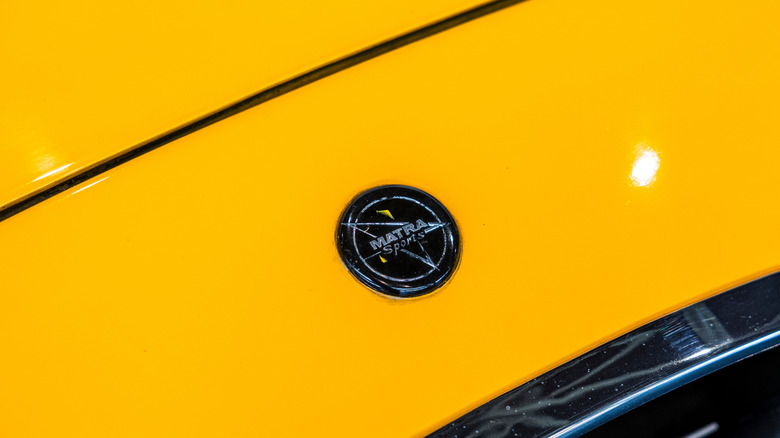
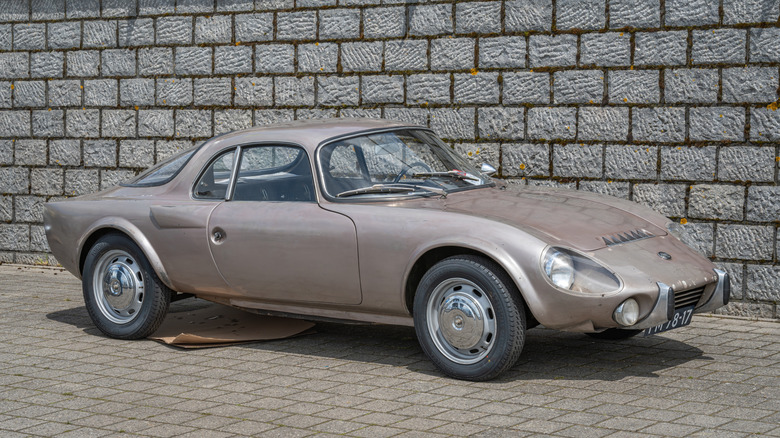
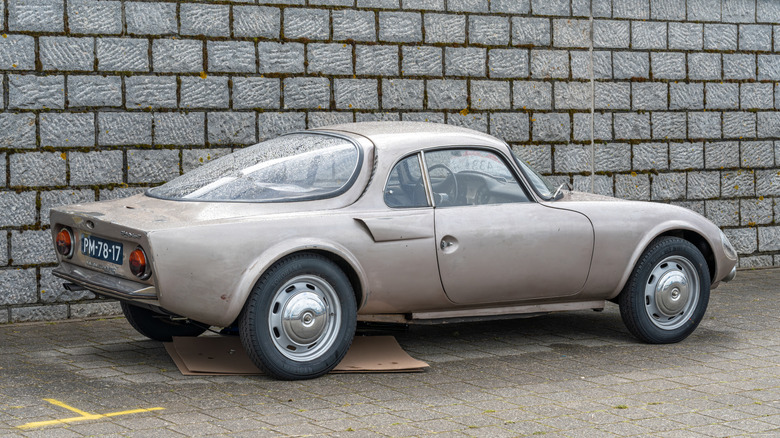
Many automotive firsts are often frequently disputed. The first muscle car, for example. Does that title belong to Oldsmobile or Pontiac? And is the first supercar a Mercedes-Benz, or a Lamborghini? The first mid-engined car, though, is not up for debate. That title belongs to the seldom-spotted and even more scarcely discussed Matra Djet — a French oddity that helped shape the future of sports cars forever. While largely forgotten today, the Djet does have an important place in history. This "first" attracted another "first" too: Yuri Gagarin, the first man in space. He paid 14,200 Francs for the privilege — 25% of what a new E-Type would have set him back.
The cover was pulled off of the Djet in 1962, and as the world's first production mid-engined car, it inspired the auto industry as a whole. It was originally dubbed the Rene Bonnet Djet, with Matra only supplying the bodywork, but just a couple of years later Matra bought the company out, and subsequently released the model in '65 as the Djet V.
A total of almost 1,700 Djets were built, with power ranging from 70 horses upward, and a total curb weight of circa 1,500 pounds — light enough to make a Miata look away from the mirror. That recipe of mid-engined design and lightweight construction is what makes the Djet so relevant today.
See, the Djet introduced a new way of thinking to the sports car world. Immediately following on from the Djet's release, automakers stepped into its footsteps and began releasing their own mid-engined models. But they only did so after the mighty Matra had made the benefits so incredibly clear.
Why the sports car world followed in the Djet's footsteps
Lamborghini's Miura, the De Tomaso Vallelunga, and Ferrari's captivatingly beautiful 250 LM. All examples of mid-engined super, sports, and race cars from the 1960s. And all beaten to the configuration by a petit manufacturer in France.
The pros and cons of front-, rear-, and mid-engined layouts have been covered in the past, but prior to the Djet's arrival, the mid-engined approach had been reserved only for racers. Okay, Porsche did release the mid-engined 550 Spyder in the '50s, but with fewer than 100 made, and all those kitted out as racing cars with a license plate, it's hardly a true production vehicle. However, the Djet took the performance benefits of having the engine between the axles, and combined it with everyday practicalities to catapult the layout into the sporting mainstream.
Those performance benefits include superior weight distribution, which in turn leads to more predictable handling, due to the engine not hanging over the nose, or dragging itself along behind the rear axle. That weight distribution also allows for better braking performance, and you're more likely to get better traction under acceleration in comparison to a typical front-engined sports car. After all, having the engine's weight sitting over the driven wheels helps to keep things neat and tidy when accelerating.
All this explains why the design found success in countless sports and performance models which have followed. From Aventadors to controversial Corvettes and back to quirky Djet-like toys such as the Alfa Romeo 4C, sticking the engine in the middle has remained a must-do move for automakers chasing the perfect sports car recipe.
Mid-engined cars aren't quite perfect, though
The positives of a mid-engine design then are well-established, certainly for sports cars at least, but there are downsides to the layout as well. For starters, a mid-engined layout doesn't work particularly well for anything other than a sports car. In the majority of cases, it restricts the car to being a two-seater as there's an engine sitting where you would normally find a second-row.
Sure, there are exceptions, like the McLaren F1 and Matra Murena, and the famously peculiar Toyota Previa, but most are strictly two-seaters. The layout also typically results in a lack of storage space too, as most mid-engine cars are quite low-slung, so the chance of a capacious trunk or 'frunk' is highly unlikely.
Frustratingly for owners, servicing and maintenance costs can also be a little higher in cars with mid-engine layouts. That's often true of sports cars in general, due to automakers using performance-oriented parts, but mid-engined cars also make access to the oily bits quite difficult too. As such, certain jobs may be more laborious, pushing up bills for otherwise fairly straightforward jobs.