

Only Rich People Can Afford Gas, The 'Good' News Is Only Rich People Can Afford Cars Anyway

It's Wednesday, and April Fools Day but we won't be yanking your leg around here. Because this is the Morning Shift — your daily roundup of the top automotive headlines from around the world, in one place. This is where you'll find the most important stories that are shaping the way Americans drive and get around.
In today's edition, it's the New York International Auto Show this week, so we're checking in with the bleak conversations around affordability and cars on both the dealer and the manufacturer's side. Plus America's top truck makers are preparing for a busy summer, and Tesla is back on its feet in Europe after only a year or so of Elon Musk keeping quiet about his politics.
1st Gear: National Dealers Association sees opportunity in 'affordability crisis'
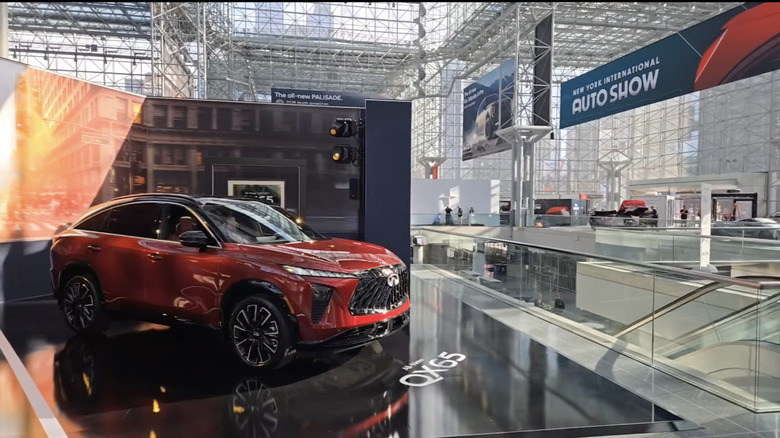
Everything is expensive now, and getting worse, and cars are no exception. In fact, cars help drive inflation. During a forum hosted by JD Power ahead of the media days at the New York International Auto Show, the National Automobile Dealers Association came up with a new, useful term for a rich person: "new-car buyer." Yes, we know, only rich people can afford new cars, and we didn't really need Thomas King, president of OEM solutions at JD Power, to point this out. But thanks anyway, King?
King made this point, not as a warning of what a top-heavy automotive industry means for America, but as positive for manufacturers. From Automotive News:
Fuel costs amounted to 2.8 percent of household income for all U.S. households as of March 26, according to JD Power, but a new-vehicle buyer has a higher median income. That means fuel costs make up just 1.5 percent of new-car buyers' household incomes.
"The new-car buyer is better positioned to deal with this," said Thomas King, president of OEM solutions at JD Power. "New-car buyers are intrinsically less vulnerable to fuel prices, even though they are nevertheless impacted."
The upbeat projections at the Auto Forum relied on a simple truth: These days, only wealthy people can afford to buy new cars.
The median household income for the country at large is about $85,000. The median household income for new-vehicle buyers is $153,000 — almost double that.
Upbeat predictions that the rich people will continue buying new cars and being able to afford to drive them is...something. Are we still using the term "ghoulish?" The panel did pay some lip service to how more affordable cars might be coming in the near future for us poors, but only if the policy environment is just right. Otherwise automakers will continue to make rich people cars only rich people can afford. Now that 11% of car loans are considered subprime, the highest rate since March 2016, this car market increasingly seems like one that is too top heavy to do anything but eventually fall.
2nd Gear: The cheap car maker says it can't make cars cheaply in the U.S.
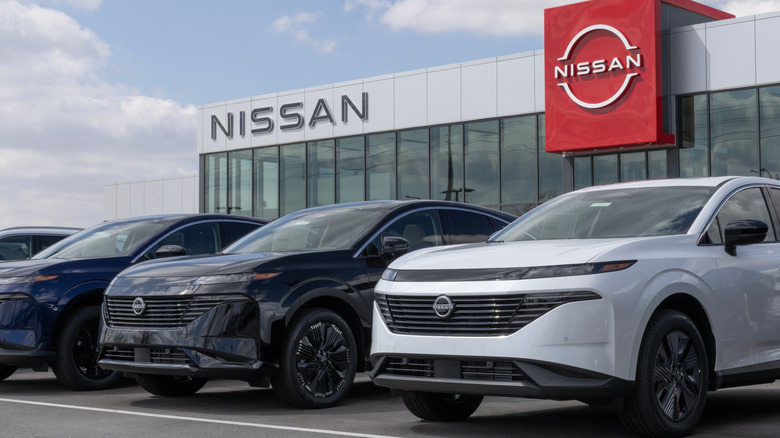
Speaking of cheap cars, the only place you're really going to find a good chunk of affordable options is from automakers who know cheap, like Nissan and Kia. The ongoing, never ceasing tariffs mess, however, means Nissan's mission of bringing sub-$30,000 cars to the unwashed American masses has never been more threatened, according to Bloomberg:
While Nissan has shifted some vehicle production to help reduce its tariff exposure, it still needs to make entry-level models like the Nissan Sentra compact sedan and Kicks crossover subcompact in Mexico to take advantage of lower labor costs, said Christian Meunier, chairman of Nissan Americas.
"We couldn't build these entry-level cars in the US at the same cost, we couldn't do it," he said at the New York Automotive Forum, a prelude to the New York auto show. "The problem is the margin."
Vehicles produced in Mexico accounted for more than one-third of Nissan's sales volume last year in the US. In addition to the Sentra and Kicks, that included a trio of now-discontinued models: the Nissan Versa compact sedan and upscale Infiniti QX50 and QX55 crossovers. Meunier said tariffs on the Kicks and Sentra cost Nissan around $2,500 to $3,000 per vehicle.
With new car prices hitting on average $50,000, and our government constantly decrying the affordability crisis (while doing nothing to address it) you'd think someone would fast-pass Nissan's tariff relief requests, but that isn't happening. Americans should probably brace themselves to see even the most affordable vehicles jump in price in the near future.
3rd Gear: Ford and GM keeping truck production lines at full blast this summer
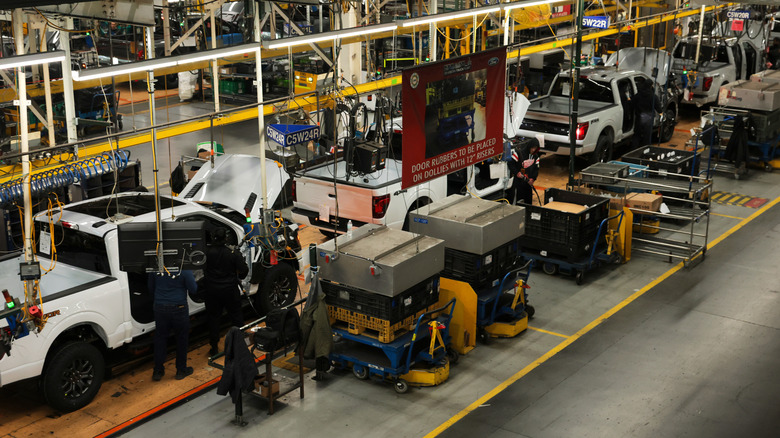
You know who couldn't give two unripe figs about the affordability crisis? Truck makers, who plan to keep the lines humming over the summer to meet demand. Ford usually winds down production at its plants over the summer, but this year it's keeping Ford F-150 and Super Duty plants–including Dearborn Truck Plant, Kentucky Truck Plant, Kansas City Assembly Plant, and the Ohio Assembly Plant–humming along. Ford is even adding third shifts and hiring more folks to work the lines. Just in time, too, as the Detroit Free Press reports Ford truck supplies are down 34% over last year.
Ford isn't alone in cranking out pickups. General Motors is also adding another shift this summer at its Flint Assembly plant. While there are no plans to hire on more workers, there will be plenty of overtime opportunities on the line as the General tries to keep up with demand for Chevrolet Silverado and heavy-duty GMC Sierra pickups, according to the Detroit Free Press.
Talk about an affordability crisis. Pickup trucks have gone from the workhorses of the American fleet to luxury vehicles in their own right. While car price averages hang around $50,000, a new truck price can easily bloat to $70,000 without even trying. Add rising gas prices and these fuel-hungry vehicles seem less and less appealing, but what do I know.
4th Gear: Tesla roars back in Europe partially due to its CEO's new policy of STFU
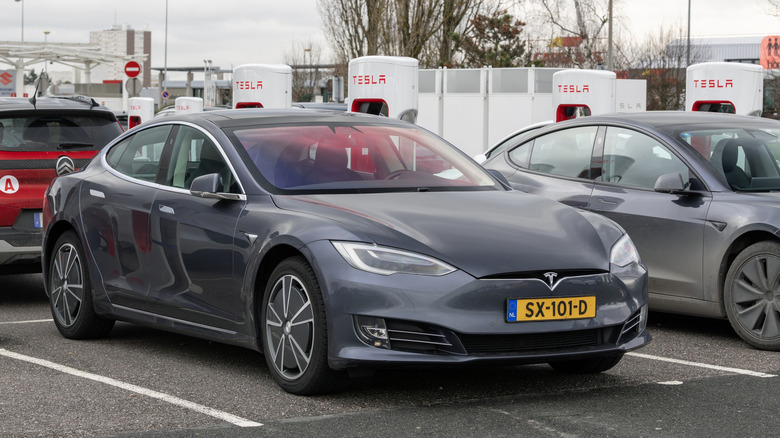
Thanks to gas prices in Europe going up faster than than the donations counter at a Jerry Lewis telethon, affordable electric cars remain all the rage overseas. The fact that those gas prices are definitely the U.S.'s fault is no matter, assuming U.S. companies get to make some cash off the crisis. Such is the case for Tesla sales in Europe. It seems Musk has finally been out of the political spotlight long enough to repair Tesla's tainted image, as registrations of the EV manufacturer's products have finally bounced back. From Reuters:
In France, 9,569 new Teslas were registered, data from French car body PFA showed on Wednesday, a 203% increase from a year earlier. That was just below an all-time high of 9,572 vehicles registered in December 2023.
Overall, monthly car sales in France grew for the first time since October.In Norway, Sweden and Denmark, Tesla registrations were up by 178%, 144% and 96% at 6,150, 1,447 and 1,784 vehicles, respectively, data from OFV, bilstatistik.dk and Mobility Sweden showed.They rose by 72% to 1,819 cars in the Netherlands and by 25% to 2,477 in Spain, according to the RAI and ANFAC industry groups.
[...]
Its first-quarter registrations grew 108% in France, 95% in Norway, 48% in Sweden, 50% in Denmark and 43% in Spain. They fell 23% in the Netherlands.
Reuters also cites Tesla's aging vehicle lineup and pressure from Chinese EVs for the reason Tesla sales cratered last year. Since those two problems are ongoing for the brand, one has to assume that the only real change–Musk getting kicked out of the inner circle of one of the least popular American regime in recent memory–must be doing most of the legwork here. Just remember, Europe: Musk hasn't changed, he's just gotten quiet.
Reverse: Goodnight, sweet Polish Prince
I'm starting to think those small planes are a bad way to travel.
The Fuel Up
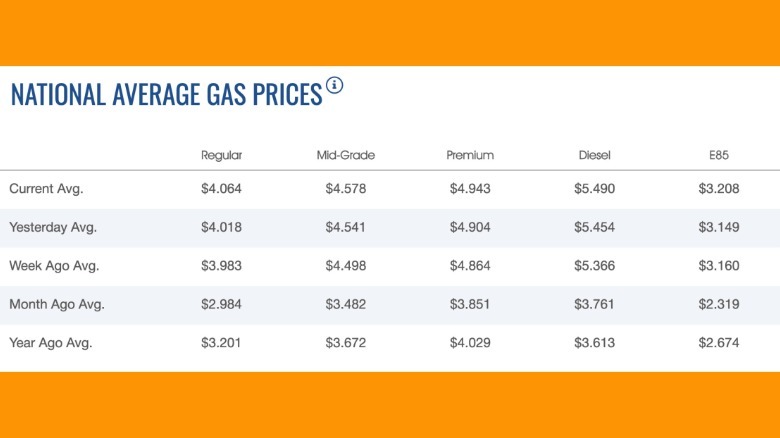
The creep up continues.
On The Radio: 'That's The Way We Get By' - Spoon
In my heart I'll always be a 2000s dirtbag with pain-in-the-ass musical tastes.