

Why Pistons Have Three Rings To Rule Combustion
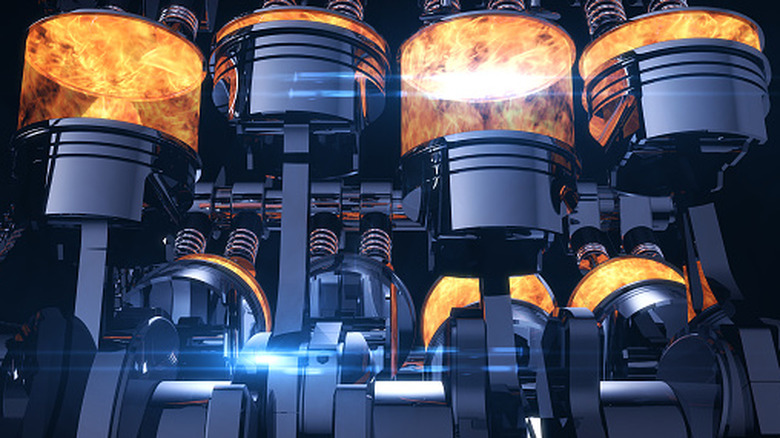
For how basic it is, a car engine's four cycles of combustion are truly fascinating. A perfectly timed valvetrain ensures that the air/fuel mixture enters, compresses, and then exits without piston-to-valve contact.
Then, there's the spark plug's time to shine; advancing or retarding it can either increase power or reduce knock. The vacuum that's created as the piston travels down the cylinder is utilized to power a myriad of other components and systems throughout the car. Then, a tight seal between the valves and the head ensures compression is as effective as possible. But the latter is just one part of the sealing going on underneath — the piston rings also play a crucial role here. Not only do they keep combustion nice and contained, they also prevent oil from entering the chat.
All sorts of issues can arise if you drive with bad piston rings, which is why conventional pistons have three rings to rule combustion. Let's dig deeper into what each piston ring does and discuss some of the finer details surrounding their design.
What does each ring do?
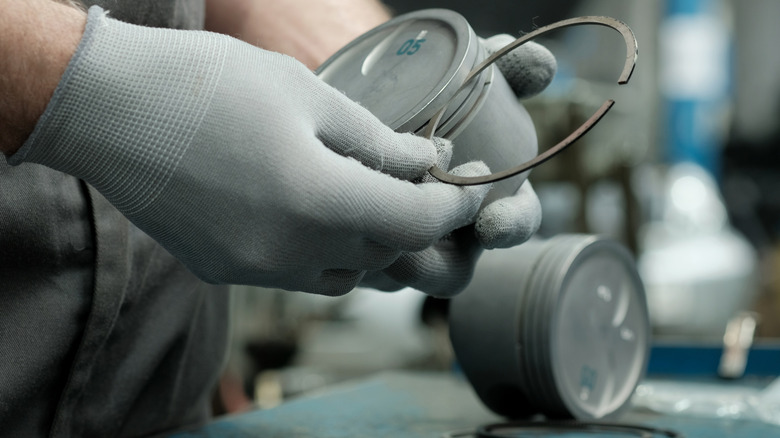
Imagining a piston sitting inside a cylinder: the two top piston rings are the compression rings, while the bottom one is the oil control ring. They each sit in a respective groove machined into the piston and are slightly wider than it. That's because a tight, perfect match between the piston diameter and the cylinder bore wouldn't move all that easily. With proper oiling, the ring's presence allows smooth, sealed movement.
The top two rings are compression rings. They ensure combustion gases don't leak down into the crankcase, keeping it contained in the combustion chamber and allowing it to fully exit through the exhaust valve (or valves) for optimal efficiency. Additionally, any leak-down from the combustion chamber deteriorates the engine's oil, reducing its effectiveness. The top compression ring does the lion's share of the work here as it's first on the scene, so to speak. The bottom ring is the oil control ring. This interesting-looking fella is designed so that it scrapes excess oil away, preventing it from seeping up into the combustion chamber and tainting the air/fuel mixture.
Altogether, the piston rings also disperse combustion heat into the cylinders, which is then cooled down by coolant passing by. If oil squirters aren't present to cool the pistons, they transfer around 70-80% of that heat into the cylinder walls. If they are, the oil that's squirted up there and sometimes circulates through the piston (if this is a design feature), allowing 30-40% of the heat to transfer into the cylinder walls.
But wait, there's more
Those are the rings' main duties, yet there's more. They also provide support for the piston, allowing it to not move too much in any direction inside the cylinder. This prevents the piston from making contact with the cylinder itself, which can score it and cause major compression and oil consumption issues.
The lower compression ring doesn't just seal off compression. Its job is hybridized (but not in the hybrid propulsion sense) — it both seals compression and prevents oil from reaching the combustion chamber. In fact, the top ring does a tiny bit of the latter, too.
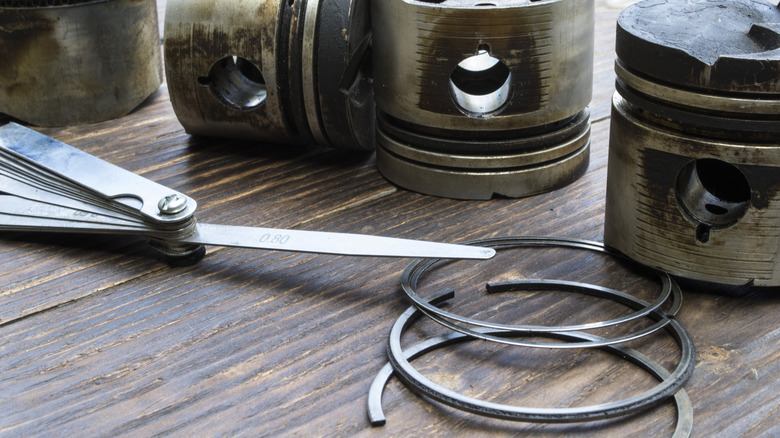
Every piston ring and engine manufacturer has a specification, so piston ring endgaps matter more than you think. When you look at a ring on its own, it's a single piece, but there's a gap cut into it to allow expansion and contraction. Too little gap, and the ring will press against itself and potentially break, causing catastrophic damage inside the cylinder. Too much gap, and too much combustion or oil may leak by, resulting in inefficient operation. Finally, the oil control ring isn't a simple ring, but actually three-in-one: two thin rails and a center expander, which is why its appearance is accordion-like. This design enables just enough lubrication between the piston and cylinder wall.
Pistons have three rings to rule combustion so that oiling and combustion can live right next to each other in peak-efficiency harmony, which translates to healthy compression, maximum power output, and long engine life.