

Smokey Yunick's Hot Vapor Engine Was Equally Genius And Horribly Unsafe
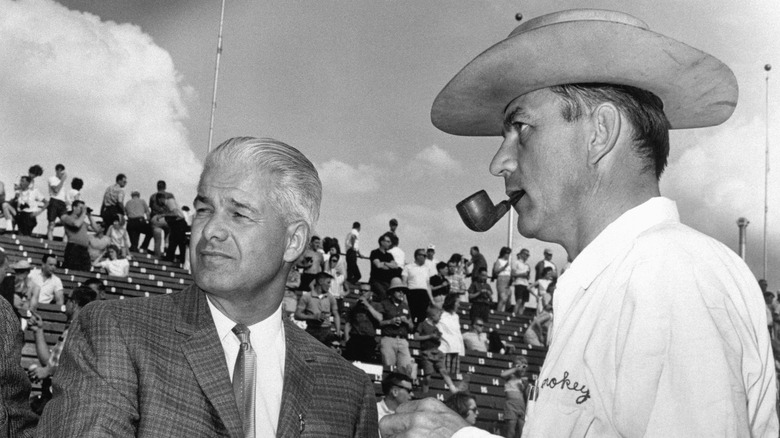
As one of the iconic figures of NASCAR in its wilder 1960s days, Henry "Smokey" Yunick not only had the creative engineering chops to help give his team a leg-up, but also a rebellious take on authority that defined the era. (You can watch NASCAR retell seven generations of stock car history, including the years where legends like Smokey thrived.) In a time when racing teams could play fast and loose with the regulations, Smokey honed his skill of unconventional approaches to maximizing performance. However, one of his most inspiring creations was revealed in the mid-'80s, when it was reported that he had been working on a Hot Vapor engine.
In an internal combustion engine, it's not liquid gasoline that burns, but vapor. And fuel isn't just made up of a singular compound, but instead, several. The problem is, each compound that makes up gasoline has a different thermal threshold required for it to change its state. Essentially, the combustion chamber only gets a portion of the total fuel that's ready for combustion, leading to lost efficiency during the process.
Smokey Yunick's unique build sought to utilize heat generated from the engine, raising the airflow to over 400 degrees Fahrenheit before it gets to the cylinders. This goes counter to conventional thinking, which seeks to reduce temperatures under the hood with something like a cold-air intake. However, at intentionally higher thermals, all those compounds within the fuel could properly vaporize, leading to remarkable output and efficiency. But then, why didn't Smokey Yunick's engine become the next big thing? Among other reasons, the Hot Vapor engine operated along a fine line of parameters lying somewhere in-between detonation and full combustion. It was highly sensitive to any irregularities, potentially destroying the engine and causing major fire risks.
How it worked, and what the Hot Vapor engine did under the hood of a Fiero
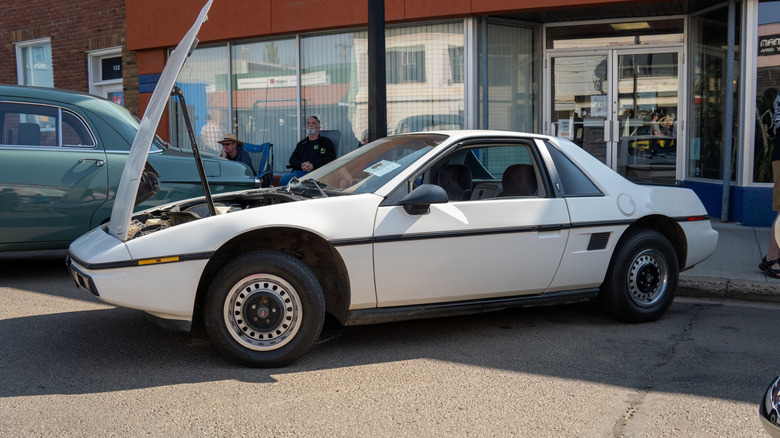
The Hot Vapor design captured heat from a few places in the engine, including the cooling and exhaust system. It also included a step where the mixture is pushed through a homogenizer, which more thoroughly mixed the oxygen and fuel together. During its journey to the combustion chamber, the mixture is continually heated by exhaust gases, helping to turn it into uniform vapor. Although, not all the details of the engine were made public, specifically how Smokey Yunick tuned his creation. Trush Yunick, Smokey's daughter, spoke about the engine's secrets with Hot Rod, saying, "Smokey is gone, and some of the secrets went with him."
So, what could the Hot Vapor engine actually accomplish in practice? Well, Smokey took a Pontiac Fiero's four-cylinder and dramatically transformed its capabilities. From less than 100 horses and barely 125 pound-feet of torque to start out with, the Hot Vapor power plant bumped output up to 250 horsepower and 250 pound-feet of torque. Suddenly, this Fiero could post 6.5-second zero-to-60 mph times while also enhancing fuel economy by an additional 16 miles per gallon over stock (with premium fuel).
But the aforementioned engine failure issues, fire risks, and concerns about durability overshadowed those enhancements. Thus, engine design has continued to progress without Hot Vapor backing it up, though scientists today are still looking for ways to eliminate waste in the same spirit Smokey Yunick did several decades ago. They're even taking advantage of exhaust gases in similar ways, which you can see from this nifty device that could turn your car's exhaust into electricity.