

How Bosch's Magneto Ignition Device Made Spark Plugs Possible
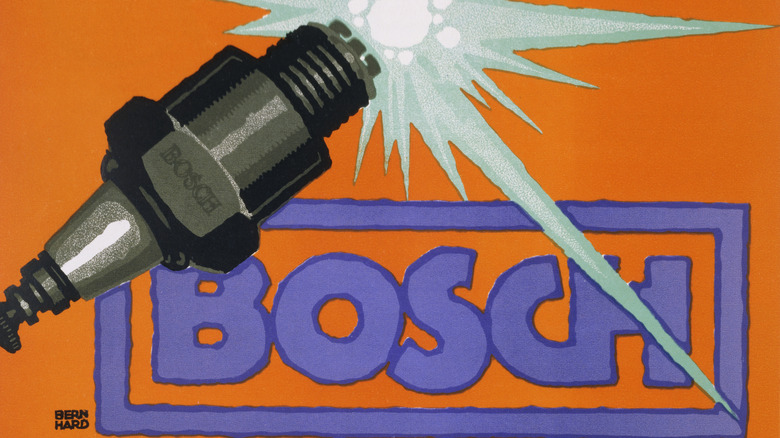
Bosch is one of the largest manufacturers of any kind on the planet. It makes everything, from power tools to dishwashers, and it also supplies just about every automotive part you can think of. However, the first major invention from 140-year-old German giant was not only its most important, but it was one of the most important innovations in the history of the automobile: the spark plug.
In 1902, Bosch was awarded a patent for the first-ever spark plug. On top of being an invention that would change the internal combustion engine forever, it's also one that's remained nearly unchanged since it was first developed more than 120 years ago. Okay, so the original spark plug was a bit bigger than the ones we know today, but it still fundamentally works the same way as it did over a century ago. However, Bosch wouldn't have been able to invent the spark plug without its first big invention. That invention, the magneto ignition device, laid the groundwork for cars no longer relying on batteries — and it made the company successful enough to create the spark plug in the first place.
What the heck is a magneto ignition device
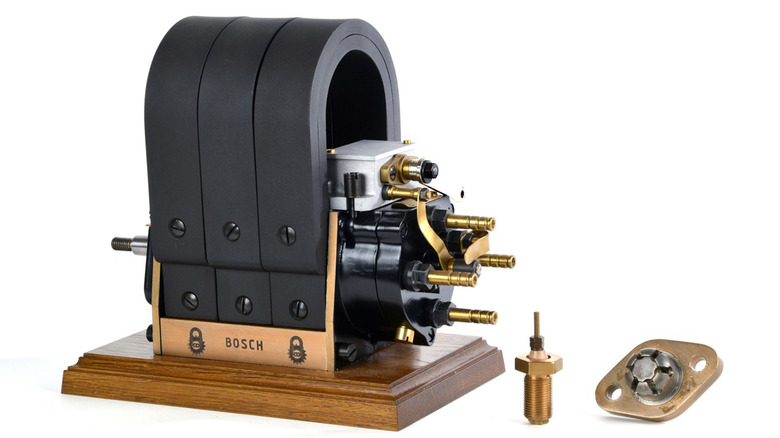
Despite sounding like something the X-Men would use to stop one of their most iconic villains, Bosch's original magneto ignition device (invented by Bosch lead engineer Arnold Zähringer) was the precursor to modern engine ignition. At first, the magneto ignition device was a means of generating small amounts of electricity. That electricity would then create spark for internal combustion engines by means of break-spark rodding, which was complicated, unreliable, and required unique designs for every engine it was used in.
Still, it was used as a means of igniting air/fuel mixtures at a time when internal combustion engine-powered vehicles were still in their infancy. Before Bosch, cars needed to carry batteries with them to power their spark ignition. But Bosch's magneto ignition system was compact enough to fit on an automobile and didn't require an external power source.
Since engine alternators weren't a thing back then, cars were limited in range by how long their battery could produce the engine's spark. But once automakers saw that Bosch's system ditched said battery, and let their cars go as far as their fuel would take them, it became the most reliable means of powering an automobile. That sudden demand helped get Robert Bosch's fledgling company off the ground.
The spark plug revolutionized the automobile
In 1901, Robert Bosch asked his head of development Gottbog Honold to develop a version of the magneto ignition that didn't need to use break-spark rodding. It only took Honold a few months to bring a new design to Bosch with a different system known as electric arc ignition. This system generated an electric arc between a pair of electrodes, thus igniting the air/fuel mixture in the combustion chamber. Electric arc ignition had been around since 1860, but it wasn't reliable until Honold rethought it with stronger insulation and electrodes, thus inventing the spark plug as we know it.
With the spark plug, Bosch's magneto ignition device quickly became famous for its robustness and reliability. In 1903, a Mercedes equipped with Bosch's new device won the Gordon Bennett Cup in Ireland. Then, in 1907, the reliability of Bosch's spark plug allowed cars to race from Peking to Paris. On top of Bosch's system being able to take thousands of miles of abuse without issue, it also allowed cars to achieve higher speeds than before.
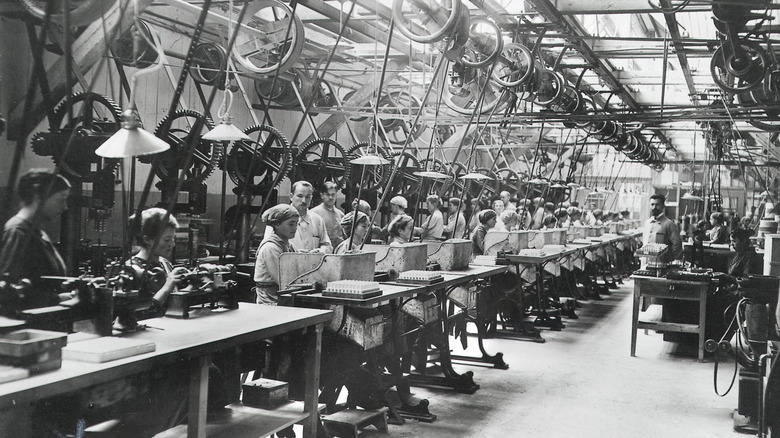
After automakers saw what the new magneto ignition/spark plug combo could do, over 50,000 orders started rolling in, allowing Bosch to open a whole new factory. The magneto system would stick around in later years, even showing up in some 1915 Dodge models. While the brand (along with others) has been improving upon the design ever since, spark plugs are fundamentally the same as it was in the early 1900s. And these tiny, cheap, and readily available items are what took Bosch from a struggling engineering upstart to the manufacturing giant it is today.