

Here's What Can Happen If You Park At A Broken Parking Meter
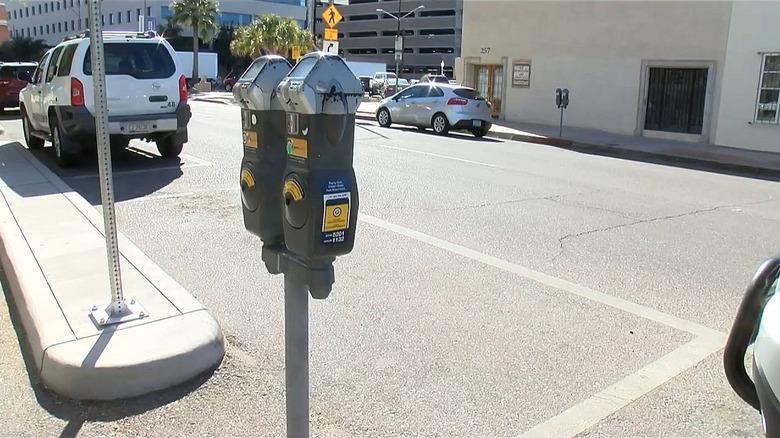
America has as many as 2 billion parking spaces, but it sure doesn't feel that way when you're desperately looking for an open spot on the street. When you find one, it often comes with a parking meter, which may or may not be functional. But if you happen across a broken meter, it doesn't necessarily mean you can park for free.
For instance, in San Diego, you shouldn't get a ticket parking at a broken meter. However, these meters let you pay in several ways, including credit cards, coins, and even an app. As far as the city is concerned, as long as one of those payment methods is active, the meter isn't broken. Hence, if the coin slot is jammed up, but the credit reader is working, you can't claim it's out of order.
In Los Angeles (which has a similar policy), of the 3,400 drivers contesting an inoperable parking meter in 2022, city officials dropped fewer than 1% of the cases, according to NBC Los Angeles. Of course, in California it isn't just humans susceptible to citations, as the driverless Waymo was slapped with 589 parking tickets in San Francisco in 2024.
In Washington, D.C. authorities won't cite your car at a broken meter, but only if they can clearly see its non-operational. As in, it's displaying an error message. Meanwhile, New York City has something called Muni-meters, which if unusable, allow free parking as long as there isn't a functioning Muni-meter nearby where you could pay — but not for longer than the Muni-meter would allow. Likewise in Eugene, Oregon, you can occupy a spot with a non-working meter, but not beyond the stated time limit. These are just a few examples from around the U.S., so consult your local laws to be sure.
The history of parking meters, what happens to the money, and who likes them
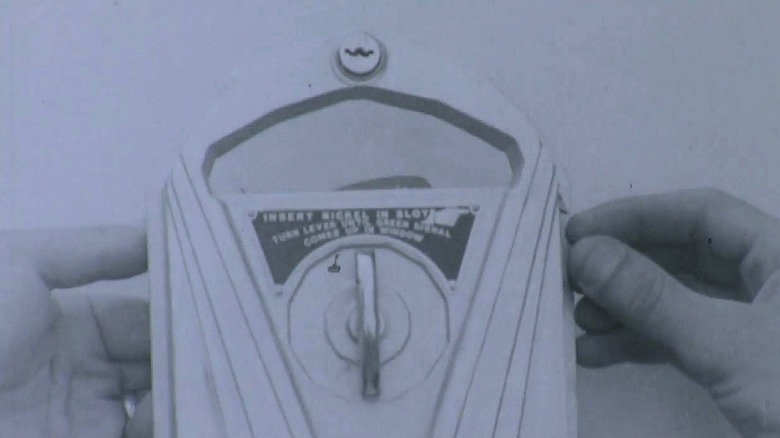
In 1935, Oklahoma City, Oklahoma became the first location on Earth to install a parking meter. Despite driver objections, meters started popping up all over and with increasing frequency, to the point that there were more than 140,000 of them just a handful of years later, per History.com. By 2019, the New York City Comptroller reported $228 million earned from parking meters the previous fiscal year. And what do cities do with the money? In San Diego, it's legally required to go toward infrastructure and repairs in the neighborhood where it's paid..
With parking fees adding up for local government officials, they obviously like meters. Retailers also benefit indirectly. Shops and eateries can enhance their bottom lines through increased customer traffic, since lingering costs patrons additional money as well as the inconvenience of needing to go back to their car and pay for more time, or remember to do it on an app.
And while local residents may not enjoy the fees, the proceeds can help them, too. Craig Gustafson, deputy director of the San Diego Transportation Department, told CBS8, "everybody parking on the street right now, that's feeding the meter. They're feeding neighborhood repairs as well." If you still loathe parking meters, consider that in some areas, open spaces can be in such short supply, you can actually purchase one, such as the time a $375,000 parking space in a Boston garage went on sale.