

Places Where Playing Your Music Too Loudly In Your Car Can Get You Into A Surprising Amount Of Trouble
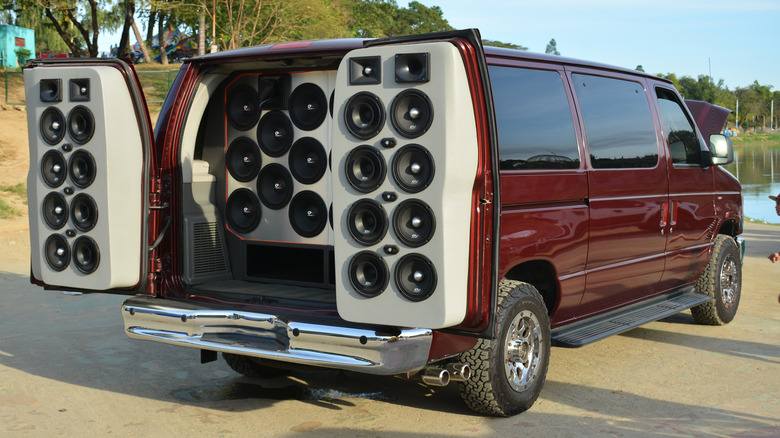
For some people, driving a car simply means going from point A to point B. It's nothing more than a necessary task required to complete daily chores. For others, the act of driving is often as important as the final destination. Some enjoy driving sports cars because of how they feel, others prefer open-top convertibles that make the experience more immersive, and some just love blasting music and cruising the streets.
However, blaring Celine Dion through the speakers might not be everyone's idea of enjoyment — especially near schools, churches, hospitals, residential neighborhoods, and courthouses. That is why certain communities have enacted various rules and regulations to ensure peace and quiet for the most vulnerable. Even so, in the U.S., there are no federal regulations prohibiting loud music from car speakers.
Enforcement primarily occurs at the state level, although not even all states have laws specifically addressing noise, let alone car stereos. In such cases, local jurisdictions usually step in with ordinances that can get you into real trouble if you dial the volume up too much. Here are the places where you are most likely to get ticketed for it.
Near schools, churches & hospitals
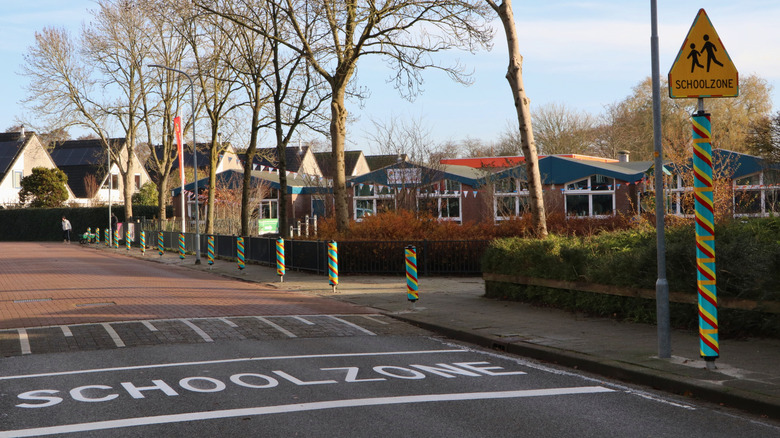
Florida cops can ticket you if they hear your car's stereo from just 25 feet away, and protecting vulnerable areas was partly why it was initiated. When ClickOrlando covered the subject, Florida Highway Patrol spokesperson "Trooper Steve" explained how the rule is typically enforced: "You are not going to get officers out on the interstate stopping cars for loud music, but what you are going to see is enforcement around schools, churches ... it's designed to bring peace to those areas." The law views it as a non-moving traffic violation, with established fines totaling roughly $114 or $116.
In Austin, Texas, if music is audible beyond 30 feet from your vehicle anywhere in the city, it's a Class C misdemeanor that can carry a fine of up to $500. Inglewood also prohibits noise that can be a hindrance to the operations of schools, with fines up to $100 for a first offense, $200 for a second, and $500 for repeated violations within a year.
The regulations are for more than just keeping the peace, though. Research published in the British Journal of Surgery found that elevated noise levels slow wound healing and lengthen hospital admissions, with the World Health Organization recommending overnight hospital noise not exceed 35 decibels. In Buffalo, New York, the city explicitly prohibits sound-reproduction devices within 500 feet of any hospital if it's audible inside the building, with violations carrying fines of up to $1,500 or up to 15 days in jail. Unlike schools or churches, which are protected during sessions, hospitals are protected at all times – meaning the restriction applies around the clock.
Near residential areas & courtrooms
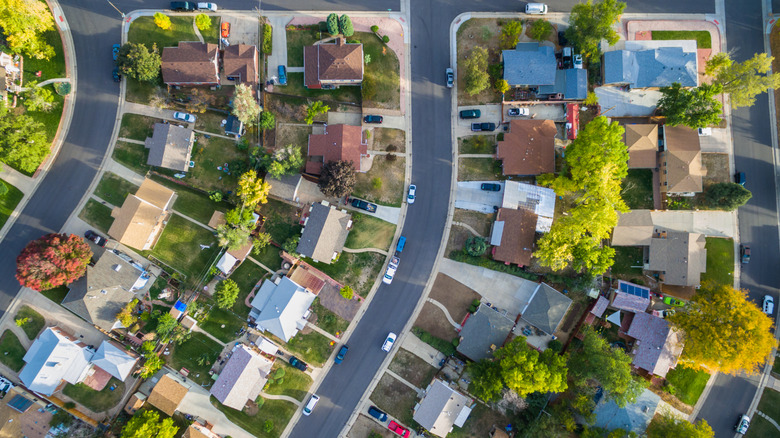
Because complaints about loud car stereos are often concentrated in residential neighborhoods, many jurisdictions strengthen penalties for violations in these areas. In Atlanta, regulations prohibit sound-amplifying devices in a vehicle at a volume plainly audible from 300 feet or more during daytime hours and 100 feet or more at night. If you ignore these laws, you are looking at a potential fine of up to $1,000, and in some cases even jail time.
Noise pollution is one of the most complained-about issues in urban areas, motivating neighborhoods to crack down hard. In Papillion, Nebraska, violations — including loud car stereos — are classified as a misdemeanor carrying fines up to $500 and jail time of up to three months. Meanwhile, Florida allows authorities to double fines and even impound vehicles for playing loud music near vulnerable areas like residential neighborhoods.
Noise rules in cities also prohibit excessive noise adjacent to a court while in session. This goes beyond the standard process of an officer or automated noise camera recording loud car music and following up with a citation and a court date. Judges can impose summary contempt if proceedings are truly disrupted, which means punishment is applied immediately and without a separate trial. Some states take this particularly seriously: the California Penal Code defines criminal contempt to include noise directly tending to interrupt proceedings. In this case, the conviction sits on your criminal record, which is a tall price to pay for the sake of listening to some louder-than-normal music.