

Factors To Consider When Choosing Between Rebuilt Engines And New Crate Engines
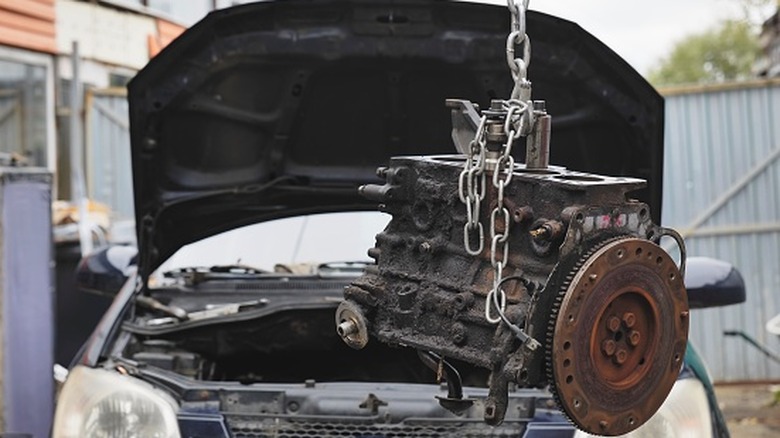
Nothing hurts more than the moment when you realize your project car's engine has imploded. Whether you are resurrecting a barn-find Mustang or building a drift Miata, a blown engine will likely be one of the most expensive parts of the build, and it can easily exceed the cost of parts such as brakes, suspension, or wheels.
When your motor gives up, you generally have two choices. You can take the rebuilt route, where you remove the blown engine and take it to a rebuild specialist to get it repaired and running again. The other option is to purchase a crate engine, which is a brand-new, factory-fresh engine that arrives on a wooden palette.
Choosing between the two isn't just about mechanical preference — it's a high-stakes financial calculation. An engine rebuild or replacement can cost a significant portion of your project car budget, and you could be one miscalculation away from having a large garage ornament. You have to choose between the allure of preserving numbers-matching components and the reliability of a new engine. Then there is the matter of time. Think of a rebuilt engine as a bespoke suit and a crate engine as a high-end off-the-rack tuxedo. Both will make you look good, but one might take 2 months or more, while the other can be worn to the party tonight. Let's get to the nuances dictating the choice between rebuilt and crate engines.
Rebuild: the budget alternative
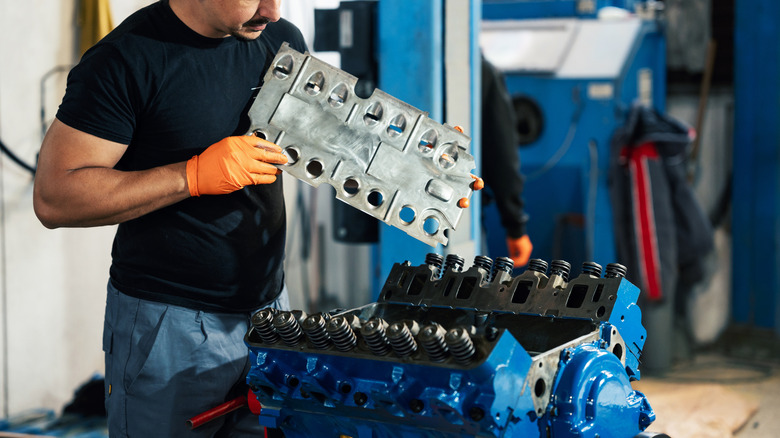
Rebuilding an engine involves disassembling it. You'll have to remove every damaged or worn part, like piston rings, bearings, and gaskets, and check every nook and cranny. Basically, it's the process of restoring the engine to new-like condition. It is the most common path if you are an enthusiast who is either sentimental about the original block or tight on cash.
The main advantage of a rebuild is cost control. If your engine block and head are in good shape, you may only have to pay for a rebuild kit and machine work. A partial rebuild can cost $2,500 to $4,500. However, the cost of an engine rebuild depends on how badly damaged the engine internals are and the parts you put into it. The beauty of a rebuild is the flexibility it allows for incremental upgrades, as you can choose every part you put into it, like a more aggressive camshaft or high compression pistons. You can easily spend upward of $10,000 if you opt for a high-quality, performance-focused rebuild.
However, a rebuilt engine comes with a significant set of cons as well. For one, the quality and timeline of your build are completely dictated by your machinist's skill and availability. A 2-week build timeline can easily spiral into a 6-month ordeal if a backordered part arrives fashionably late, or if your engine specialist is slammed with race season prep. Then there is the risk of hidden damage. Once a shop opens your engine and finds more serious issues, like a cracked block or a warped head, your initial quote can easily double.
Crate engine: the horsepower alternative
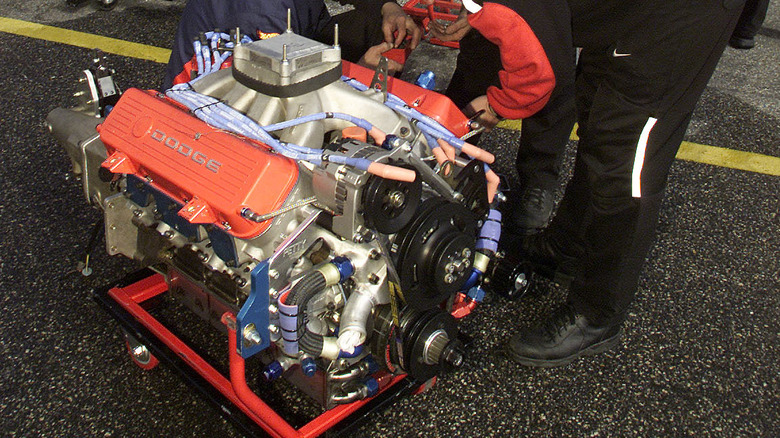
A crate engine is a fully assembled engine shipped directly from an OEM manufacturer or a high-performance engine builder. Think of it as an easy plug-and-play version of automotive restoration. A crate engine is nothing like a used engine pulled from a wrecking yard. These are typically brand-new engines, with new castings and zero-mile internals.
The biggest advantage of a crate engine is its predictability. When you order a crate engine from a reputable place like Chevrolet Performance or Ford Performance, you know exactly what you are getting. These engines have been dyno tested with consistent tolerances. More importantly, these engines often come with a factory warranty. Most major OEM manufacturers or engine builders offer 24-month or 50,000-mile protection, something you can't expect from your local machine rebuilding shop.
The downside of a crate engine is the sticker shock. You pay dearly for the convenience, the new parts, and the R&D that goes into building these engines. While an engine rebuild mostly uses your old block, a crate engine requires you to buy the whole assembly outright. Also, a modern crate engine often requires new accessories, a different transmission adapter, or even a standalone ECU to run properly. You aren't just buying an engine. You buy an entire ecosystem, which does not come cheap. A complete high-quality LS swap ecosystem can easily set you back $20,000. Or, if you have deep pockets and an even deeper engine bay, Chevy will sell you a new 632 big block. You could even go for the Dodge Demon 170's 1,025-hp crate engine. A crate engine may be the quickest way to get your project car on the road, but it is by no means the cheapest.
Popular crate engine options
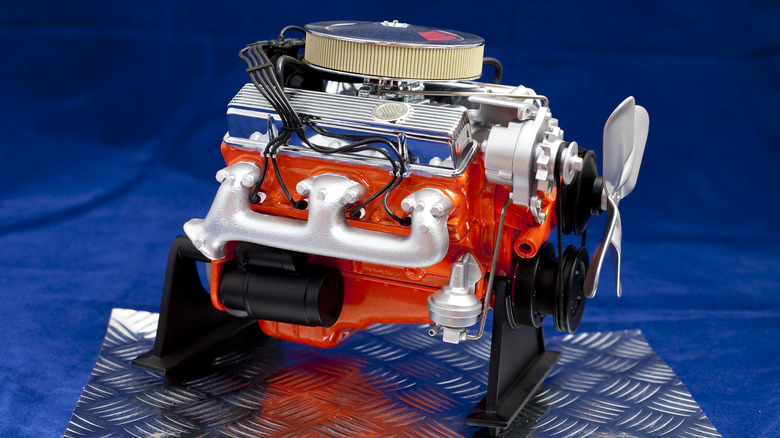
While there are quite a few crate engine makers, the crate engine ecosystem itself is dominated by a few legendary engine architectures. These are some of the greatest engines of the automotive world, often chosen for their reliability, aftermarket support, and ability to fit into almost any engine bay with proper fabrication. For example, here are five crate engines that give you serious horsepower. The most popular engine swap is the GM LS. The compact size and massive power potential make the LS3 the default V8 choice for everything from C10 trucks to E30 BMWs. A base 6.2-liter LS3 with 430 horsepower on tap typically costs $7,500 or more. The high-output version pushes the cost over $11,000.
If you are a fan of the Blue Oval, the 4th-gen 5.0-liter Coyote V8 is the gold standard. These are physically larger than the LS, due to the overhead cam architecture and produce about 480 horsepower out of the box. These engines generally cost around $12,000.
For Mopar fans, it has to be the Chrysler 392 Hemi. The 6.4-liter 392 Hemi crate engine pushes 485 horsepower and 475 pound-feet of torque, making it the perfect swap for B-body Chargers and modern Jeeps. These generally cost close to $10,000.
If you are on a strict budget, companies like BluePrint Engines offer dressed small block Chevys that cost between $5,800 and $7,000. Dressed here means a completely assembled, ready-to-run motor that includes bolt-on accessories such as the intake manifold, carburetor or fuel injection system, valve covers, oil pan, water pump, and distributors. These clean, simple, and close-to 350-horsepower engines are great for budget builds and classic cruisers.
Rebuilt versus crate: cost comparison

A cost comparison of rebuilt and crate engines goes beyond the initial invoice. Imagine that you are looking at a rebuilt or crate Chevy V8. Let's break down the costs.
A rebuilt engine could require machine work such as boring, honing, and decking, all of which could cost up to roughly $1,000. A rebuild kit that includes pistons, rings, bearings, and gaskets adds approximately $1,500 to the cost. Add labor for assembling the engine, and the price goes up by around $2,850. Overall, you are looking at an estimated total of around $5,350 for a V8 engine rebuild. Keep in mind that these figures could change drastically, depending on the engine, parts, and shop.
If you are buying a new GM 383-cubic-inch V8 from a reputable engine builder like Summit Racing, the dressed long-block crate motor costs around $7,300. This includes accessories such as a carburetor, distributor, water pump, spark plugs, and wires. It's ready to plug and play — well, almost.
You are saving nearly $2,100 by choosing a rebuild over a crate engine. However, the savings come at a cost. Suppose the rebuild takes close to 4 months, while the crate engine arrives in 4 days. The question you need to ask here is, "are the savings worth the lost time that you could have spent driving your completed project car?" Also, most engine rebuilds usually come with a measly 12-month warranty, and if your engine fails after the warranty period, you will end up paying for the whole thing again, plus the time lost. The same could apply to crate engines, but these are much more reliable, given their new internals.
Rebuild vs crate: which one to choose?
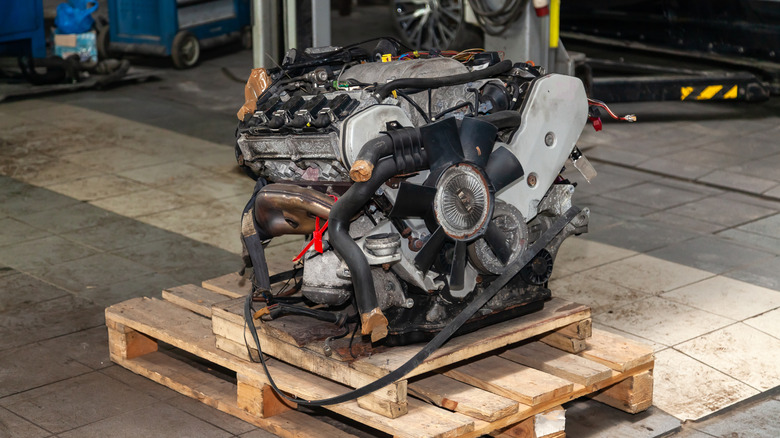
Choosing between a rebuild and a crate engine ultimately comes down to your goals and risk appetite. There is no wrong answer, only one that fits into your specific scenario. Go for an engine rebuild if you are working on a period-correct restoration and want the original numbers-matching engine block to be a part of the car to maintain its value. Another good reason to choose a rebuild is if you enjoy the process of building your project car rather than just driving it and want to be involved in the process. If you want to hand-pick every component that goes into your engine, a rebuild may be for you. Finally, if you are on a tight budget and have the patience to endure the long build time, go for an engine rebuild. However, make sure you have a trusted local machinist who specializes in your specific engine platform.
If you want to spend more time driving your project car rather than waiting for the engine to arrive, splurge for that crate motor. The same applies if you are building a "Restomod," where modern reliability and performance matter more than originality, and if you are looking for peace of mind that comes with a longer, factory warranty. It also makes sense to go for a crate motor if rebuilding the engine with fancy new internals costs more than an equivalent crate motor.
An engine can be called the heart of your car. While it will arguably be the most expensive part of your project build, it is also the one that will define the character of the car, especially when you drive it.