

Why You Might Run Afoul Of The Law If You Street Park In Front Of Your Neighbor's House
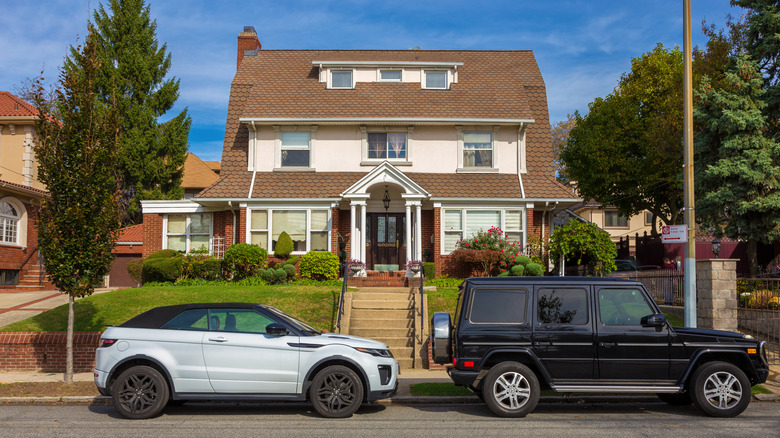
The road isn't a private space, so typically, it isn't illegal to park in front of a stranger's home. However, there are some things to keep in mind if you want to avoid trouble. For example, in Texas, as well as many other U.S. states, blocking a driveway (even your own) is against the law. This has to do with giving emergency personnel adequate entry into a property. In California, among several other places, parking any part of your vehicle on the sidewalk can also result in a ticket. Other circumstances that'll draw the ire of authorities include leaving your car too close to a fire hydrant and double parking, among other more obvious infractions. Depending on your location, getting a citation might be swifter than you think, as some U.S. cities might feel incentivized to bring the most money from parking tickets.
What about parking in front of a neighbor's house? Perhaps you're having a get together with friends and space is limited; will you get in trouble legally? Depending on the local laws, your car could get towed if left there for an extended period (such as a couple of days). In fact, if you left your vehicle parked in the city of St. Louis for five days straight, it's considered deserted — which is how this Acura MDX gathered $8,660 in parking tickets. Unless you're blocking the homeowner in some way, though, you should be fine with Johnny Law. However, just because it's not illegal, that doesn't mean everything is fine in the neighbor's eyes, and they could become angry enough to call the police.
The practice can raise tensions in the community

While it's not technically illegal, parking on the street directly adjacent to another's home can prompt frustration. One poster on the Bob Is The Oil Guy forums explained that his neighbors have been parking in front of his house, lamenting, "I guess with me it's more of a consideration issue. It's also hard to mow the ditch grass, as I have to schedule my mowing around [their] schedule of when they move their vehicle." This was a common issue among many online posters, especially if the drivers refuse to park in other empty areas instead.
While previous generations may have had more interactions and social contact with those on their street, a recent survey shared by Top Rail Fence found the majority of respondents actively avoiding those in their local community. This exacerbates issues like parking, which could be a simple misunderstanding between neighbors. What could be potentially resolved with a conversation can instead fester, turning a friendly street into one where you get the side-eye every time you step outside.
One way to help lower hostilities is to be upfront with neighbors, especially if you plan on throwing a party, for example. If those on your street know what to expect, and they know that it's temporary, you and your guests likely won't have anything to worry about. Unless you decide to intentionally make your neighbors hate you with rev-focused features on newer cars. Please don't.