

The Benefits Of Diesel Electric Semi Trucks, And Where They Still Fall Short
For over a century, the heavy-duty trucking industry has been in a long, committed, soot-stained marriage with the diesel engine. The major reason why the diesel engine has been the powertrain of choice for a long time is its energy density. A gallon of diesel fuel can pack a massive punch, which is much needed if you are trying to move tons of freight across the United States. The combination of diesel engine and 18-speed gearbox has been the undisputed highway king because it simply works. The setup is reliable, more than 100,000 diesel filling stations are scattered across the country, and an equal number of mechanics know how to fix them. That said, the diesel engine isn't the most efficient way to move heavy loads. A diesel engine loses massive amounts of energy to heat and friction, and it struggles to maintain momentum when climbing a steep gradient with full load due to its narrow powerband.
The railroad industry had figured out a better mode of transportation a long time ago. By the end of WWII, railways have relied on diesel-electric locomotives to do the heavy lifting. Now the diesel electric drivetrain isn't like the hybrid Prius in the traditional sense — they are more like mobile generators. The diesel engine in a diesel-electric setup does not turn the wheels, but acts like a massive generator that sends electrical power to electric motors at the axles. This setup is popular in the railways because it offers something a mechanical diesel engine can't, that is, 100% torque at zero RPM, eliminating the need for a massive, heavy transmission.
If diesel electric technology has been moving millions of tons of freight on tracks for more than a century, why hasn't this technology taken over our interstates?
The Edison approach
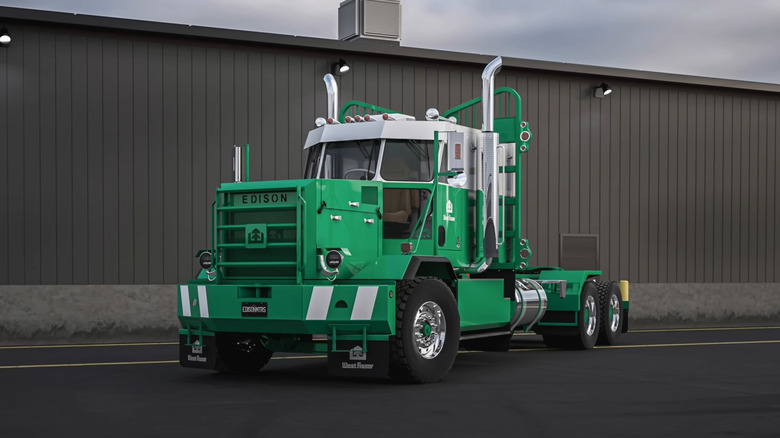
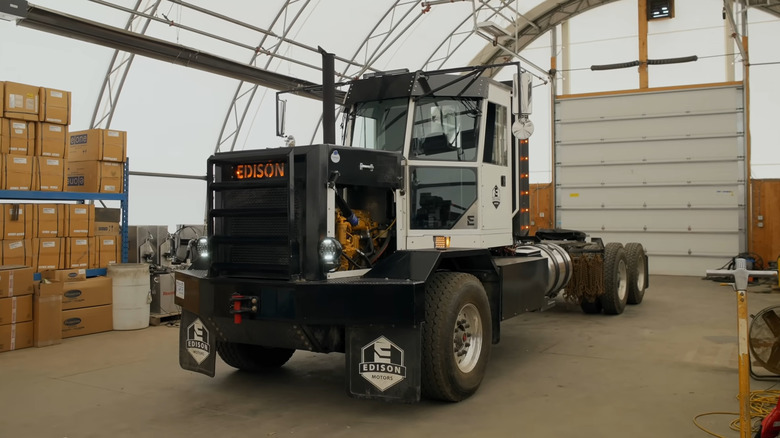
The most exciting development in this space isn't coming from a massive conglomerate in Germany; it comes from a small outfit in Canada. Edison Motors is bringing locomotive logic to the logging road, and the company has a rolling proof of concept that effortlessly hauls massive logs through the mud. Its hybrid semi truck, named after Edison's snuff film elephant, Topsy, might change the trucking industry. The Edison diesel electric truck works exactly like a locomotive. You have a smaller, high-efficiency diesel engine designed to run at a constant, optimized RPM, that charges a battery bank, which in turn feeds high torque electric axles.
A diesel electric setup works for a number of reasons, including the way it provides almost unending torque on demand. Mainly, its simplicity is staggering. By removing the complex transmission and long propeller shaft, you are reducing the number of moving parts that can potentially break down in the middle of nowhere. Secondly, the setup also allows for regenerative braking. In a traditional semi truck, coming down a mountain puts a lot of pressure on your brakes, making them prone to failure. In a diesel electric, the descent is controlled by the battery regeneration system, which also charges the battery packs.
However, for now, the Edison diesel electric is a vocational truck at best. The added weight of the battery and generators is a weight penalty for long-haul carriers. Federal laws levy heavy fines on semis crossing mandated GVW or axle weight, limiting the weight you can legally carry. So in an industry where semis are paid on tonnage, every pound of battery weight is a pound of haulage lost.
What about electric trucks?
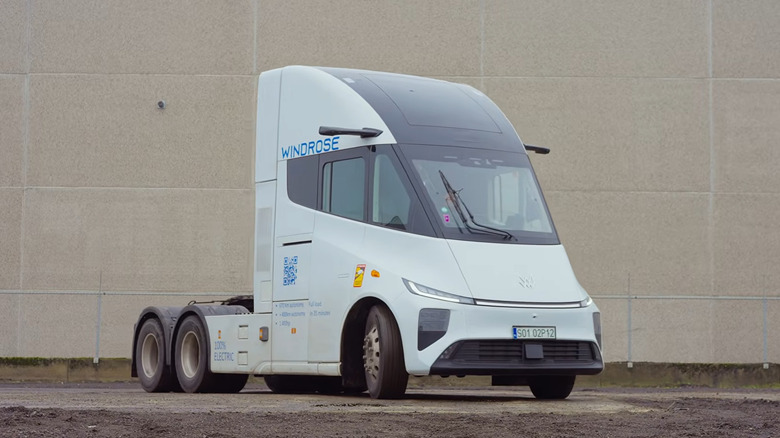
Can we really delve into diesel electric propulsion without touching upon the pure Battery Electric Vehicle (BEV) trucks currently pushed forth by companies like Tesla and Freightliner? Despite all the ways Tesla's Semi falls short, on paper, BEVs seem like the perfect solution for trucking, as they offer incredibly low operating costs and zero tailpipe emissions. For now, these trucks are perfect as last-mile delivery solutions and short-haul drayage, where the trucks could potentially return to a charging hub every night.
But when it comes to long-haul trucks, there are significant limitations. The current battery technology limits its energy density. This means that for an electric truck to achieve a fraction of a diesel truck's range, it needs to carry huge battery cells weighing thousands of pounds. Then there's the question of limited charging infrastructure, and the charging time itself. Even with a high-output charger, it would take you hours to recharge an electric truck's massive batteries. In an industry where travel time dictates revenue, such downtime will kill profitability.
Quite a few companies have figured out a workaround for the charging conundrum. The potential game-changer is battery-swapping technology, where a truck rolls into a charging bay, and an automated system swaps out its depleted 500kW battery pack for a freshly charged one, and the whole process takes minutes instead of hours. Battery swapping tech sounds promising, though the infrastructure cost for such a setup is astronomical, and the lack of a standardized battery pack is holding this revolutionary solution back. Until battery swapping becomes universal and standardized, pure electric trucks remain a good short-haul solution, while the long-haul crown lacks a strong contender for now.
Mining trucks show the way.
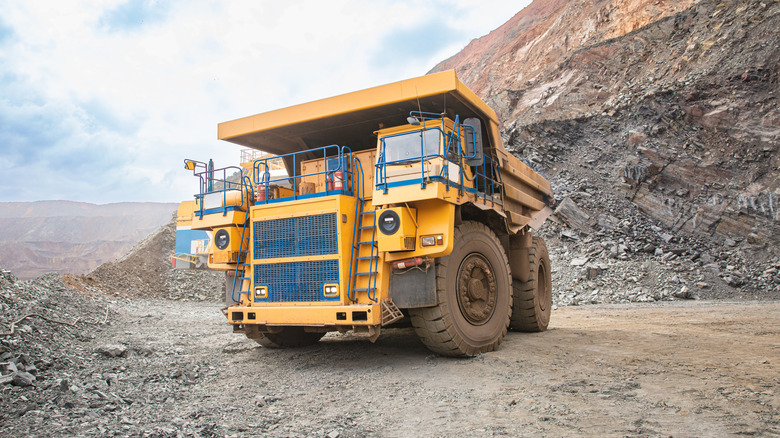
If you want to see a perfectly working diesel-electric ecosystem beyond railways, you will have to take a look at massive pit mines across the world. Mining trucks have been using diesel electric drivetrains for decades for the same reasons locomotives do: to carry massive payloads. These mining trucks are the size of apartment blocks and use multiple turbochargers to keep their diesel generators running at constant, peak efficiency, delivering megawatts of electricity to generate the torque needed to climb out of the deep mining pit.
The benefits of a diesel electric powertrain in a mining environment are both mechanical and economic. Diesel electric drivetrains have electric motors compact enough to be tucked into the rear axle. These motors provide precise control, which prevents the wheels from spinning and potentially destroying massive tires that can cost $100,000 apiece.
In some mines, these trucks use "trolley assist" systems, which basically are overhead electrical wires like those used by city streetcars. These are used to power the electric motors on the steepest inclines, saving massive amounts of diesel fuel. This trolley assist system is being used to develop eHighways or electric highways. Countries like Germany, and Sweden are experimenting with specially equipped hybrid trucks that connect to overhead wires via a pantograph. There were also plans for a wireless charging highway in Michigan. These allow EVs and hybrid trucks to charge on the go, while also directly powering the electric motors onboard.
Where do diesel electrics fall short?
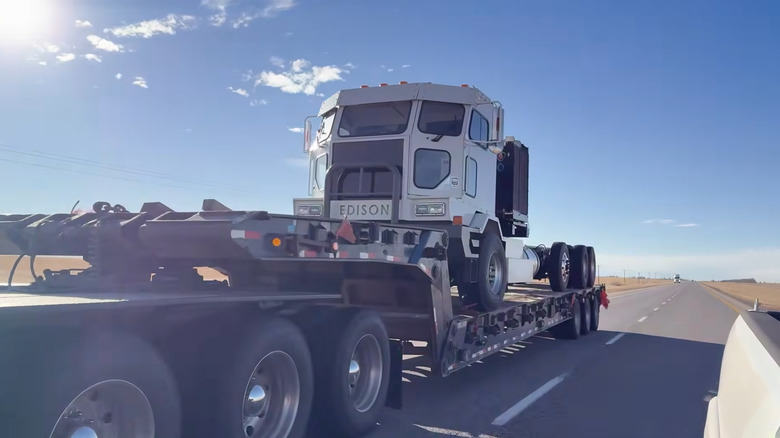
Despite the hype, diesel-electrics do have gray areas. We already spoke about weight and reduced payload, but there are others as well. If you are a long-haul trucker driving on a plain, straight road at a steady 65 miles per hour in a modern, aerodynamic diesel truck with an automated manual transmission, you are travelling in a fairly efficient manner. When put in the same scenario, a diesel electric truck might not be as efficient. Since there is no battery regeneration at constant speeds, the diesel motor has to continually keep running to feed the electric motors, leading to increased running costs. To add insult to injury, you are also lugging around the extra weight of the battery pack and electric motors. Diesel electric power plants work best when you have to climb hills (effortless instantaneous torque), or when you are coming down one (brake regeneration).
Then there is the matter of upfront costs. The initial purchase price of a diesel-electric semi truck will be significantly higher than that of a traditional diesel rig. Even though a diesel electric will cut fuel costs, it can take years for a fleet owner to recoup the buying costs. Then there is the matter of thermal management. Keeping the batteries and high-voltage electronics cool would require a separate, complex liquid cooling system. Then there are the challenges of serviceability, especially when niche, complex electronic systems are involved.
Can diesel electrics revolutionize the trucking industry?
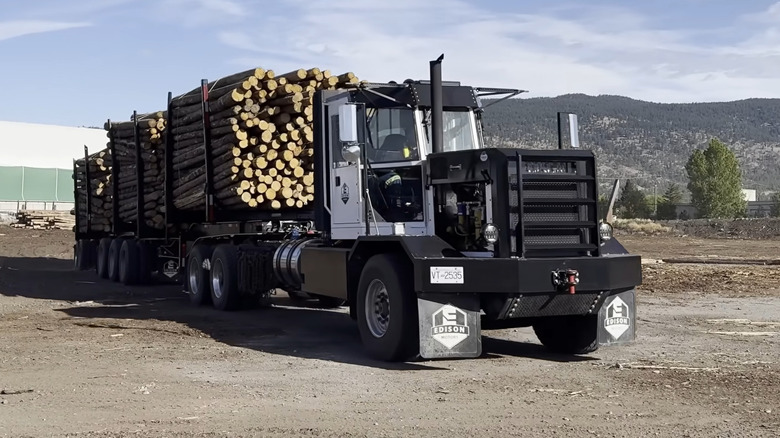
Diesel electric trucks do have the potential to change the way we move freight. Specifically, the potential lies in the kit approach, like what Edison Motors is doing with their pickup truck conversions. There is the possibility of a future where old "Glider" kits can be retrofitted with electric axles, small diesel generators, and battery packs. This would allow owners/operators to retain their classic truck look while enjoying the efficiency and torque of a modern diesel-electric powertrain. This is the ultimate best of both worlds scenario: The backup of a diesel motor and the efficiency and low running costs of an electric drive.
What's holding diesel electric trucking back right now is first-mover hesitancy. When it comes to trucking, fleet owners are quite conservative, buying only what they know. Then there is the matter of easy serviceability. A technician at a truck stop will know how to fix a Cummins diesel or an Eaton 18-speed transmission, but they might not be able to diagnose a high-voltage inverter or repair a liquid-cooled battery management system.
For now, diesel electric drivetrains should serve well in the "vocational" world, such as logging, mining, and stop-and-go regional jobs. Until the government steps up and dealer networks catch up with hybrid maintenance technology, diesel electric drivetrains remain a tempting "what if?" for the mainstream trucking industry.