

Five Times Different Manufacturers Used The Same Names As Each Other
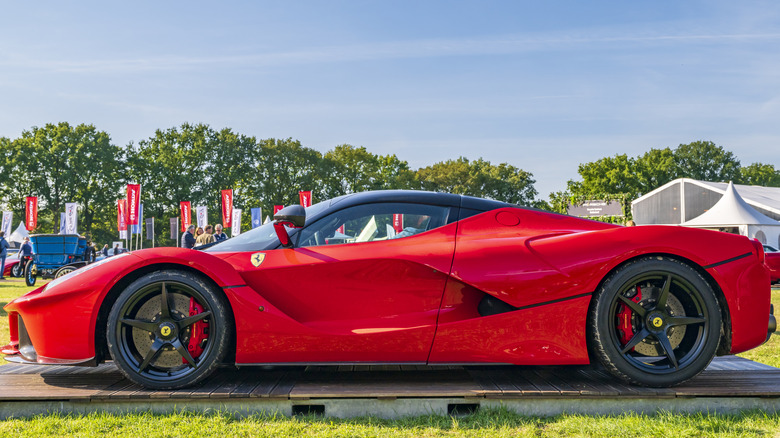
Many of us are fairly familiar with the Ford v. Ferrari movie saga, but the rivalry between the two brand played out many times on the track, the movie screen, and on paper. One of the more interesting examples of their conflict occurred when Ferrari named one of its Formula 1 cars the F150, which prompted Ford to assert a trademark claim. This wasn't the only time Ferrari used that name, either. As Tim Burton of The Shmuseum YouTube channel explains, when the Ferrari LaFerrari hypercar was in development, Ferrari used the F150 code name.
Burton notes that Ford reportedly sent a letter to Ferrari as a warning to not use the name, leading to the F150 strictly being kept as a code name rather than a public badge. Interestingly, Burton points out in the video that the prototype LaFerrari's steering wheel still features a plaque with "F150," a nod to the internal code name. This case of a name being used across competing brands isn't the only example, as Ferrari and Ford are only a part of the auto industry. There have been many other times different manufacturers used the same names as each other.
Ferrari, Pontiac, and others: GTO
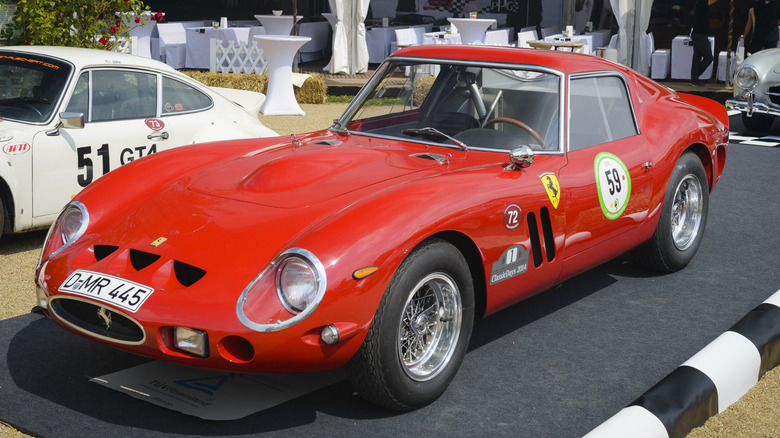
The name GTO originates from the Italian wording "Gran Turismo Omologato," which basically means "Grand Touring Homologated." It was Ferrari who used it first for its 1960s 250 GTO (a $70 million car that burst into flames at Goodwood) which is widely revered as one of the most valuable cars ever. Ferrari also used it for its naturally-aspirated limited-edition Ferrari 599 GTO, as well as its '80s Ferrari 288 GTO that succeeded the 250.
But as the name's appearance here might suggest, Ferrari wasn't the only brand that used "GTO" to spruce up its offerings. One of the most familiar ones is the Pontiac GTO, which followed Ferrari's footsteps and used the name only two years after the 250. Although the Pontiac GTO is still a respected enthusiast's car, it isn't nearly as coveted as the 250. Either way, Pontiac no longer exists, but that does not mean that the GTO nameplate story ends there.
If you are an Australian, you have probably also heard about the Holden Monaro GTO, an early 2000s performance coupe that was exported to the U.S. under the name Pontiac GTO. The GTO name also found its way into the Japanese market with the 1997 Mitsubishi GTO. This car was exported to the U.S. market, too, under the "3000GT" nameplate. Besides that model, Mitsubishi also used the badge for the 1970s Galant GTO.
GMC, Ford, and others: Sierra
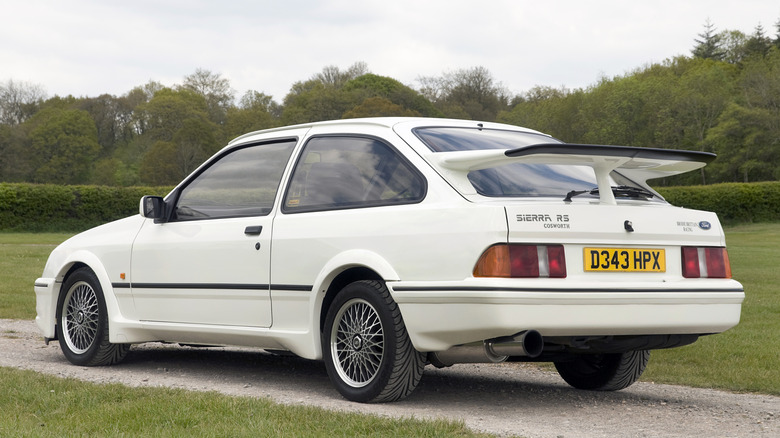
If you are an American, you've probably seen the GMC Sierra pickup truck a bunch of times — but probably not if you're overseas. Enthusiasts there instead had the pleasure of drooling over the Ford Sierra RS Cosworth, one of the most beloved cars in the 1980s U.K. and Europe. The Ford Sierra was a mid-size family car manufactured between 1982 and 1993, and the Cosworth RS (which we also highlighted as one of the best fast Fords of all time) was the top-spec model.
These two cars perfectly show the differences between product placement in the U.S. and Europe. The former was where full-size pickup trucks have always been desirable and the latter was where compact and mid-size family cars ruled. The Sierra nameplate was also used for the Dodge Sierra, a 1950s U.S. performance wagon that was based on the Dodge Coronet platform. The Sierra nameplate also graced Indian cars, notably the 2026 Tatra Sierra SUV which used the name as far back as the 1990s. It's also worth mentioning the Suzuki Jimny, which was offered in Australia under the Sierra name, as well as the Dutton Sierra, a British kit car from the 1980s.
Bentley and Lincoln: Continental
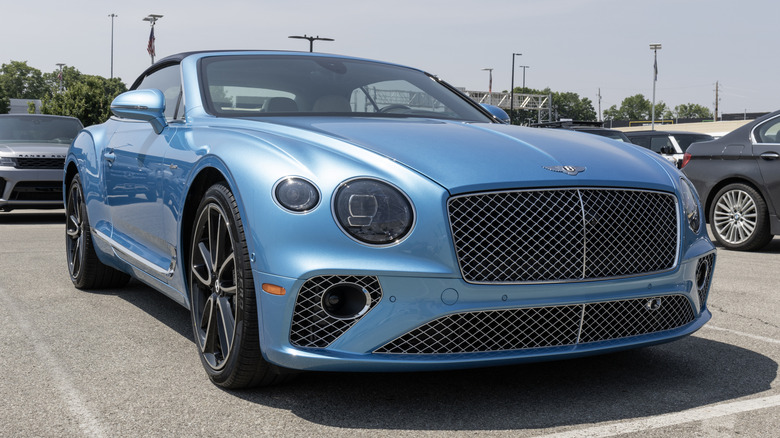
The Continental nameplate is typically associated with top-end luxury, but the brand behind it changes depending on who you ask. If you ask someone from the U.K., they are likely going to point toward the Bentley Continental GT, a two-door luxury coupe that traces its origin back to the 1950s. In the U.S., although the Bentley is indeed popular, the flagship Lincoln Continental is also a household name. Even more famously, although not exactly a car manufacturer, you can also find that name being used by the Continental tire brand.
The Bentley Continental GT is still in production, although its customer base has been somewhat eroded by the popularity of the Bentayga SUV. The Lincoln Continental died in 2020 because of the SUV mania endured by the British coupe. Lincoln predated Bentley's use of the name by more than a decade, though, because its first Continental appeared in 1939.
Although Bentley and Lincoln used the same name to describe touring luxury, there are plenty of different reasons to like both Continentals. However, besides these, the name has also been associated with the "Continental Automobile Company," a U.S. car company that was in the business of making luxury cars in the 1930s. Some of the most popular cars by this company were the Continental Beacon and the Continental Flyer.
Dodge, Daimler, and GSM: Dart
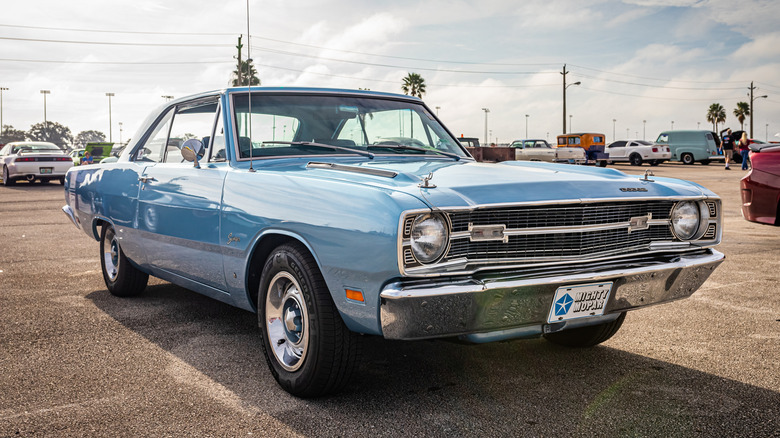
The first Dodge Dart came about in the 1960s and was in production until 1976, quickly becoming one of Dodge's most popular models at the time. When it was revived for the 2013 model year, although it wasn't a perfect revival, owners enjoyed it for its handling, surprising reliability, and decent power train options. Besides these examples, the name Dart also appeared on the late 1950s/early 1960s Daimler Dart. This was a lightweight two-seat sports car often called "SP250" because Chrysler objected to the "Dart" name in certain markets.
In South Africa, the name was also associated with a 1958-1964 model from Glass Sport Motors (GSM). Similarly to the Daimler Dart, this car was also made out of fiberglass and was marketed as a two-seat sports car. It relied on Ford and Alfa Romeo engines, and even though this may sound like it was a rebadged Daimler, it actually was not. The GSM Dart was one of the first sports cars that came out of Africa, and there are likely just about 116 that were ever made. For our Australian audience, we also have to note the quirky 1950s Goggomobil Dart, an Australian-based tiny car with 18.5 horsepower and only 761 pounds of weight.
Nissan, Mercedes-AMG, and others: GT-R (GTR)
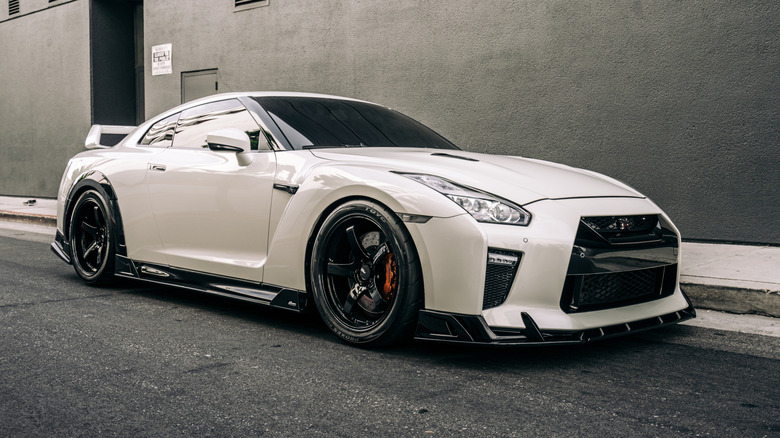
According to iSeeCars, the name GT-R in Nissan's lineage means "Gran Turismo Racing." As was the case with "GTO," this nameplate has graced the metalwork of many cars throughout history. But probably the most famous of them all are the ones found in Nissan's range, thanks to JDM favorites like the R-33, and the R-34, and the Nissan R-35 GT-R — which was discontinued in 2025. The badge can also be found on the Mercedes-AMG GT R, a track-focused version of the Mercedes-AMG two-door. McLaren also used the GTR name for its race version of the iconic 1990s F1, and if you played the 2005 video game "Need for Speed: Most Wanted," you will surely remember the iconic BMW M3 GTR that was so heavily featured in it.
Mercedes-AMG used the GTR badge before its two-seater sports on the now multi-million dollar Mercedes CLK GTR. Interestingly, that model actually based its existence on the McLaren F1 GTR since Mercedes secretly took a retired F1 GTR chassis (#11R) for testing and development of its own LMGT1 car. Mitsubishi also used the name for its early race-spec Mitsubishi Lancer GTR that later evolved into the EVO series.