

Can Semi Truck Tires Be Plugged?
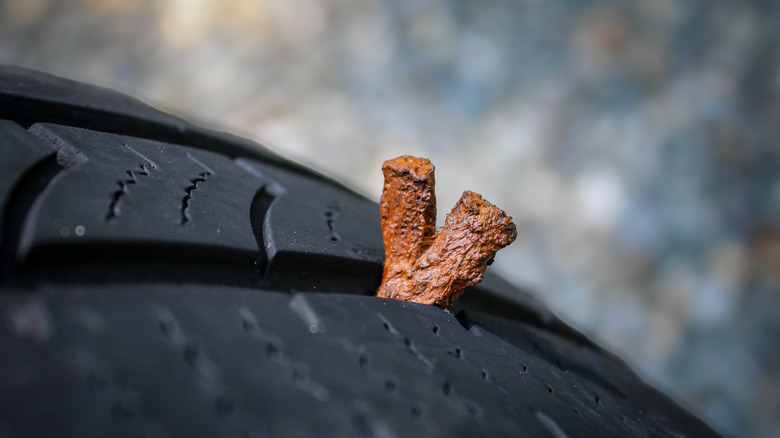
To plug or not to plug is a thought that comes up whenever there's a puncture. The truth is, plugging a tire can be an easier, more convenient way to patch a flat, but it goes against Department of Transportation (DOT) standards for repairing punctures in passenger and light truck tires. And per a U.S. Tire Manufacturers Association (USTMA) product service bulletin, you should never repair a tire without removing it from the wheel or rim.
That leaves plugging out, since the process typically doesn't involve removing the tire to repair it (which is why plugging is more convenient). To hammer the point, the USTMA insists on never using only a plug (stem) or only a patch to fix punctures. The safer route is to remove the tire from the rim, fill the hole from the outside with vulcanizing material, and patch the inner liner: a plug-and-patch combo.
Now, think about this: if the DOT and USTMA were finicky enough to issue procedures for repairing flat tires in passenger cars, wouldn't that apply even more to commercial vehicles and semi trucks? As it turns out, the USTMA also has issued a Care and Service of Commercial Truck and Bus Tires manual. Chapter 4 covers "Repair, Retread and Regrooving," and the rules are crystal clear: never repair a tire without removing it from the wheel, never use only a plug or stem, and never use only a patch.
So can semi-truck tires be plugged? The answer is yes if combined with an inner repair patch. But if we're talking about a plug only, the answer is no, since insisting on a non-DOT-compliant repair could lead to a host of legal problems when the tire fails.
How to fix semi truck tires safely and legally
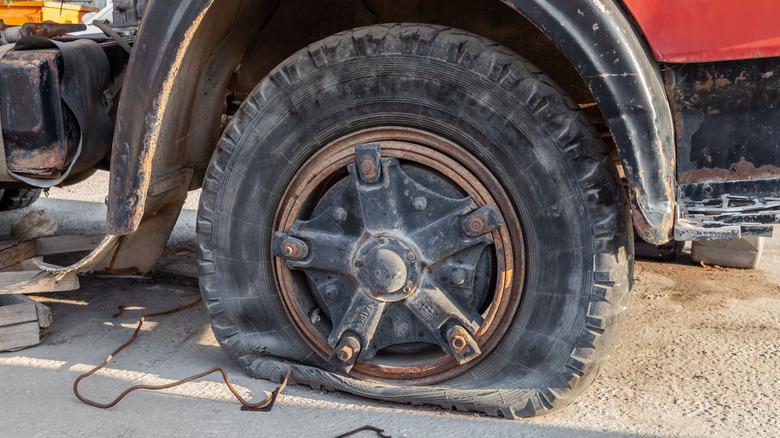
The USTMA is quite thorough and to the point on how to repair punctures in truck and bus tires. For instance, the manual says to never return a tire for active service without following all DOT-approved procedures, which include a physical inspection by a professional tire technician. Moreover, the guidelines state that underinflated tires driven for short distances could be permanently damaged even after correcting the inflation pressure, which also means the tire could be ineligible for repair.
For repairing punctures, within the tread area only holes up to three-eighths of an inch can be plugged and patched. Larger damage on the shoulder or belt is not appropriate for a plug-and-patch, but rather a more comprehensive section repair by a USTMA-approved tire repair facility. Other than those, the procedures are no different from fixing a flat tire on a Corolla or Ford F-150: removing the tire from the wheel, inspecting the damage, preparing the punctured area, filling the hole with a rubber stem or vulcanizing chemical, and sealing the inner part with a patch.
Tire plugs are a short-term fix, and we're not stopping you from plugging away. However, driving on damaged or poorly repaired tires is a bad idea and can lead to tire failure, tread separation (Toyo and Nitto recalled their truck and SUV tires in mid-2025 for exactly that), and fatal crashes.