

It's Not Always Legal To Ride Your ATV On A Snowmobile Trail
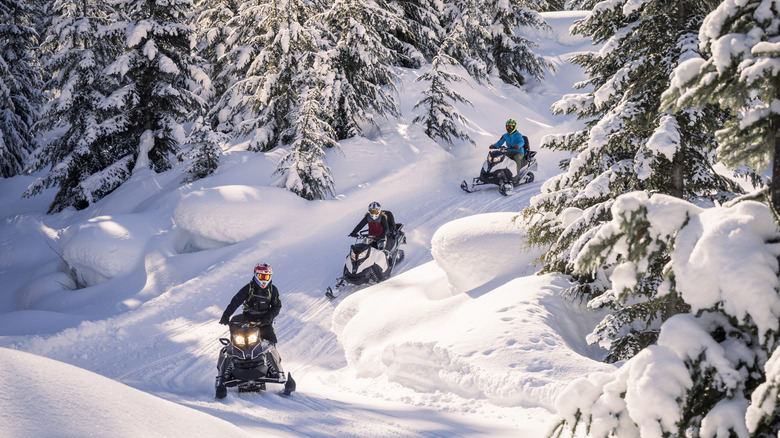
Snowmobiles and all-terrain vehicles (ATVs) are both great means of traveling the backcountry, getting into rugged areas inaccessible by automobiles, and having fun outdoors. You do need to take extra caution when riding, as even a motorsports legend isn't immune from suffering an accident, such as when Hoonigan Industries co-founder Ken Block was killed in a snowmobile crash at just 55 years old.
And before heading down the trail, you'll also want to keep an eye on how it's designated, lest it land you in trouble with the authorities. Some backwoods tracks are classified as shared-use and permit both ATVs and snowmobiles, though it may depend on local conditions. For instance, the Minnesota Department of Natural Resources says trails in the St. Croix State Forest are among those allowing ATVs on snowmobile routes, but only when tempereatures drop to 30 degrees Fahrenheit or lower.
However, it's much more common to find four-wheelers prohibited from most snowmobile trails. For example, in New York and Maine, it's generally illegal and if caught breaking the law, you could be subject to fines or more. It's not just snowmobile trails you need to avoid on a quad in some areas; riding an ATV to a gas station in Ohio could get you fined (and the store clerks too). But what's the big deal if other off-road vehicles use a snowmobile trail?
Why snowmobilers don't want your ATV on their trail
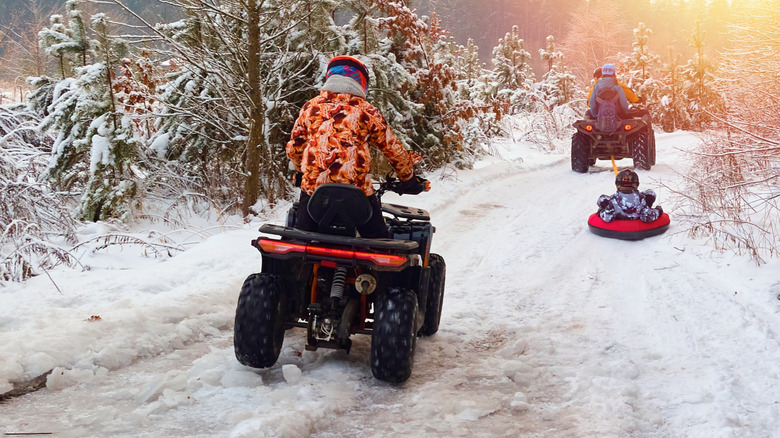
Cultivating a proper snowmobile path requires a significant amount of work. For instance, fallen trees and debris must continually be cleared from the paths, areas graded or leveled, and trail bridges repaired, among many other ongoing projects. And this is just for an already-existing route. A brand-new trail includes clearing land and coordination with property owners, along with state and national governments.
According to The American Council of Snowmobile Associations, North America has around 230,000 miles worth of maintained snowmobile trails, developed by passionate volunteer groups working with government. That's a whole lot of hard labor to keep these trails navigable and safe for snowmobiles.
When ATVs go tearing through these dedicated routes, they create deep grooves that destroy the trail surface. This requires even more volunteer hours and effort to correct and level the uneven terrain. One poster on dootalk.com explained their frustration at ATVs and UTVs (utility task vehicles) on snowmobile trails by stating, "they chew the crap out of them and then we need 4x as much snow to fix the holes." Which is a shame, because as one of our Jalopnik crew found out firsthand, riding Ski-Doo snowmobiles kicks so much ass.
What about ATVs with a track conversion kit?
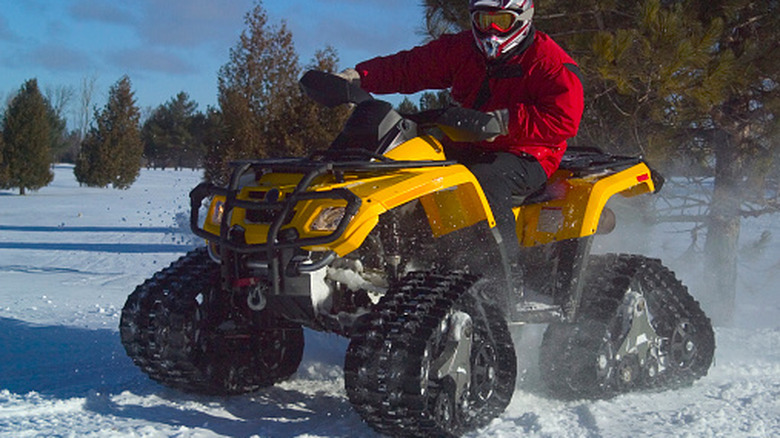
Obviously, one of the biggest differences between an ATV and snowmobile is that one moves on wheels, while the other has a large track. But there are modifications available that replace your quad wheels with tracks. This could put your ATV in a different category, right? Perhaps those snowmobile trails won't be off limits after the ATV acquires a set of tracks?
Well, not so fast. In New York, for example, even if your quad is running tracks instead of wheels, the state still considers it an ATV and use of a snowmobile trail is still illegal. And New York isn't alone, as Minnesota also has rules on the books pertaining to track-equipped ATVs. According to Minnesota conservation officer Mathew S. Miller, per the Duluth News Tribune, "The legal definition of a snowmobile states that the machine must be 'originally manufactured and designed for travel on snow steered by skis or runners.'"
This might be for the best, as these track kits do have some downsides. The entry price for a kit is around $2,700 and goes up from there. In addition, they can put more strain on the vehicle.