

Why Does The US Navy Sink Its Unwanted Ships On Purpose?
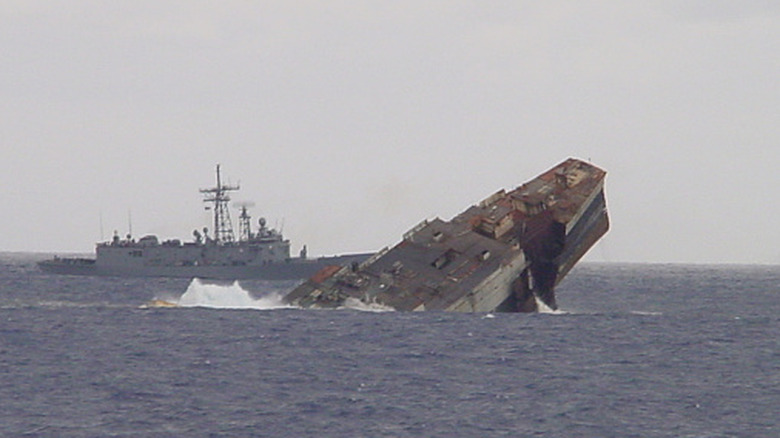
It might seem strange that the U.S. military would decide to sink some of its previously proud and costly vessels. However, in the context of combat training, weapon demonstration and the expenses associated with scrapping a ship on land, it makes more sense. And after being sunk, the ship can then act as an artificial reef. Using real ammunition and more realistic targets, like actual ships, during what the Navy calls, "SINKEX," better simulates the levels of stress and visceral feedback faced during real combat. The Navy does use plastic boats designed to be sunk for target practice, but they could never be confused for the real thing.
These SINKEX exercises are also an opportunity for the U.S. military to showcase its firepower to any potential enemies outside of actual conflict. Retired Marine Col. Mark Cancian, spoke with TaskandPurpose.com and explained the thinking behind SINKEX.
"The purpose is twofold," he said. "To exercise the system and ensure that it works and to send the message to other countries (China) that the United States has these capabilities."
In addition, it can be a lot cheaper and potentially less hassle to sink a ship than have it scrapped. For instance, according to ShipUniverse.com, the average cost range for breaking down a ship (not specific to the Navy) and recycling the reusable materials can be between $200,000 and $5 million. Although, in some cases the cost of cleaning the vessel for sinking can be much higher.
Some are taking issue with old ships, including Navy vessels being used as artificial reefs
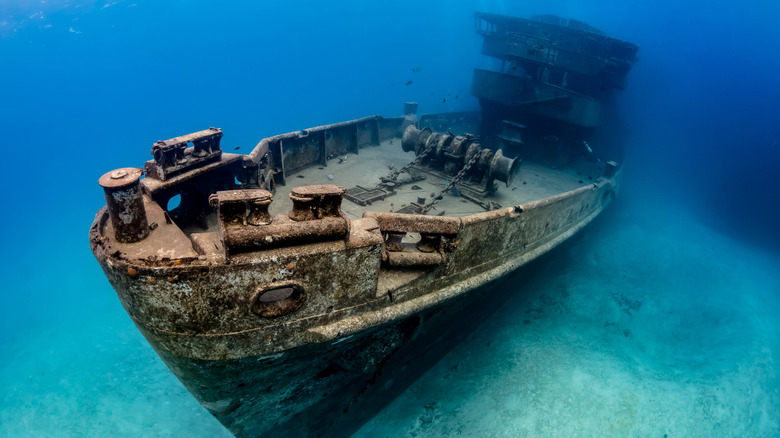
One of the benefits touted once the wreckage sinks to the ocean floor, is that the hunk of metal can now become home to a variety of sea life. Some objects work better than others in terms of artificial reefs. For example, you can sink a subway car to make a reef, but probably not an automobile. Nevertheless, coral, fish and other organisms can attach to the hard surfaces of these Navy ships, bringing a wide range of creatures to the area. It also can provide a great diving spot and bring in tourists eager to explore the sunken wreck.
However, some are calling attention to the potential of contamination to ocean environments, with some ships harboring toxins that could pose a threat to living organisms. Outspoken activist Erin Brockovich commented on plans to sink the massive SS United States (a long-decommissioned ocean liner), writing on Facebook: "Clean your ship up before you sink her... or be stupid, do it, harm thousands, and spend hundreds of millions cleaning up your crap for the next twenty years." According to NationalPriorities.org, the U.S. Oriskany, after a reported $20 million cleaning operation, still held around 700 pounds of polychlorinated biphenyls (PCB's) a collection of man-made chemicals, when the military sunk it. Considering the Navy has a total of 292 vessels listed among its battle forces, and planned to decommission 19 ships in 2025 alone, this has become a contentious issue.