

Europe's Had Gasoline Particulate Filters For 10 Years, Now It's America's Turn
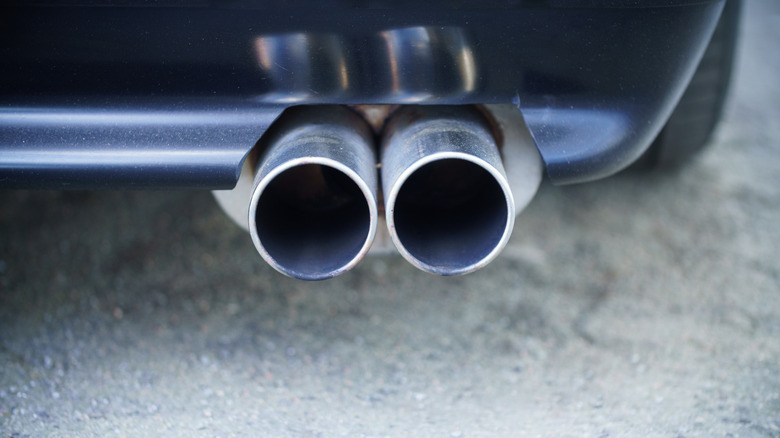
Gasoline particulate filters (GPFs), otherwise called Otto/petrol particulate filters, are increasingly finding their way into modern cars to curb particulate emissions. While they were introduced initially for Europe and China in 2017 and 2020 respectively, it looks like GPFs are heading to the U.S.. Certain 2025 and 2026 Ford models are getting them, particularly the Maverick and F-150 in their turbocharged EcoBoost forms. Although it's worth pointing out that GM, Toyota, and Ram have not incorporated the tech for 2026, they'll likely have to for model years 2027 and up to comply with the EPA's latest emissions rule that targets "criteria pollutants."
But didn't Trump and the EPA recently pull an Uno reverse on emissions and the agency's previous study on greenhouse gases (GHGs)? While it's true that the Trump administration revoked the GHG standards, the rules pertaining to criteria pollutants under the Clean Air Act (which includes particulate matter) remain unaffected. That means GPFs are likely here to stay.
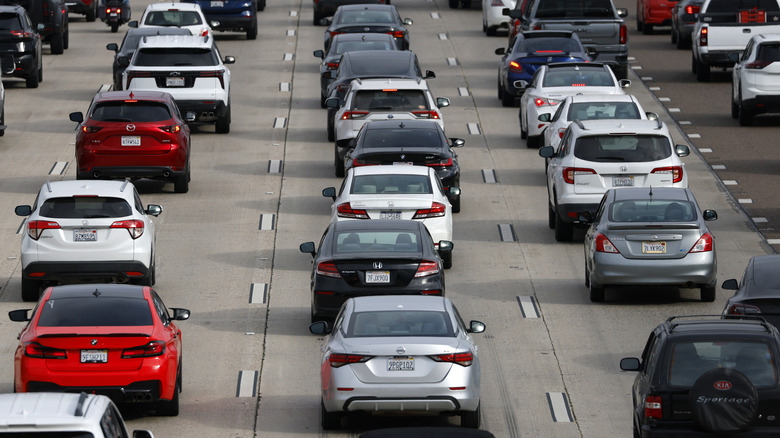
Depending on how you look at GPFs, it may or may not be your cup of tea. Understand that GPFs have a tangible impact when it comes to reducing particulate matter (PM) from exhaust emissions. PM is a recognized health concern according to the EPA, and it is created when an engine burns fuel — whether that's gasoline or diesel. Roughly 73% of new cars sold (including light-duty trucks) in 2023 had GDI engines, according to the U.S. Department of Energy, and it's thought the increased concentration of PM in highly populated urban areas is potentially down to road traffic.
Unsurprisingly, GPFs have cons too
In terms of working principle, GPFs are very similar to diesel particulate filters (DPFs), but you can't simply swap one for another. Both GPFs and DPFs are designed to suit their respective requirements. Understand that gasoline engines are less sooty and can form finer particulates than diesels. Because of that, the honeycomb structure is generally more porous in the case of GPFs. You may find GPFs as separate units, but it's also not uncommon to find the filter embedded within the three-way catalytic converter.
If you are questioning whether GPFs actually work, a 2022 study by two EPA researchers found that particulate matter saw a reduction of up to 99% (depending on the test cycles) after using GPFs in a 2011 Ford F-150. But while there are benefits to having a GPF (mostly environmental), it does come with a few drawbacks.
Arguments surrounding GPF regeneration and clogging can seem valid. For instance, a build-up of soot and ash within the GPF can mess with the exhaust back pressure, which may lead to problems like reduced engine efficiency. GPFs themselves can also interfere with power output and efficiency, by creating back-pressure in the exhaust.
Most of the time, regeneration (the self-cleaning process) is passive, and you'll barely notice anything. Unlike DPFs, active regeneration is very rare in gasoline engines as it temporarily increases nitrogen oxide (NOx) emissions. Exhaust sound is perhaps another concern for enthusiasts, with GPF cars sounding relatively muted.