

Nobody Wanted These Cars In The 1980s, Now Collectors Do
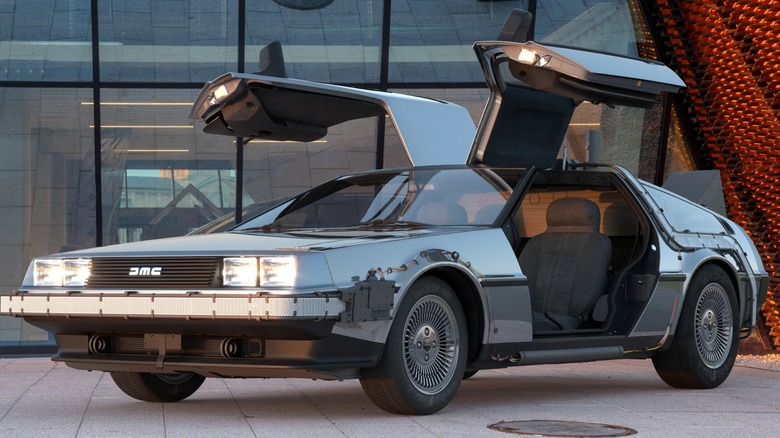
It's funny how things can go from being utter garbage to being considered collectibles. But time has a way of doing that, especially with automobiles. Take the AMC Pacer, for example. It was such a failure that its last year of production saw just 21,000 units made. Yet a well-preserved Pacer can go at auction for more than $30,000.
It's natural to have a soft spot for things you remember from childhood, which is probably why a number of cars from the 1980s are seeing a resurgence. Some Gen Xers are now at a point in their lives where they have a little disposable income, and some 1980s models are exploding in value. And so we see cars like the Gen III Ford Mustang experiencing a rise in popularity. That car received a lot of criticism for being such a departure from the original Mustang, but top condition Fox body Mustangs have been selling at around $50,000. Another example would be the DMC DeLorean, which was such a dismal failure that only 9,000 of them were made. Still, a pristine DeLorean could fetch six figures today.
And then there's the Ford Pinto, a known death-trap that could explode into a deadly fireball. They've been selling at auction for over $28,000. And we'd be remiss if we didn't mention the AMC Gremlin, a car that had become the target of ridicule by the 1980s — they go for over $40,000 now.
Ford Pinto Wagon
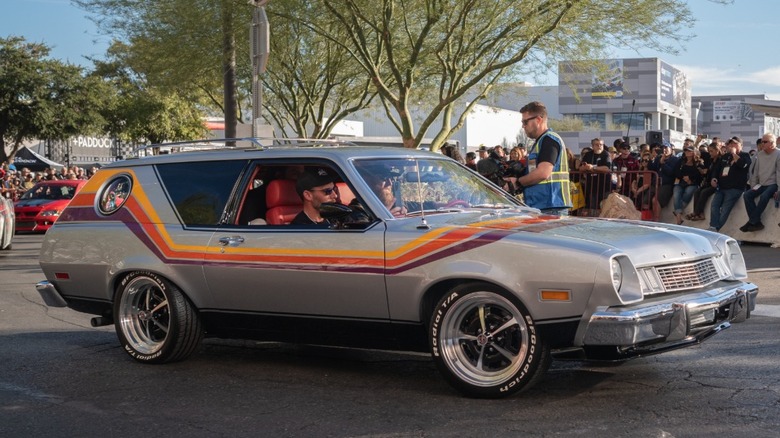
"That cool guy with the Ford Pinto station wagon" wasn't a phrase you'd have heard a lot in the 1980s, or ever, really. The Pinto itself was affordable and fuel-efficient, making it pretty practical during the fuel crisis of the 1970s. In fact, it would become America's best-selling subcompact during that decade. But it didn't exactly turn heads while going down the road. It was the kind of car you bought if you couldn't afford the one you really wanted. The fact that there was a station wagon version added another level of uncool.
But something far worse than its lack of prestige would take the Pinto down. You see, car buyers tend to prefer cars that don't explode. After a while, the public became aware of multiple incidents of Pinto explosions – some deadly – thanks to a faulty gas tank. Often this would happen when a Pinto would be rear-ended by another car, even at relatively low speeds. Eventually, Ford would pay out millions by settling lawsuits in an effort to keep it quiet. It didn't exactly work. The car gained a reputation, had one of the largest recalls in automotive history, and 1980 would be its last model year.
So color us surprised when we found out that a 1977 Ford Pinto Squire Wagon went for over $28,000 at a 2022 auction. More recently, in 2024, a 1978 Ford Pinto Wagon went for nearly $16,000.
AMC Gremlin
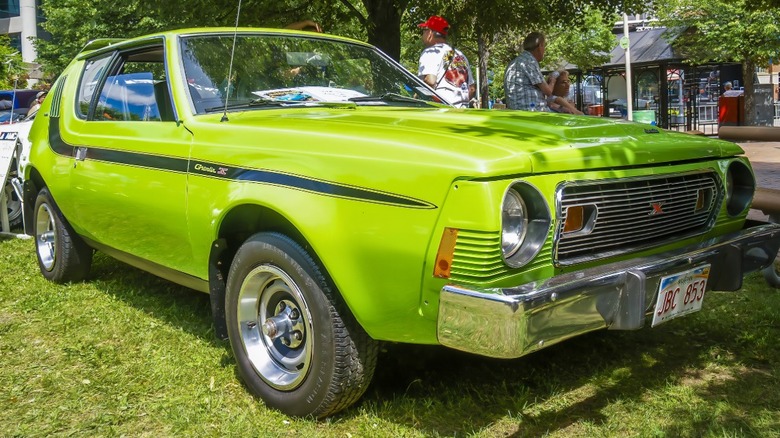
In the same way that it's hard to find something to eat that is both good for you and delicious, it was hard to find a car in the 70s or 80s that was both economical and nice to look at. Case in point was the AMC Gremlin, which was ugly as sin, at least in our opinion. But as Hagerty pointed out, the $1,879 (around $15,000 in today's money) starting price was hard to pass up for a lot of folks. It's like one ad said, "If you can afford a car, you can afford two Gremlins." Its fuel efficiency didn't hurt, either, coming at just the right time when gas prices were through the roof, thanks to an oil embargo by OPEC.
More than 670,000 Gremlins were sold by the end of the 70s. But by the 1980s, after the car stopped being produced, it had become a bit of a joke, as its lack of coolness caught up with it. Oddly enough, for a few model years, a V8 was put into a version of the Gremlin, called the X 304. But there was no way anyone would mistake a Gremlin for a muscle car.
Yet the Gremlin seems to be another former dud that has become a bit of a collector's darling. Famous ventriloquist Jeff Dunham owns not one, but two Gremlins as part of his collection. Maybe he took that ad seriously. In reality, they aren't cheap anymore. A well-preserved Gremlin can go for north of $40,000 at auction.
AMC Pacer
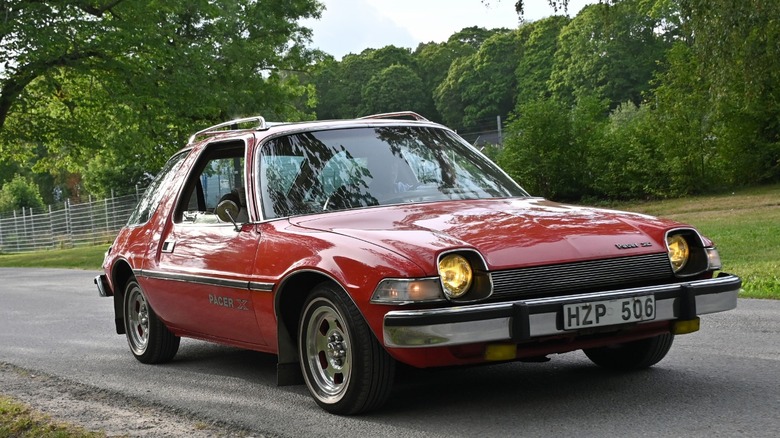
The AMC Pacer had an identity crisis. Even AMC couldn't seem to figure out what the Pacer was supposed to be, advertising it as "the first wide small car," and adding "Small was never this wide." The Pacer was indeed wide, about half a foot wider than most compact cars of its time. So that must have meant more room for passengers, right? No, not really. The car could only hold four people. Not only did the extra width fail to do the car any good, it was really a detriment and made it too heavy. The Pacer actually weighed more than the two-door 78 Chevy Malibu and two-door Ford Fairmont.
Its looks didn't do it any favors, either. People weren't enthralled with being surrounded by so much glass, which is why it earned the nickname "Fishbowl on Wheels." All of that glass would also make the inside of the car feel like an oven. Sales reflected this sentiment. In its first year (1976), 117,000 Pacers were produced. Just under half that many were built the next year. The year after that, only 21,000 were made.
That seems to be turning around today, at least among collectors. Early in 2024, a 1976 Pacer X sold for $31,000 at auction. Later that year, another Pacer would sell at auction for $37,275. That was the highest any Pacer had sold for at auction, except for the Pacer that appeared in "Wayne's World" — that car sold for just a little more at $37,400.
The Fox body Ford Mustang
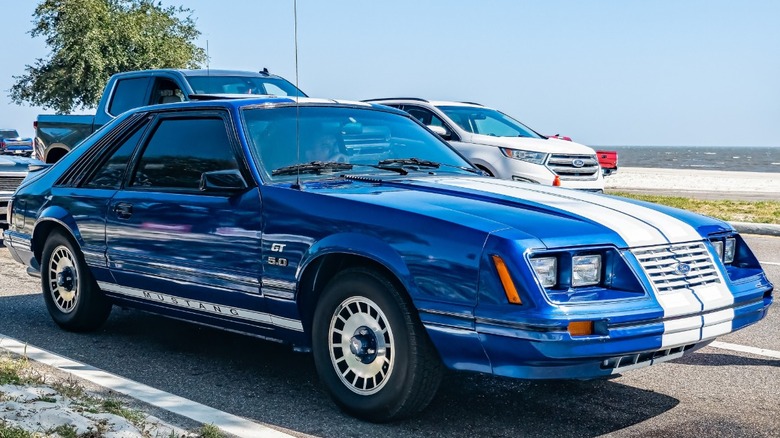
Words cannot describe how disappointed we feel when comparing the third generation of Ford Mustang to the first generation, especially the original version. But it's our job to use words to describe things, so we'll try. Sure, there were reasons to hate the Gen II, but Gen III was the most visually boring of all Mustang generations in our opinion. Yet it was the longest-running generation, running from 1979 to 1993. The original 1964 ½ model, however, looked so cool. Its confident straight lines, aggressive front-end, distinctive tail lights, and pony badge on the grille combined to make this car instantly recognizable. It was intimidating yet accessible all at once. There were muscle cars on the market that had some similar characteristics, but the Mustang felt unique.
Then 1979 came along and ruined everything. Ford decided for some reason that this American icon needed to resemble European cars. So they made it look more like a compact that your mom would drive to the grocery store, even though it was still a muscle car at heart.
Nostalgia has a funny way of making us love terrible things, and the Gen III Mustang is no exception (which is why we expect to see some angry comments below). Gen X collectors are seeking out this car and are willing to pay well for it. In 2024, Hagerty valued 1993 Mustangs in concours condition between $45,000 and $50,000, with the highest sale of a Gen III at $231,000.
DMC DeLorean
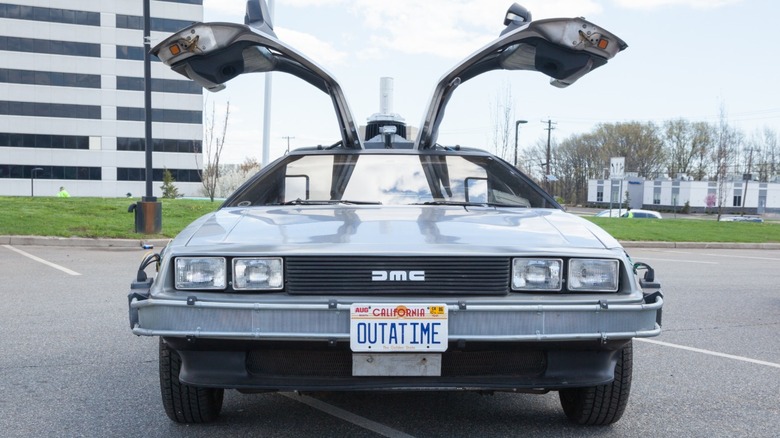
There were only two model years for the DeLorean, 1981 and 1982. In that time, just 9,000 were produced. Yet this car is one of the most iconic and recognizable cars in history, all thanks to a little movie you may have heard of. But the DeLorean wouldn't hit the big screen until 1985, three years too late to keep it from failing. There were lots of things wrong with this car, largely due to shoddy quality of work during manufacturing.
It had mechanical and electrical problems, as well as decidedly underwhelming performance. It was supposed to compete with supercars, yet the 1981 model would take over 14 seconds to go from 0-60 mph — we wonder how long it would take to go from 0 to 88. That was likely because it was equipped with a V6 that cranked out a paltry 130 hp. And did we mention how ugly this thing was? It was like the Cybertruck of its time, stainless steel body and all. The only feature on the DeLorean that really stands out, in our opinion, is the set of gull-wing doors. There's the Flux Capacitor, of course, but that was a third-party aftermarket part.
How much would it cost you to own a DeLorean of your own today? As of 2023, Hagerty had already valued a DeLorean in concours condition at north of $100,000 and in excellent condition at $75,800. And that's without the Mr. Fusion mod, though "Back to the Future" DeLorean replicas are still available.