

Can You Bring Your Own Car Parts To A Mechanic?
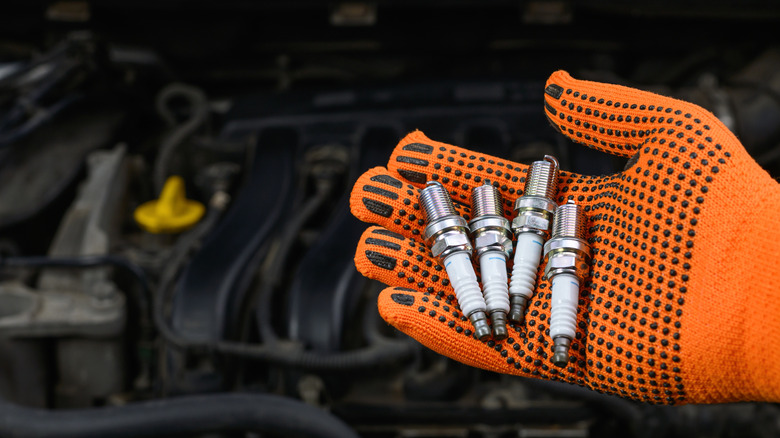
Looking after your car is the best way to ensure it stays reliable and dependable in the long run. What that means is you need to service it regularly, address repairs promptly, and carry out preventive maintenance. For example, you should replenish your suspension bushings when you know they've worn out, instead of waiting for them to start knocking and banging on every speed bump or pothole.
A strict maintenance regime like this gives you the best chance of avoiding expensive failures, but maintenance isn't exactly cheap. Of course, it all depends: some of us will have to save over the course of a few weeks just to cover the cost of an oil and filter change, whereas others could pay for a timing belt replacement on a whim without having to plan for it.
For those in the former camp, a few valuable dollars could be saved by bringing your own parts to the mechanic — and, yes, you absolutely can do this. You can buy cheap parts from places like Amazon or Walmart, which will save you a fortune in comparison to factory-supplied parts. You could even buy Original Equipment Manufacturer (OEM) parts and provide them, and still save on the mechanic's mark-up this way.
However, before you head on down to your preferred garage with a basket full of eBay parts, it's important to know that there are many exceptions to the rule. Not everyone will be happy to take your parts, and you may lose out in other ways by doing so, even if the bill is more tolerable.
Not every mechanic will be happy to use your parts
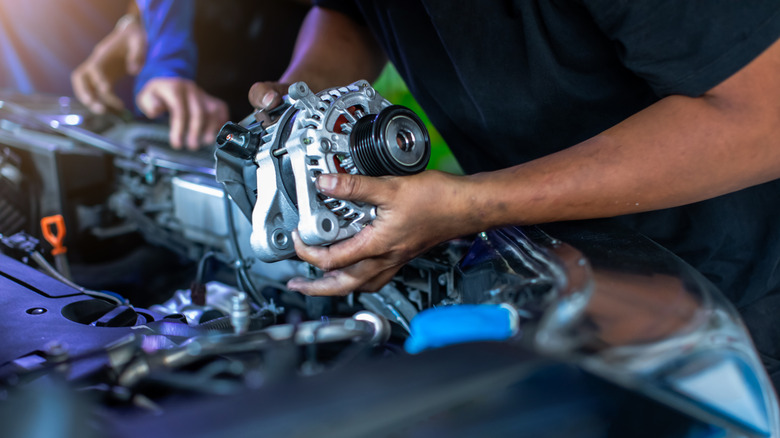
While some garages will be happy to use parts you have provided yourself, others are going to give you a flat no for a variety of reasons. First up, the mechanic loses out on their mark-up on the part, meaning less profit for them. Adding to that, mechanics can quite often get parts cheaper than you, add their 20% to 30% on top, and still sell the item to you for less than you'd buy it yourself. In that scenario, everybody wins, so it's understandable why the mechanic may say no.
Secondly, using customer-provided parts could also bring the mechanic a headache. For example, if you provide cheap or even secondhand parts and they fail after a few weeks, you'll probably go right back to the garage demanding a refund or repair — even though the failure could have been avoided had you let them supply a quality part. This brings arguments and disgruntled customers to the mechanic, and that could damage their reputation.
Using customer-provided parts also prevents the garage from building up a solid relationship with their parts provider, which is vital for securing the best deals for their business. If the mechanic is seen as a loyal and dependable customer, they may be able to negotiate better terms with the supplier, which in turn could result in cheaper and faster repairs for you as a customer.
So while there are indeed many mechanics — usually independents rather than more established garages — who will happily use your parts, don't be surprised if the suggestion also gets shot down. It's not a red flag; it's a sign that the mechanic has a system in place that they wish to keep consistent.
Why you might not want to provide your own parts

If your mechanic replies with a "yes," then hold off a second, as it may be followed by a "but." See, while some mechanics will gladly fit your parts, they may have extra conditions.
It wouldn't be unusual for the mechanic to request you sign a disclaimer, stating that you have supplied the parts. The disclaimer may note that the job will therefore not be covered under warranty, and that the garage is not liable in the event of a failure. Furthermore, some mechanics may even insist you pay a higher labor rate to cover the fact that they are not making a profit on the parts. This isn't unfair, and it doesn't mean your mechanic is ripping you off. After all, they're running a business, and this might be required to ensure the shop continues to make enough profit to keep the lights on.
Furthermore, even if the shop doesn't charge a higher labor rate, you could still end up paying more than if you'd opted for pricier garage-supplied parts. That's because, if you have supplied cheap aftermarket parts, they may take considerably longer to install due to poor fitment issues. And if the part just isn't correct, you may be looking at a far-longer repair time while you head out to source an alternate part. There's also a safety aspect, as there are certain car parts you shouldn't cheap out on – mechanics might not feel comfortable fitting cheap brakes, for example.
So yes, quite often mechanics will accept your parts, but it's essential that you check in with them first. Don't just assume they will gladly accept them, and consider whether it's even the best choice for you before opting to go down this route.