

From Monza To Malibu: What Pristine Examples Of Chevy's Cool '70s-'80s Cars Can Be Worth
The 1970s and 1980s were unique automotive eras marked by velvet upholstery and chrome-plated plastic. Yet many considered these two decades to be the dark ages for Chevrolet. The Malaise Era – triggered by the 1973 oil crisis, stricter safety and emissions regulations, and an influx of Japanese cars — was quite hard on the American automobile industry. This was when American carmakers moved away from their big-block V8s — considered the epitome of performance at the time — toward downsized, less powerful, and less desirable cars. Chevrolet was part of this, too, and it created some real doozies. However, there were also some jewels that went unnoticed — cars that can be considered real collectibles today, though most still slip under the radar.
Enthusiasts who are tired of modern cars with features that just seem to make them worse, and want something interesting but relatively affordable, are now beginning to look at the Chevys that have fallen through the cracks. The best part is that well-maintained, low-mileage Chevrolets can be had for as low as $20,000 — we're talking about cars like the Monza, Malibu, Cosworth Vega, Citation X11, and LUV.
Finding one in good condition can be challenging, however. Most of these cars weren't preserved as well as muscle cars and are often third-generation hand-me-downs. From the H-bodied Monza to the ill-fated Citation, let's have a closer look at these models and explain why they were launched, why they failed, and how much you need to cough up to take a good example home.
Monza
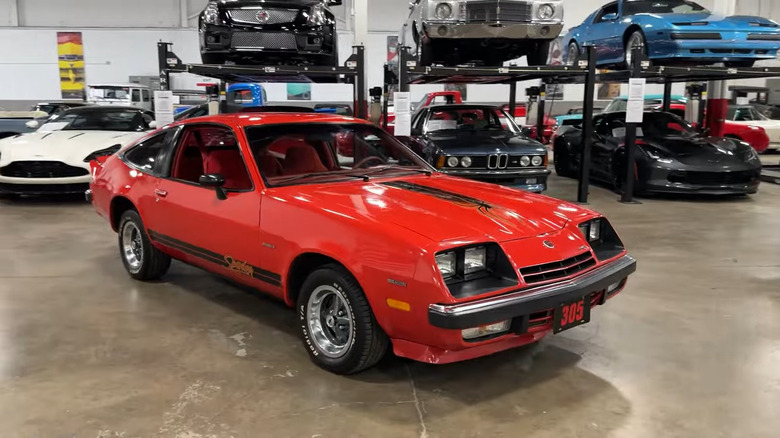
The Chevy Monza was launched in 1975 as GM's answer to the second-gen Ford Mustang and the influx of European cars into the U.S. It sat on the same H platform as the Vega, but featured European styling — specifically the 2+2 fastback profile and side window design influenced by the 1971 Ferrari 365 GTC/4. The subcompact sports car was originally designed to house GM's ill-fated in-house Wankel rotary engine. When the rotary program was scrapped, the Monza instead got powertrain options ranging from a humble four-cylinder motor to a V6 and even a large 350-cubic-inch V8 stuffed into its cramped engine bay.
During its five-year production run, the Monza's claims to modest fame were the Mirage and Spyder packages. The Spyder was primarily a cosmetic package with suspension upgrades, while the Mirage was a wide-bodied IMSA racing-inspired street car with forged-aluminum wheels. The ones to look out for are the 350 V8-equipped cars offered specifically for California that produced a paltry 125 horsepower. Monzas weren't known for performance, but they handled well. However, if you're lucky, you might find one with a 140-horsepower 305-cubic-inch V8 – this engine was offered briefly, from '77 to '79. And while it looked fantastic, the Monza struggled against European and Japanese rivals such as the Opel Manta, Volkswagen Scirocco, and Toyota Celica, which offered far superior build quality.
If you are looking for a pristine Monza, you are in for quite the hunt. A good, drivable Monza 2+2 can be had for around $10,000, while high-quality restored examples — or the rare Mirage (just 4,124 were made) — can command prices around $25,000.
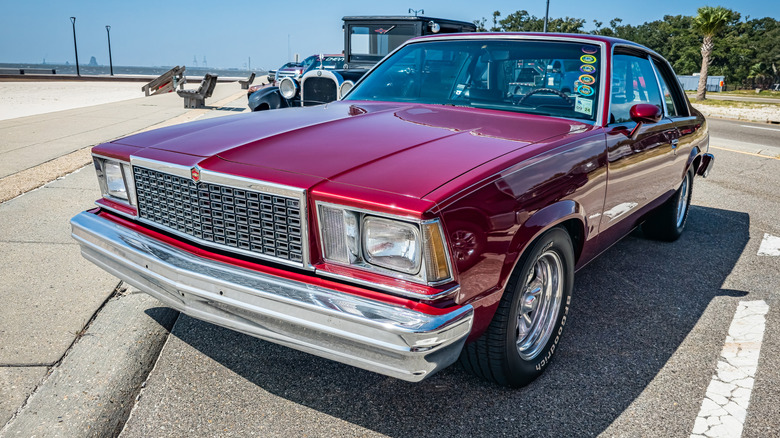
Malibu (fourth-generation)
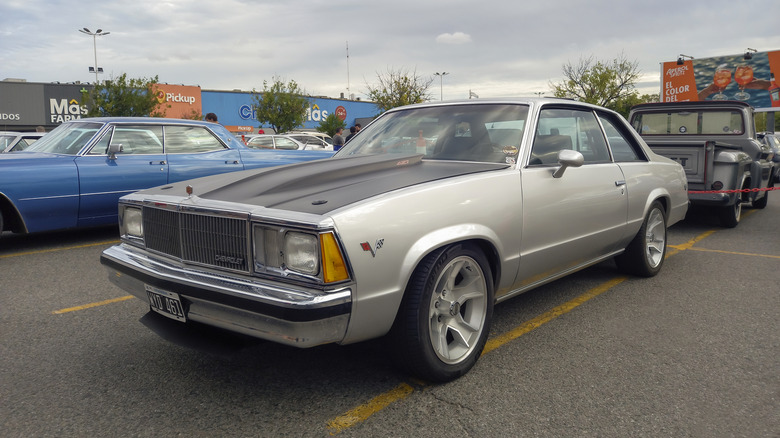
By the late 1970s, big-bodied cars were dying out and being replaced by smaller, more efficient models. In 1978, Chevrolet introduced the fourth-generation Malibu as a standalone model, ending its 14-year run as a Chevelle variant. The Malibu was marketed as a modern family sedan and went up against the likes of the Ford Fairmont and Plymouth Volare. It featured a downsized G-body platform, which was a foot shorter and 500 pounds lighter than the previous model. During its five-year run, the Malibu was sold in coupe, sedan, and station wagon body styles. Under the hood, it featured engines ranging from a 95-horsepower V6 to a 155-horsepower 305-cubic-inch V8. In 1982, the Malibu received a facelift that made it resemble the recently launched Caprice. It was discontinued in 1983 and replaced by the front-wheel-driven Celebrity.
However, the facelifted Malibu isn't the most sought-after version. That title belongs to the rare Malibu M80, a dealer-prepped package mostly sold in North and South Carolina. Some 1,901 examples were built, with changes limited to a white paint job and dark blue interiors, spoilers, and rally wheels. The Malibu was a massive success, but it was perceived as an unexciting car. Malibus were also a popular choice for drag conversions owing to their lightweight and sturdy rear-wheel-drive platforms, and a large enough engine bay to fit a big-block V8.
Today, you can get a stock, clean coupe for around $12,000, while a pristine example can be had for around $30,000.
Cosworth Vega
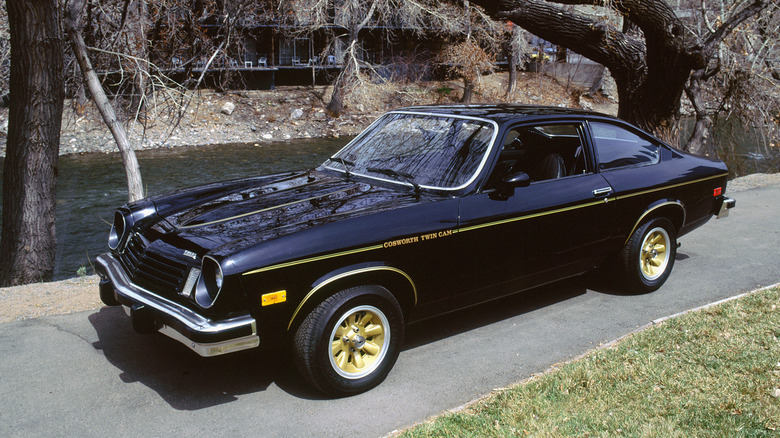
The Chevrolet Vega was a failure due to its unreliable engine, poor build quality, and severe rust issues, which led to multiple recalls during its early years of production (1971 to 1977). Chevy teamed up with legendary British engine builders at Cosworth to develop the Cosworth Vega. The Cosworth Vega was engineered to boost the Vega name in order to compete with European performance imports such as the BMW 2002tii and Alfa Romeo GTV.
The Cosworth Vega was equipped with a 2.0-liter DOHC 16-valve all-aluminum four-cylinder engine that featured Bendix fuel injection, a technology years ahead of its rivals. It was supposed to be a small American car with a European soul. Initially, all Cosworth Vegas were painted black with gold pinstriping. To ensure quality control, the Cosworth Vega was assembled at a slower rate than other Chevys. It was also expensive, priced only $900 less than the Corvette. Unfortunately, when it debuted in 1975, emission regulations forced Chevy to limit its power to just 110 hp. The price and limited performance meant the Cosworth Vega failed to attract buyers and was discontinued a year later, with only 3,508 units produced. Today, the Cosworth Vega is a bona fide Malaise era collectible.
Examples in good condition can now be found for around $12,000, while the concours-level cars can cost four times as much. While most carry the curse of the Vega rust, finding one with the original fuel injection is the bigger headache, as the unreliable electronics of the time meant many were converted to a carburetor setup.
Citation X11
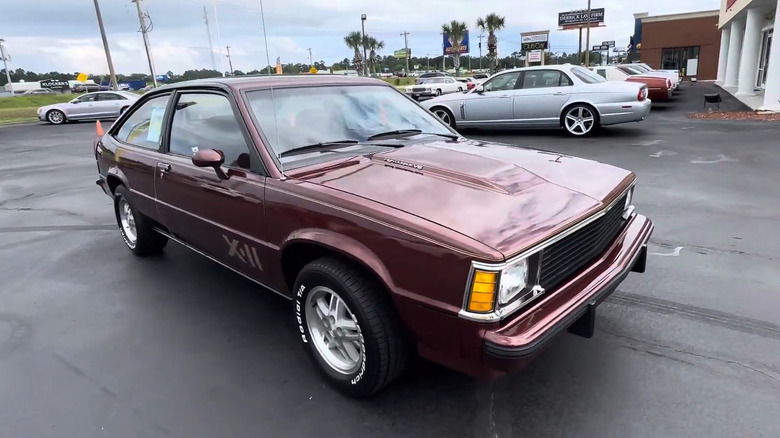
Positioned as GM's savior, the Citation was meant to lead the automaker in the direction of fuel-efficient front-wheel drive (FWD) compact cars. The first FWD Chevy, though, suffered from recalls and poor build quality, which caused major losses for GM and cast a shadow over the Citation X11 — a legitimate performance car. Launched in 1980 and sold alongside the Citation, the X11 was Chevy's attempt to take on imports like the Volkswagen Golf GTI and Saab 900. It looked decent, despite arriving during one of the worst eras of car designs.
The Citation X11 had two powertrain options: a 90-horsepower 2.5-liter four-cylinder motor and a high-performance 135-horsepower 2.8-liter V6. It stood apart from the standard Citation with its functional hood cowl intake, aggressive graphics, larger alloy wheels, a rear spoiler, and a sporty suspension. It was available as either a two-door "Club Coupe" or a hatchback. At its peak, it was priced around $7,000, which was expensive for a compact sedan. The larger motor was known to deliver solid performance with a claimed fuel efficiency of 22.3 miles per gallon. The upgrades also made the Citation X11 surprisingly capable on the racetrack. Despite this, five years into production, Chevy quietly discontinued the X11.
Finding a Citation X11 can be tricky since very few survived the 1990s, but decent examples can be had for around $7,000. A highly restored, low-mileage car can cost up to $20,000. Buyers need to watch out for issues in the steering rack and rear brake lock-up.
LUV
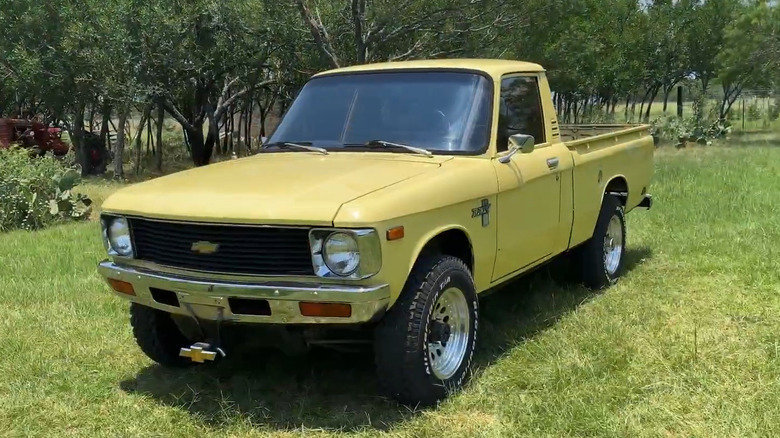
Before the S10, Chevy had the LUV (Light Utility Vehicle). Essentially a rebadged Isuzu Faster, the LUV was Chevy's entry into the small truck market dominated by Datsun and Toyota. It was sold from 1972 to 1982. Interestingly, small pickup trucks at the time attracted a "Chicken Tax" — a 25% tariff. Chevrolet got around it by importing the LUV's chassis and cab separately, and then assembling it in the U.S.
The LUV was a compact truck way ahead of its time but was discontinued to make way for the S10 pickup. The LUV featured a simple 80-horsepower 1.8-liter engine. Later models had a larger 2.0-liter gasoline and even a 2.2-liter diesel option. From 1979 on, it was available with four-wheel drive. The top-of-the-line Mikado trim added a three-spoke steering wheel, better upholstery, and a choice of loud graphics. It was a rugged little workhorse that was used as a cheap commuter and light-duty farm truck. The problem was that the Isuzu-based LUV used thin Japanese steel, and many of these trucks simply succumbed to rust. That makes finding one that hasn't terminally rusted or been V8-swapped quite difficult.
Chevy LUV prices have gone up. A decent example can cost as much as $5,000, while a pristine, original condition 4WD Mikado edition truck can cost close to $20,000. Some prime examples have also fetched up to $45,000 in auctions.