

I Rented And Renovated A Workshop Because I Have Too Many Cars And Motorcycles
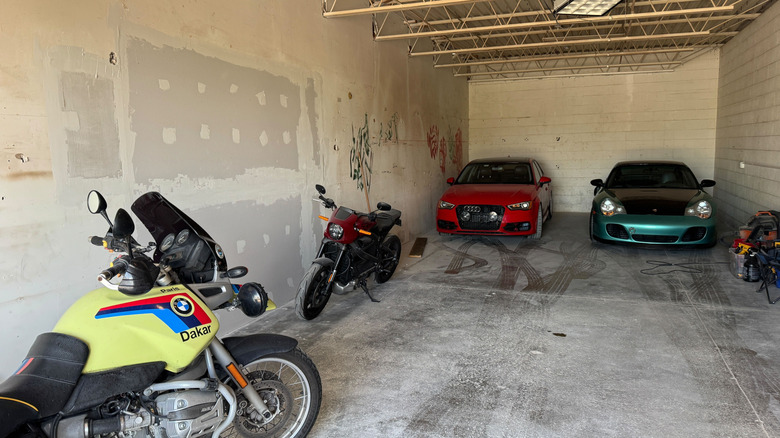
The self-storage business in America is booming right now. Somewhere between 10 and 30% of Americans currently rent a storage unit. We all love buying and having stuff, but we don't want it sitting somewhere we can actually see and use it. It's a 45 billion dollar business, with around 60,000 facilities operating nationwide. I, too, have been afflicted by the American disease of writing checks that my home driveway can't cash. After a few years of tucking cars and motorcycles in where friends, family, and fools could fit them, I bit the bullet and signed a lease on a nice-sized shop to accommodate my vehicles.
I've still got one project car, my old Porsche Boxster track machine, in my garage out in Nevada, which I will someday get around to finishing, but now all of the rest of my track rats, commuters, daily riders, trail crawlers, and comfy cruisers are in the same place. I didn't realize how much stress it had been causing me to have a variety of machines in a variety of locations, but once the last one moved in to this shop, I breathed a huge sigh of relief. It's such a luxury. Now I don't have to rent by the hour.
 Bradley Brownell/Jalopnik
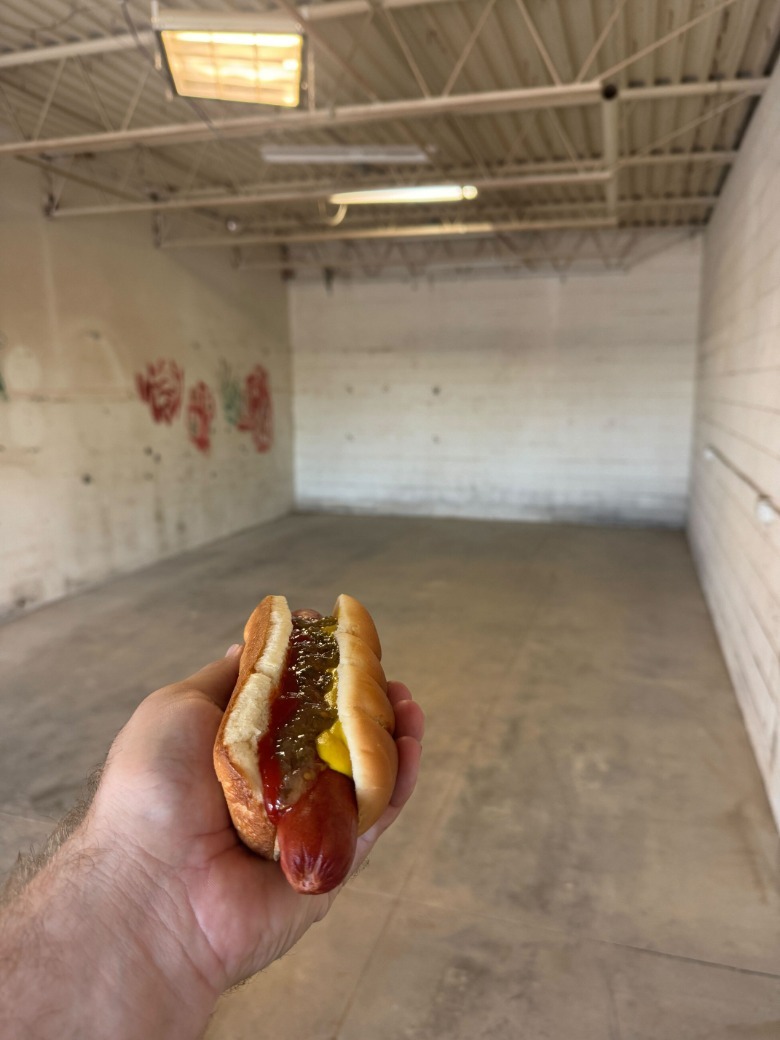
The shop itself is a decent size, measuring 18 feet wide by 60 feet deep. If I never wanted to work on anything, I could easily fit six cars in here, stacked two by two, with enough room to stack bikes down the middle like Tetris. But I don't want a storage unit, I want a wrenching space that I can relax in between jobs, store some of my car stuff that doesn't belong in the house, and maybe hang out and watch F1 races on a giant projector screen. Even better, there's a Costco just down the street, so I'm only a few minutes away from a $1.50 glizzy at any time.
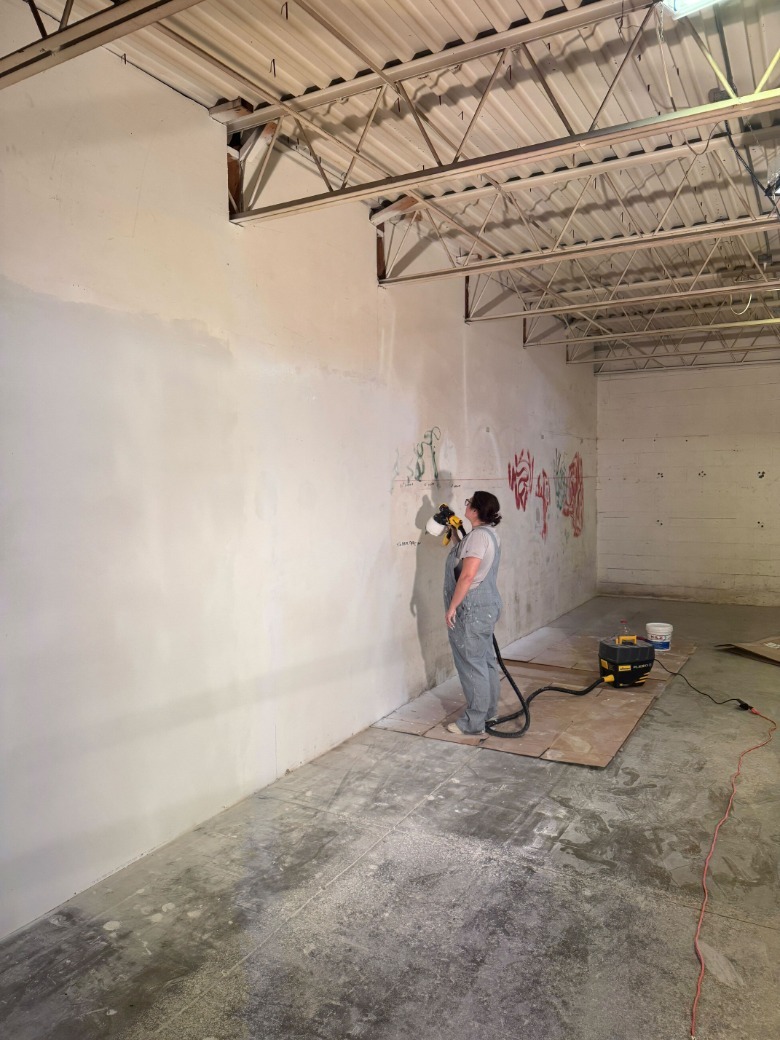
Painting the ceiling
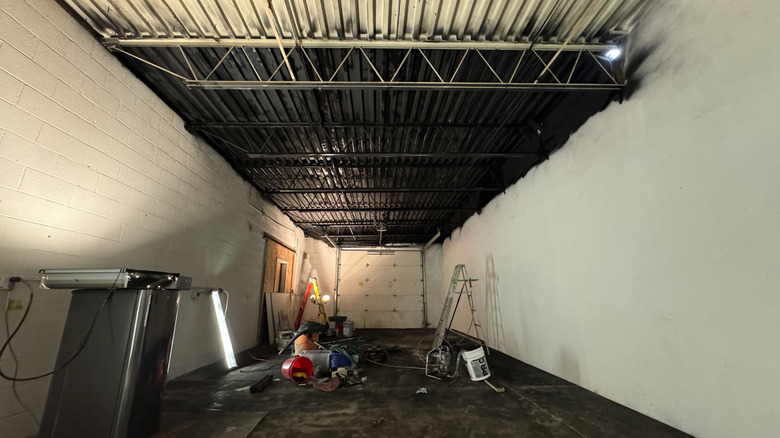
I'd been looking for a little shop for a while when something popped up on my local Porsche Club of America Facebook group. A fellow member needed to rent his space and wanted to rent it to a fellow enthusiast. The price was good, almost too good, so I told him I'd come check it out. It was a brief meeting, but I got the vibe he was a cool dude, and the space was the right size, so I signed the papers for a two-year commitment and got a garage door code. That's when the work began.
When I entered the shop for the first time, it was obvious that the room had seen better days. Two of the walls are cinderblock, so they just needed a coat of paint, but the one long sheetrock wall had about 300 small holes all the way down its length that I couldn't explain. They looked as if a very strong baby punched through the drywall, but we all know babies don't typically have that much repressed Midwest Catholic rage. Since I don't have much experience with drywalling, it took me a couple days (along with plenty of mud and tape) to get the drywall repair right.
 Bradley Brownell/Jalopnik
A few weeks later, the previous tenants of the unit were hanging around, so I struck up a conversation with them about the highway-adjacent location. They'd downsized their woodworking business and required just one unit in the building instead of two, so they'd recently vacated the segment I was renovating. I mentioned that I'd had to do a bunch of drywall work and they gave me the backstory. Apparently, the guy's son, now an adult, had used the unit as a batting cage during Ohio's long and cold winters. So that explains it!
A clean slate
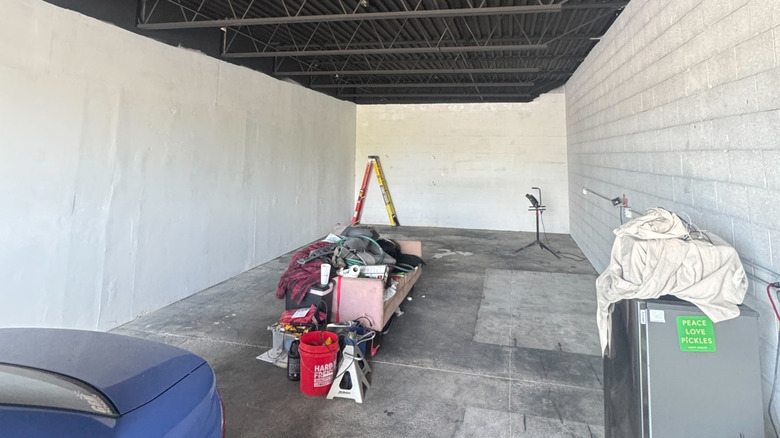
Once the walls had been repaired and the mud was sanded somewhat smooth, my wife and I set about getting the place painted. With a few gallons of Kilz on the walls and about ten gallons of whatever black dryfall paint was on sale that week, we managed to make a mess of the shop. Dryfall is intended for ceilings — you spray it upward, and the overspray is supposed to be dry by the time it hits the ground. But as it turns out, the dryfall we bought required about 18 feet of fall to become dust on the ground instead of sticking to the surface — our ceilings were about 17 feet high. Oops. Not only did the floors require two full days of scrubbing to get back to looking like concrete, but the top of the refrigerator and both of my ladders (definitely not 18 feet below the spray) are completely coated in black. My face (and likely my lungs, even through a mask) also got a nice fresh coat of black.
Now that we've got the place back to a blank slate, my mind is racing on the next steps. I know that it's extremely important to have a lot of storage, lots of lighting, and easily accessible power for all your tools and charging. I'm going to need a place for my toolbox, and pallet racking for extra car parts. Obviously, I need a place to hang all my motorcycle gear. Oh, this is going to be good.
What's it for?
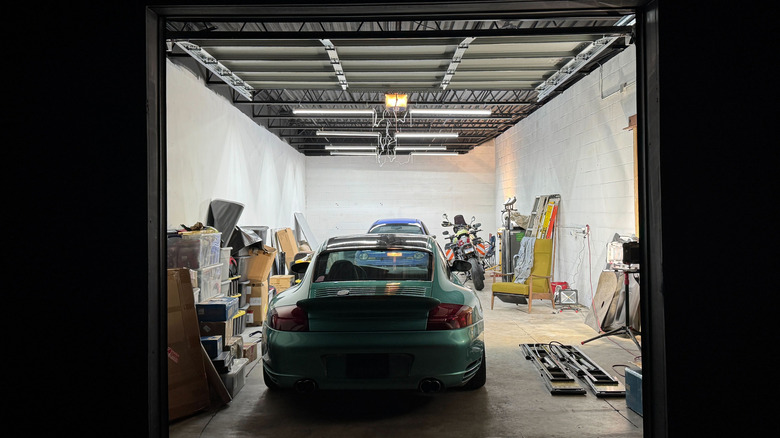
Why do I need this much space to store my stuff? Well, in addition to our family's daily drivers (2013 Porsche Cayenne Diesel and 2016 Audi A3 E-Tron), which live rough lives parked outside at our house with no garage, we have a 1996 Dodge Neon ACR, 1990 Cadillac Allante, 2001 Porsche 911 Turbo, and 1976 Porsche 912E to store. And that's just the stuff with four wheels. I've also got a Harley Davidson LiveWire, a 1996 BMW R1100 GS, a 1999 Ducati Monster Cromo, a Yamaha FZR 600, and a box of parts that will eventually be a BMW flying brick. Does all of this fit in here? Theoretically, but not practically.
I've always wanted my own shop, and now I've got it. Now to finish it out and actually start working on some of my long-neglected car projects. Should I catch up on deferred maintenance for our decade-plus-aged out-of-warranty German daily drivers, or get my bikes into shape for summer first? Let me know what you'd do with the space, too. If you were starting from scratch on a workshop and hangout space, where would you go with it first? If you've already built your dream shop, what's something you found that you can't live without, or something you wish you'd included? This is definitely a do it once, do it right kind of situation. Let me know in the comments, we'll hash it out.