

Drying Your Car With A Leaf Blower: Kind Of Genius Or Asking For Trouble?
We may receive a commission on purchases made from links.
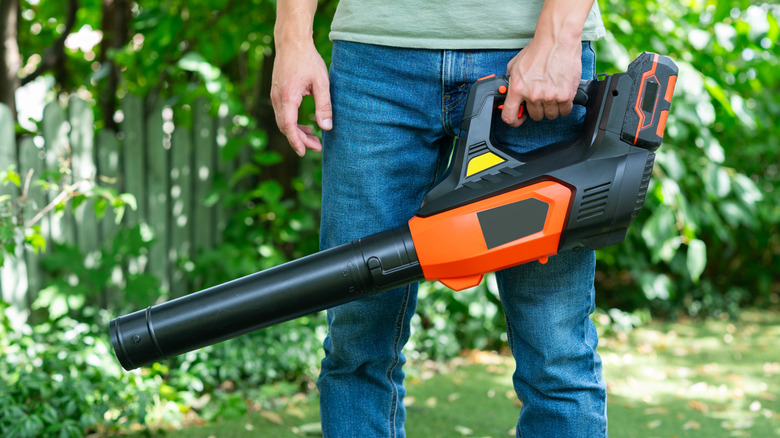
We totally understand why some owners dry their cars using a leaf blower. Wiping or touching the finish, especially when using dirty rags, will surely scratch, swirl, or mildly damage the paint. Moreover, there's always a risk of inflicting scratches or swirls each time you touch or wipe the paintwork, and that's just how it is.
The layer of clear coat on your car's finish protects the base coat from moisture and UV rays, and they're responsible for the gleaming shine that we all love. However, there's only a very thin layer of it on the paint (only 35 to 50 microns thick, roughly half the thickness of a dollar bill), and the clear coat is somewhat flexible to conform to the curves and edges of a modern car.
The wafer-thin layer of protection and its inherent flexibility makes clear coat prone to scratching, and it doesn't take much to damage it. Wiping dry paint with a dry towel, using dirty sponges or towels, driving through non-touchless automatic car washes, and using the wrong cleaning products (a surefire way to ruin an otherwise glossy paint job) can all damage, scratch, or swirl your car's finish.
That's where leaf blowers enter the fray, and using them to dry a car initially makes sense, because less contact means less scratching, right? Drying with air means you don't have to touch or physically wipe the paint with a towel, which lessens the chances of scratching it. However, you might want to reconsider, since there are dedicated air blowers for cars that are safer, more convenient to use, and are specifically designed for drying cars and auto detailing instead of yard work.
Car dryers are better than leaf blowers
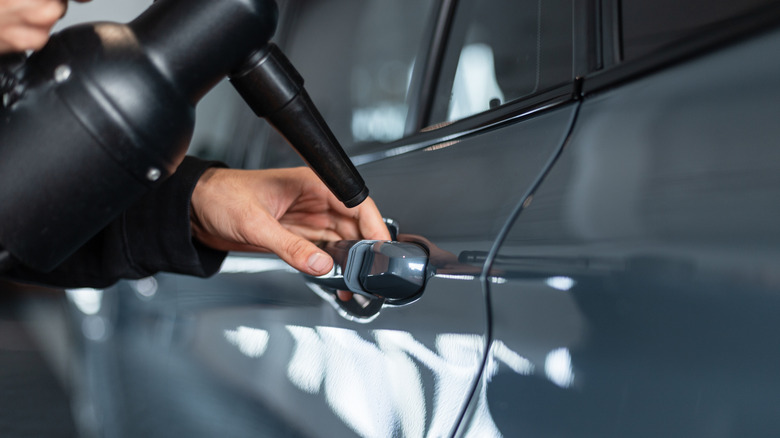
The major disadvantage of a gas or electric leaf blower is its inability to dispense unfiltered air. Unlike dedicated car dryers that can blow warmer air and have dedicated filters to clean the air before striking your car's paint, leaf blowers have none of that, and that could be a problem. The rushing air from a leaf blower may have dust, dirt, and debris, and you might end up introducing more contaminants while drying the finish.
Meanwhile, the warm air capability of some car dryers is user-adjustable, and it helps to speed up water evaporation to enhance the drying process. Car dryers also have settings to control the air speed, making them ideal for precision drying and detailing. In addition, car dryers are easier to handle and are more ergonomic, since they are conceived specifically for drying cars.
Leaf blowers, on the other hand, are somewhat heavy, cumbersome, noisy, and, if you have a gas-powered leaf blower, emit fumes. Moreover, their size, weight, and awkward shape make leaf blowers challenging to use for drying cars, especially larger vehicles like vans, family crossovers, and SUVs. It's not all roses and honey, since car dryers are not exactly cheap, with some costing $74 to $250.
They're worth it for the price, though, but why spend more if you already have your old, trusty leaf blower? If you insist, it's perfectly fine to dry your car with a leaf blower if you know what you're doing. Maintain a safe distance from the vehicle to avoid the blower tube from hitting body panels and painted surfaces, and always start from the roof, hood, and trunk, and work your way down to rid the bodywork of water and moisture.
We prefer the old school way of drying cars (but with a modern twist)
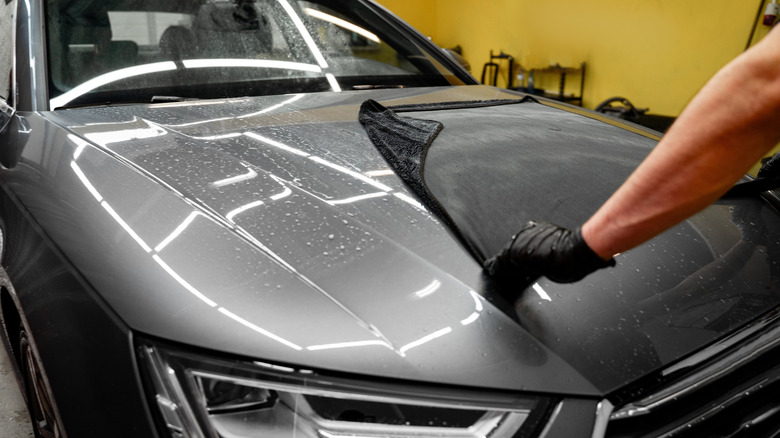
Car dryers are great and all, but we find nothing wrong with the tried, proven, and tested way of using drying aids and a high-quality microfiber towel. Drying aids are spray-on liquids that add shine, reduce water spots, and repel standing water, enabling you to wipe, dry, and leave a protected finish in one stroke. Furthermore, drying aids add lubricity to prevent scratching.
Products like the Chemical Guys Afterwash, Torque Detail Trophy Finish, and Meguiar's Ultimate Quik Detailer are excellent for drying cars. Shake the bottle, spray over the wet surface, wipe dry with a microfiber towel, and that's it. Wring the towel, turn it over, and repeat. For this, you'll need a thicker and denser towel since microfiber comes in many types, sizes, and weave patterns.
Leaf blowers may seem a crude way to dry a vehicle, but they're fine in a pinch, and they're okay for blowing off water from side mirrors and other crevices before waxing the paint. Whatever you do, you should avoid pointing the leaf blower at the ground (it's mildly counterintuitive, we know) when near a freshly washed and still-wet car, because doing so will send dirt and dust from the ground into the air where it can settle on your car's paint.