

How Automakers Tackle Auto Start-Stop Without Adding Wear And Tear
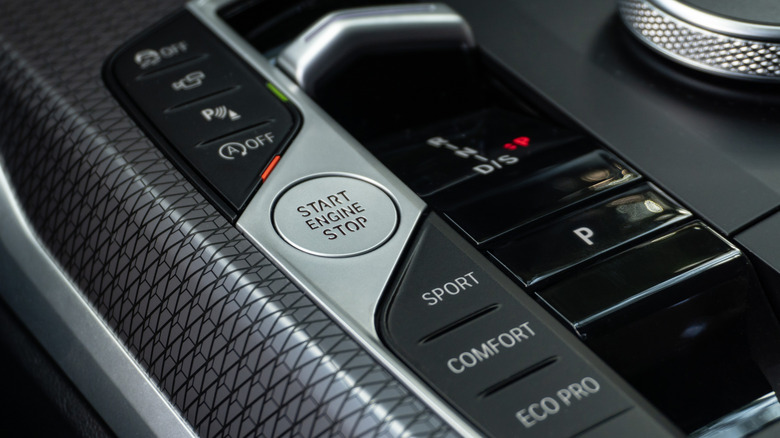
There's no question whether auto start-stop technology brings about tangible fuel economy benefits. A study by the Society of Automotive Engineers (SAE) found that drivers could potentially see a 7-26%improvement in fuel consumption. This, however, depends on the usage, hence the wide range. The more idling time you have in your commute, the better your chances of witnessing improved fuel economy.
But perhaps the biggest misconception surrounding auto start-stop is increased engine/component wear. While there's some truth in that (though it isn't as dramatic as you may think), it's worth pointing out that cars with the technology built in are designed to tackle those issues. Understand that the car's battery and starter motor are key players here, as are the control modules and the alternator. Manufacturers are fully aware of the additional loads that some of these components may have to endure during the vehicle's lifetime.
Take the starter, for example. Denso, which supplies starter motors to several carmakers, has three different versions, designed specifically with auto start-stop in mind. You have a fairly traditional starter, with improved ring and pinion gear actuation for reduced wear and tear; a tandem solenoid (TS) version that reduces the required electrical load; and a "permanently engaged" design that's quieter, faster, and more efficient between stop-starts.
Some cars use an integrated starter-alternator design, which often features a separate control module to run programs that protect the system against the increased strain from repeated stop-start cycles. So technically, you could say that a start-stop alternator is different from what you'd find elsewhere, although it generally depends on the car, brand, supplier, and so on.
Various checks and balances are in place

Most OEMs specify a deep-cycle absorbent glass mat (AGM) battery for their auto start-stop systems. They also employ sophisticated power/battery management modules to keep the alternator and battery in check. Since AGM batteries are less temperature sensitive and have much lower internal resistance compared to standard flooded lead-acid batteries, they can charge relatively quickly after the engine's turned on. Ergo, better recovery after a start.
That said, using the wrong battery could screw things up, and without realizing it, folks might blame the auto start-stop system instead. However, it's not like start-stop is without possible faults. Your engine mounts may experience increased wear due to the repeated starting and stopping, or the battery itself may go out from a voltage mismatch, all of which could lead to more maintenance over time. Although AGM batteries can last longer, they are pretty sensitive to overcharging.
You may have concerns about your car's engine wear, especially in cold conditions, when it's important to keep a car engine warm, but the onboard computers are smart enough to monitor oil temperatures and act accordingly. If the motor's been turned off for too long (via start-stop) or is about to go cold, it'll fire back up again to prevent internal damage. On top of that, you have manufacturers like Federal-Mogul developing special polymer-coated bearings for start-stop engines that can withstand up to 300,000 start cycles or more, which is three times higher than a typical main bearing's lifespan.
Long story short, don't get too worked up about auto start-stop; it can actually be great. Whether you like it or not, the technology is here to stay. If, however, you're looking to retrofit the system (for whatever reason), it might not necessarily be an easy modification or even a good idea.