

Why This '80s Transmission Used Three Shifters Instead Of One
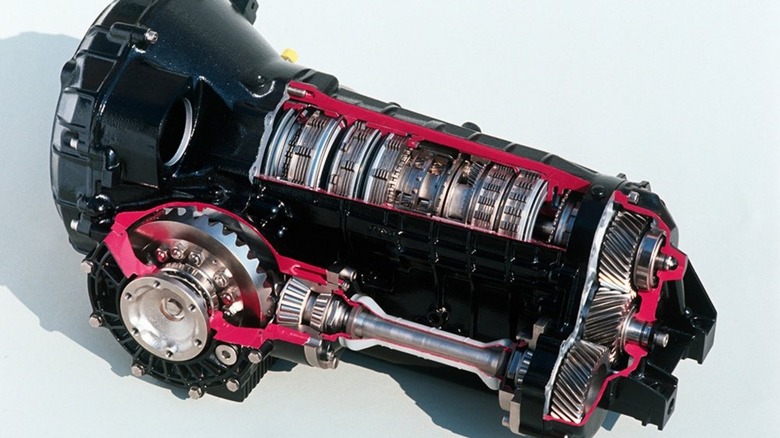
Long before ZF bolted up the Tiptronic transmission in such enthusiast fare as the 964-generation Porsche 911, the automotive industry was coming up with fun ways to spice up the automatic shifting experience. Why not nix the clutch for everyday duty and give the consumer the option of still having a little fun and control when vivacious motoring was on their mind?
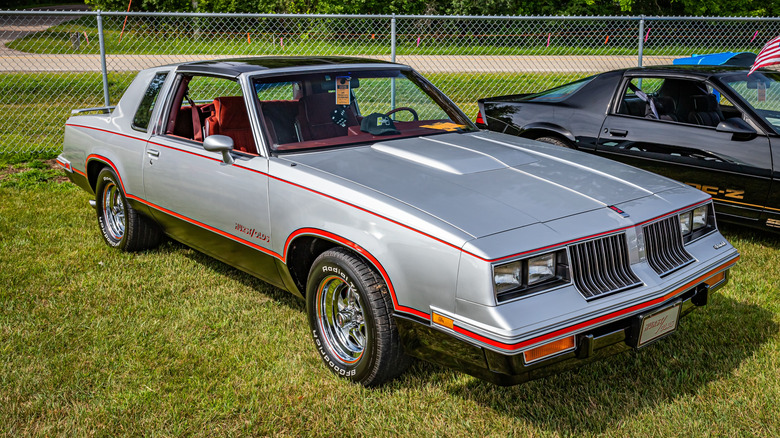
But could an automatic provide a similar level of involvement as a manual back when bands like The Police and Men At Work were high on the charts and "Return of the Jedi" was at the top of the box office? Hurst, in partnership with Oldsmobile, concocted one heck of a solution for the 1983 model year — three levers sprouting out of the center console.
We're all familiar with the three-pedal experience of a manual gearbox, but why did this '80s transmission use three shift levers instead of one? The short answer is that these Hurst Lightning Rods, as they were known at the time, were a wacky method of providing some much needed driving engagement from a rather underpowered drivetrain. There are some other neat methods of torque converter-sourced drivetrain engagement worth highlighting, too.
That's right, three-freaking-levers
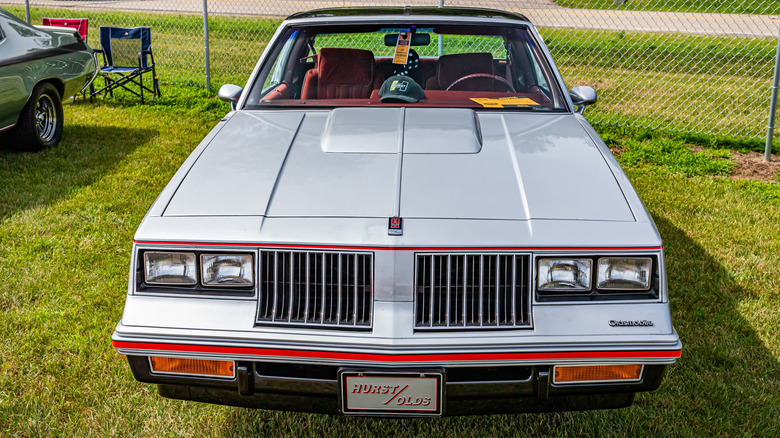
1983 wasn't the first time that Hurst and Oldsmobile partnered on a car, by the way. The first Hurst/Olds (or, H/O for short) hit dealer lots in 1968 and packed a hot-rodded 455 cubic-inch V8 instead of the normal 400, plus a special silver paint job, some other neat niceties, and a Hurst Dual Gate shifter.
Dual Gate — meaning two? Cute, but try three on for size. The H/O badge returned in 1983 and blessed Oldsmobile's G-body Cutlass. This time around, its paint and red accents harkened back to its '68 forefather, but under the hood was now a 5.0-liter HO (or, High Output) V8 putting down 180 horsepower and 245 pound-feet of torque. A far cry from the 390 hp and 500 lb-ft that the '68 produced, but it was more than any other Cutlass badge at the time. It also had four forward gears instead of the OG's three.
The shifter's operation was a curious affair. As Driving Line details, move the middle and outer lever forward and put the inner lever in Overdrive, and it'll act like a conventional automatic. The party started with all levers in the bottom position, which put it in first gear. Second gear engaged by moving just the outer lever forward, and to reach third you would move the middle lever forward. To downshift, simply reverse the order of operation.
Underneath it all was a normal sequential shifter, meaning, the gears are shifted in a 1-2-3 manner that disallows skipping them and operated via a cable. But not in the motorsports sense. Neat thing about the prior Hurst's Dual Gate: transmission fluid line pressure was increased once moved into the outer gate, which made shifts much faster over having the transmission do all the work itself.
All in the name of engagement
In terms of why this '80s transmission used three shift levers instead of one, well, because it made the engine in a special, low-production model — one with half the horsepower of some of its predecessors — more engaging to operate. It's also not unreasonable to say that people who enjoy driving cars fast like having something to do in the process. Perhaps it's the same reason why a lot of us loved using those digging contraptions on the playground when we were knee-high to a grasshopper.
A few automakers have come up with other unique methods of sequentially shifting gears without a clutch. We mentioned the Tiptronic transmission in the 964-generation Porsche 911 above, but before that Porsche offered the Sportomatic from 1968 to 1980. Technically, this wasn't a conventional automatic, but rather had a single dry clutch that was disengaged — allowing H-pattern shifting to happen — when the driver's hand touched the shifter, and re-engaged with the engine when they took their hand off.
Then there was the Lenco transmission, which actually looked a lot like the Lightning Rods but had four shifters! Though, instead of moving a cable, each shifter locks a planetary gearset into place, changing the gear ratio. It was renowned for being quite robust and saw favored service in drag racing.