

This Is How Long The Ford F-150 Lightning Could Power The Average House
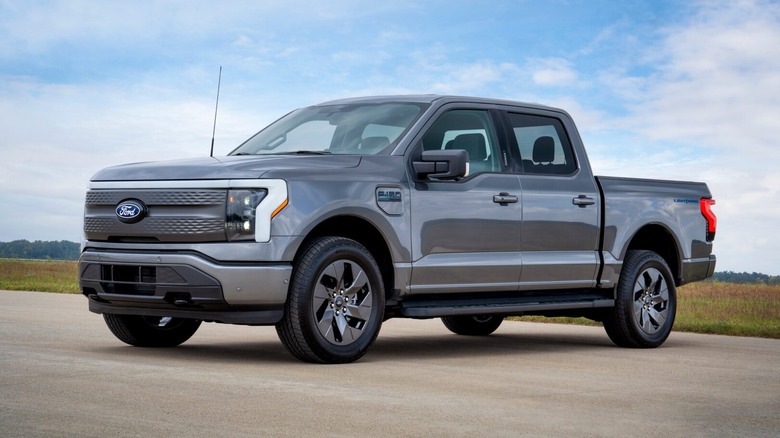
When Ford introduced the all-electric Ford F-150 Lightning in 2022, it wasn't launching another EV — it was an apparent shift in Ford's ethos. The departure from the Ford F-150, long associated with raw petrol power and toughness, to practical electric utility was shocking.
Beyond instant torque and zero tailpipe emissions, one feature quickly grabbed attention: the ability to power an entire home during a blackout. Not metaphorically or with a bunch of extension cords running through the window, but full-home backup power from your pickup.
Even after all of the marketing campaigns and demos, consumers still ask how long the F-150 Lightning can really power the average house. The answer is somewhere between "long enough to get through a bad outage" and "surprisingly longer than you think." And with its recent discontinuation, a used Ford Lightning is an appealing buy with a clever functionality. But before relying on your Ford Lightning to keep the lights on, there are a few caveats — and significant costs — worth going over.
How the F-150 Lightning powers your home — and for how long
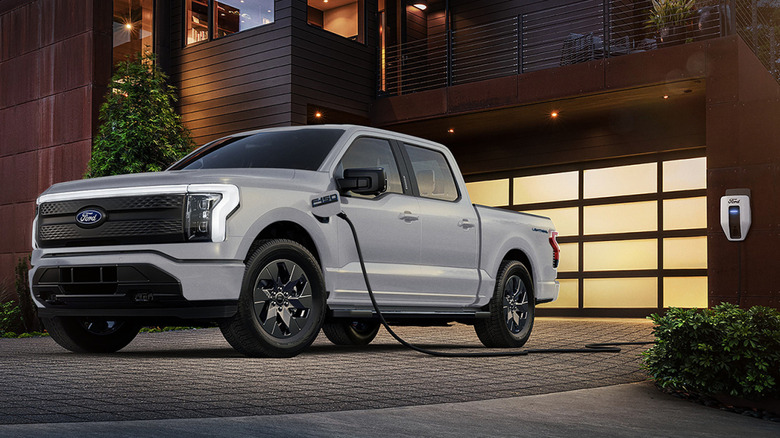
The Ford Lightning can power your home thanks a combination of the Charge Station Pro and a Home Integration System sold and installed via SunRun. Together, the system lets the plugged-in Lightning supply power during an outage, giving homeowners access to backup electricity when they need it most.
So just how long can the Ford Lightning power your home? Per the automaker, the Lightning can power your home at full usage for three days or as long as 10 days if homeowners ration their power consumption. At peak output, the Ford Lightning can produce 9.6 kilowatts of power — sufficient for daily household appliances. Under most circumstances, this production is more than enough — especially in emergency scenarios.
For buyers, it's important to consider equipment and labor costs, which can vary significantly depending on the home, with one such report reaching up to $18,000. Whether that investment makes sense often comes down to personal preference and how owners compare it to a standalone backup generator, which costs several thousand dollars to purchase and install.
Ford's decision at the end of 2025 to move on from the full electric F-150 Lightning in favor of a hybrid system came as a result of the automaker losing nearly $5 billion from its EV efforts paired with declining consumer EV interest. If Ford continues pivoting toward hybrid solutions, the company's ambitious vehicle-to-home power vision may end up becoming a short-lived experiment.