

While A 122 MPH RV Is Impressive, When Does A Motor Home Stop Being A Motor Home?
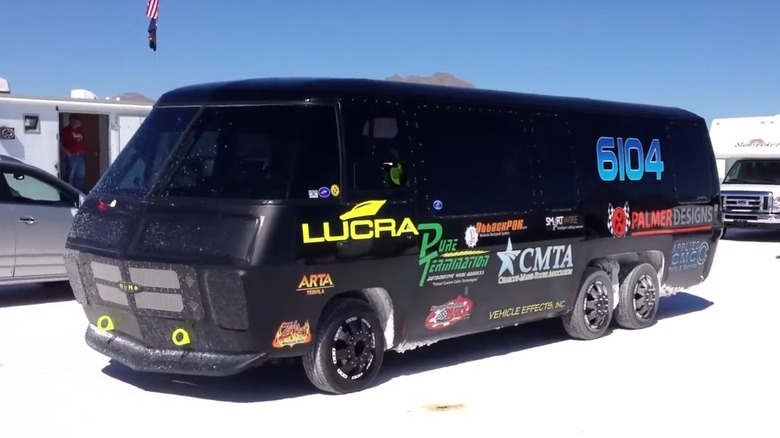
A hallmark of many automotive enthusiasts is the appreciation of speed. While engine displacement and output are revered, how fast a vehicle can cover ground is often the metric that has jaws dropping. Enter the impressive and equally ridiculous "MoHo," a classic motor home transformed into a Bonneville Salt Flats scorcher. In case you weren't aware, there are apparently land speed records in contention for the fastest recreational vehicle. In the case of MoHo, this late '70's GMC is equipped with a Ram Jet 502 engine, nitrous, and a top speed-enabling gear ratio. With 700 horses under the hood and the wide-open flats of Utah, MoHo can reportedly achieve 122 mph, letting iteclipse the previous record.
While undoubtedly cool, one must wonder if this radically-transformed speed demon still qualifies as a motor home. The 1970s produced a GMC motor home that is one of the most innovative RVs ever created, and before its transformation, MoHo shared this legacy. But it wasn't just the engine and boost system that allowed for triple digit speeds. The team behind the project essentially hollowed out the interior. A kitchenette, bunks, a dining table, and other amenities were replaced with aluminum panels and a roll cage.
Obviously, this was done to reduce weight and enhance safety. But can an empty shell in the shape of a motor home, still qualify as one? Arguably, the answer is no; MoHo, which is a Class A (the largest type of motor home), would need to be able to provide sleeping quarters, a cooking space, and more comprehensive seating at minimum. It isn't just Class A motor homes that provide these amenities, either. Kei campers show you don't need a bus to live large.
Motor homes and the concept of escaping modern hassles are older than you think
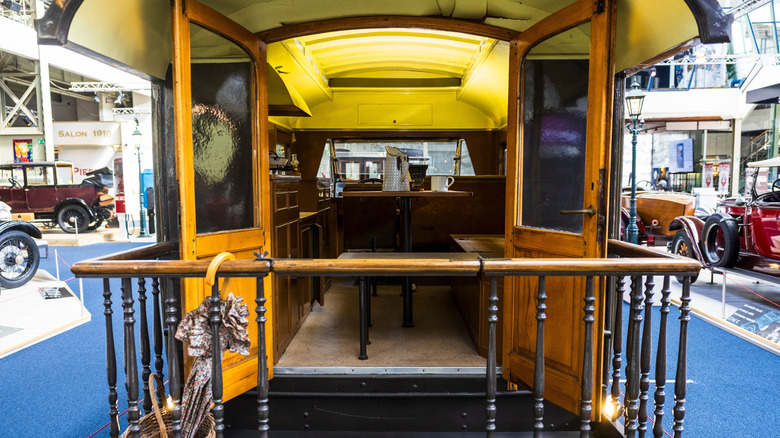
The early American experience was full of pioneers and adventurous trips into the untamed frontier. As a result, the spirit of those times has carried on, calling some to travel, camp, and be challenged by the outdoors. Although, modern versions of the experience can really stretch the notion of "roughing it." Take for instance this "Land Yacht" motor home which is so big it has a garage. Nevertheless, 1904 was when the first RV came into existence, which was a special project built on top of a normal vehicle chassis. Even this RV included features not found in MoHo, like bunks, a radio, and an ice chest.
While some today look upon 19th- and early 20th-century life as simpler compared to modern society, those times featured plenty of additional challenges. Back then, those seeking to hit the road in either a horse-drawn wagon (or — eventually — the first motor homes) were doing so for the same reasons folks do today. It was to get a reprieve from congested urban cities, noise pollution, and societal expectations.
While a lightened husk of an RV equipped for high-performance can hit unthinkable speeds (for a Class A), it's not a proper motor home. Without offering the same functionality, and by stepping away from the original spirit behind the motor home experience, MoHo is more akin to a really fast van. Then again, it's not like people weren't able to handle rougher conditions, like one woman who managed living in a 2006 Smart ForTwo.