

These Cars Have The Worst Visibility According To Drivers
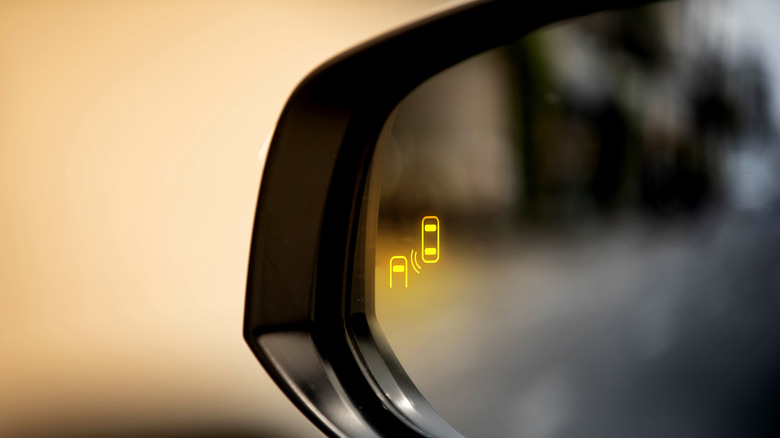
Maybe you haven't noticed — thanks to all the parking sensors, backup cameras, and that weird top-down view that makes it look like you're watching yourself drive from a drone 9 feet overhead — but it sure seems like it's getting harder to see out of our cars these days. In fact, the diligent researchers over at the Insurance Institute for Highway Safety (IIHS) have even applied some real science to the situation, and a detailed study confirmed what your gut already knew: blind spots keep getting larger.
Still, although we here at Jalopnik can appreciate a deep dive into spreadsheets compiled by insurance people, there's another bit of research methodology that we're going to focus on for this particular analysis: people griping online. Because for every statistically rigorous table and aggressively paywalled research study, there's a car review, an angry blog post, or a chaotic Reddit thread litigating the exact same thing. Heck, sometimes, it becomes an entire internet content genre in itself, which you'll probably recognize in our first entry here. So, sit back, adjust your mirrors, and relax. Then, look over your shoulder one more time. Man, it really is hard to see back there, isn't it?
Chevrolet Camaro
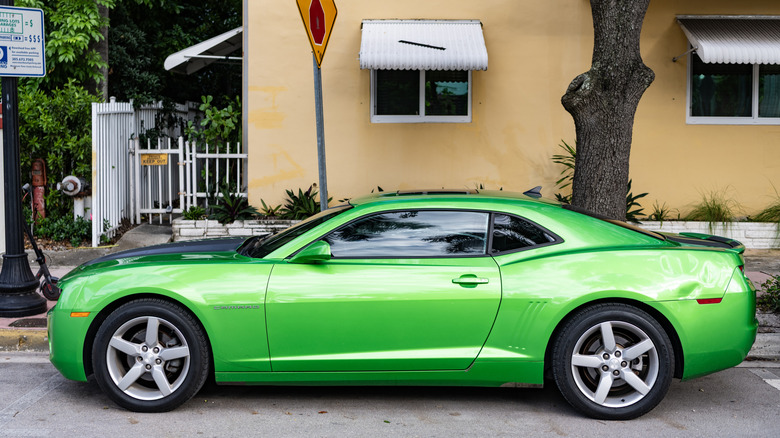
You know when something becomes such a punchline that you eventually assume that it can't actually be as bad as it's made out to be? Well, when it comes to Camaro visibility, it may actually be worse. You might say that 2003 to 2009 represents the largest Camaro blind spot of all, as they weren't being made at all during the 7-year stretch. But that wouldn't do justice to the fifth generation (2010 to 2015), which set a new standard for being really, really hard to see out of. Its bold new exterior was an aesthetic throwback to the iconic 1969 model year, with a low-slung roof line and high belt line that together created the automotive equivalent of a squint.
When the fifth generation launched, car buyers and journalists alike immediately latched onto the visibility issue, and it became something of a meme complaint that you may or may not remember from back then. It was certainly enough to make General Motors think twice when designing the sixth generation, with gen-five owners pulled together into a focus group agreeing that, one, it's impossible to see out of and, two, it looks cool, so they don't actually care. We rest our case. But are you wondering how the latest redesign might have improved the situation? It has the worst visibility among all sports cars, according to Consumer Reports. It still looks cool, though.
Mazda Mazda3
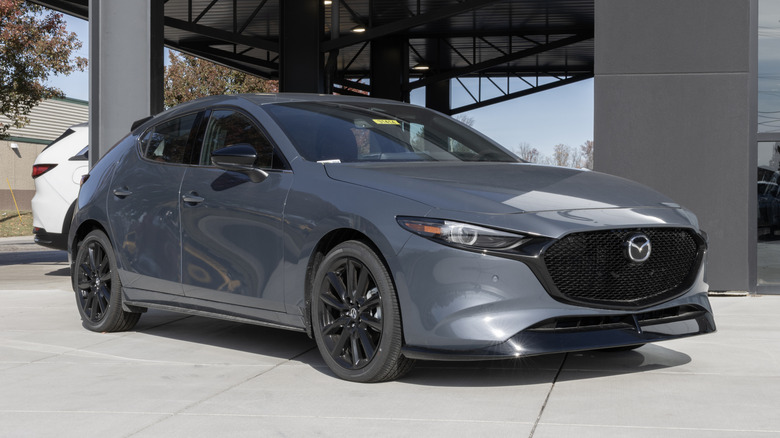
In addition to the minor branding blind spot necessary to call something the "Mazda Mazda3," the vehicle itself has long had a reputation for being heavy on literal blind spots as well. In any case, it's been kind of a thing among forum posters since the original Mazda 3 launched in 2004 on the Ford platform shared by the European Escort.
The complaints grew louder with the 2019 redesign, when Mazda reshaped the hatchback with dramatically thicker rear pillars and a smaller back window in pursuit of a cleaner, more coupe-like profile. Reviewers at the time pointed out that the sleeker styling came at the expense of rearward visibility, noting a fairly shocking 97-foot blind spot directly behind. Owners echoed the concern on forums and discussion boards, debating whether the sharper design was worth the tradeoff in day-to-day usability. The data backs up the sentiment, by the way, with Consumer Reports putting the Mazda3 dead last in its compact sedan category.
Ford F-150
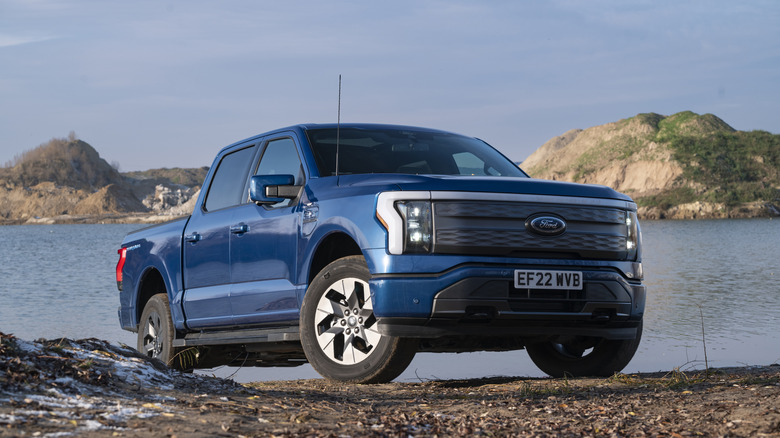
Once upon a time, passenger trucks like the F-150 actually had a reputation for being pretty easy to see out of. They had a boxy, no-nonsense greenhouse and a slightly-elevated vantage point. They were basically lifeguard chairs cruising down the road, making it easy to spot a kid struggling in the waves or a nearby sedan changing lanes. But over time, vehicles grew bigger across the board, and trucks were no exception. Trucks, in particular, not only got bigger, they also got bulkier, with huge imposing grilles and bulging hoods that introduced a whole new blind spot in an area that would have previously seemed impossible: directly in front of the vehicle.
Anyway, maybe it's just because the F-150 is in many ways "the" truck in America, you will indeed find plenty of owners complaining that it's getting harder and harder to see out of them. The data supports the anecdotes, too, as the IIHS shows that the Ford F-150 has seen a substantial increase in its forward blind zone over successive redesigns since hood heights have risen. As pickup trucks get bigger, it sure doesn't seem like this is a trend that's going to reverse anytime soon.
Toyota C-HR
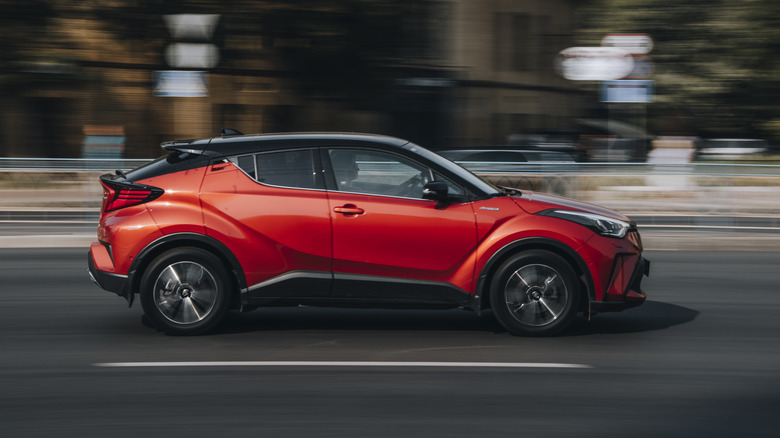
For the uninitiated, the Toyota C-HR is basically a Prius Crossover. It's a predictable enough, spreadsheet-and-focus-group sort of product that you may start noticing on the road now that we've brought it up. But aside from simply looking like the kind of M.C. Escher-inspired design exercise that might create some weird angles that make it hard to see, it turns out that the C-HR forums (okay, miscellaneous Toyota forums) are, in fact, abuzz with folks commiserating about how difficult it is to see out of the back. Even though Consumer Reports describes visibility as "horrendous," to be fair to the C-HR, it does comes standard with an impressively robust suite of driver assistance technology and features to help mitigate the out-the-window experience.
The visibility problem seems to stem mostly from the squinty rear windows matched with fairly chunky C pillars. Regardless, the sentiment is once again confirmed by the data, with the C-HR named worst compact hatchback for visibility in the Consumer Reports study. So, it looks like if you want to roll heavy with a chunky Prius, you're going to pay the cost to be the boss.
Mazda CX-30
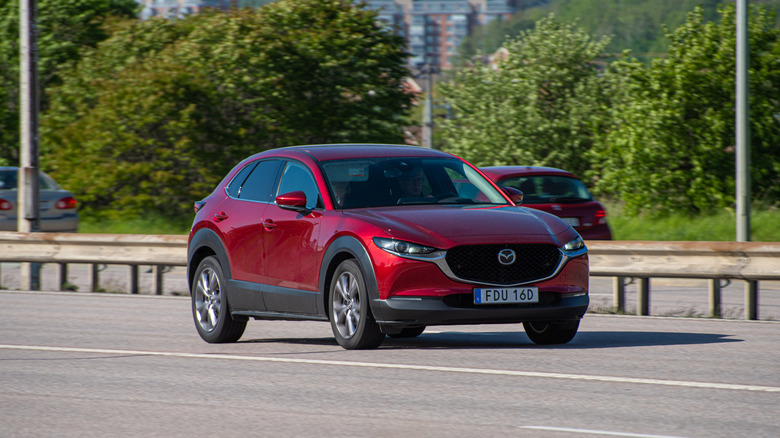
The Mazda CX-30 is a crossover for those who love to drive, but it may not be one for people who want to be able to see out of it. Now, if we're being honest, it never occurred to us that Mazda as a manufacturer had a particularly poor reputation for visibility, but boy did this issue come up a lot as we researched this topic. It was apparently enough of a thing that when Mazda announced the CX-30 it touted "broad visibility in all directions," while still kind of acknowledging the visibility issues experienced by past models.
Still, drivers continue to kvetch online, and the Consumer Reports study pegged the CX-30 as tied for worst visibility in a compact SUV, right alongside the Ford EcoSport. Just as a side note, this made us wonder if Mazda and Ford were actually back in cahoots after their partnership unraveled in 2008. (They are not.)
Honda CR-V
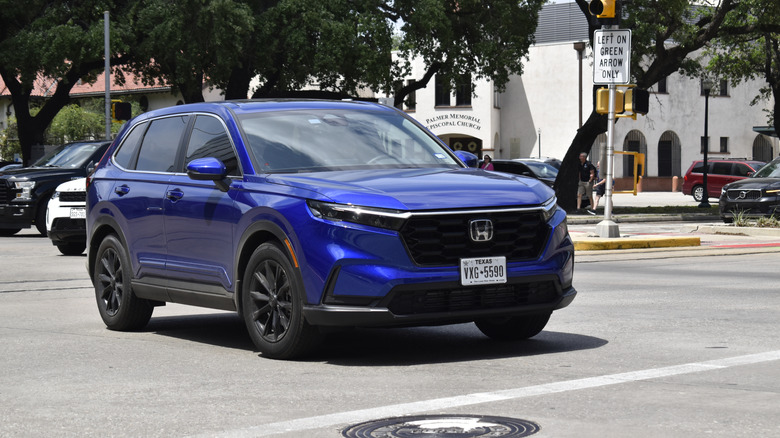
The Honda CR-V is such an icon of mainstream transportation at this point that it's as much an automotive archetype as it is an actual car. After a long reign at the top, it's not the best-selling vehicle in its class (that'd be the RAV4), and it's not really anybody's favorite (which is why we covered the three compact SUVs Consumer Reports rates higher than Honda's CR-V), but it is something of a line in the sand, the standard by which its class is judged, even if it's no longer at the top of the world.
Well, sometimes, when someone comes for the king, it starts to expose some weaknesses, namely, gripes that its power and amenities aren't keeping up with the competition and a whole bunch of folks complaining online about not being able to see out of the thing. It's not just the tide of public opinion that's driving this sentiment, though. A detailed longitudinal study cited by the IIHS found that the CR-V was in the same ballpark as the Chevy Suburban in terms of the decrease in outward visibility since when they came out. At least with the Suburban, buyers probably know what they're getting into in this department from the beginning.
Jeep Wrangler
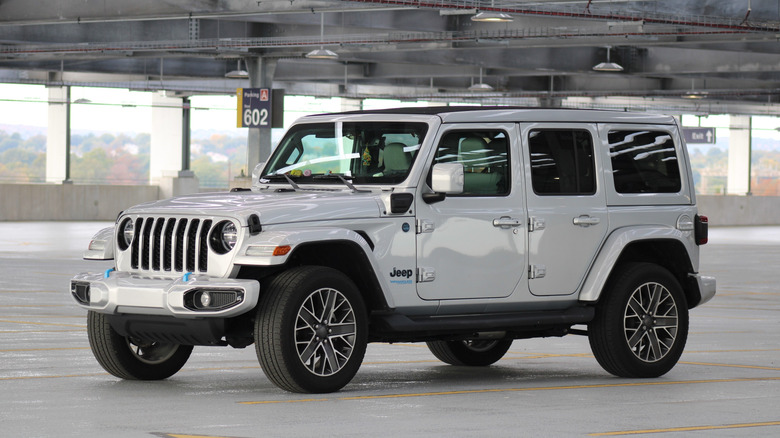
Everybody knows that the Jeep Wrangler lets you live your American dream, so maybe there's something poetic about how it's easier to enjoy that dream with only a limited view of what's actually going on around you. The Wrangler's legendary utilitarianism results in relatively narrow windows blocked by everything from awkwardly-placed rear wiper motors and soft top hardware to unnecessary aftermarket add-ons. And despite presumably willfully purchasing a vehicle that's compromised in every single way that isn't based on driving on things that aren't roads, people still complain about it. There's not a whole to be done about some of this, though — it's not like they're going to put that iconic rear spare somewhere else.
As for Consumer Reports and HLDI analysts, though, not a peep on this one. It's almost like they're just letting everyone live with the consequences of dealing with idiosyncrasies that will deliberately be written off as Jeep things that we wouldn't understand.