

Ceramic Coating Vs. Waxing: The Pros, Cons, And Differences Explained
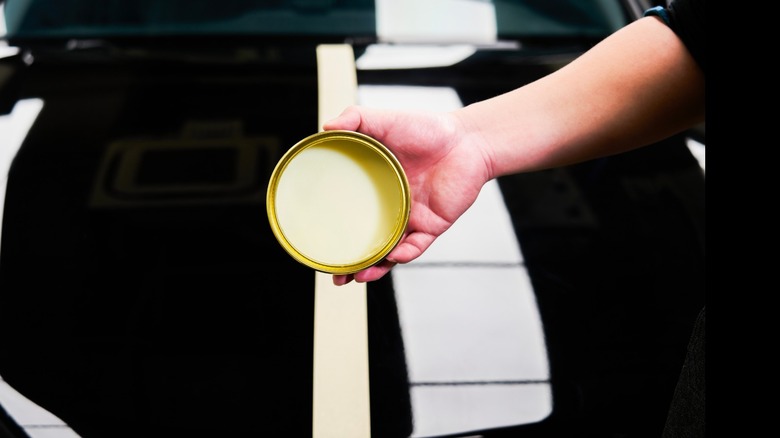
Are you tired of waxing your car every few weeks? Are you thinking about putting a ceramic coating on your car? Considering that a ceramic coat lasts two to five years, it's a good way to get out of having to wax your vehicle. And it's better than wax at protecting your car against the sun, rain, and snow. It's a pretty durable product that might just last until you decide to trade in or sell your car.
It's not all cut-and-dried, however. The cost of having a ceramic coating professionally installed is pretty steep, running into thousands of dollars in some cases. If you wax your car yourself, it's hard to justify the cost of ceramic coating compared to buying a $6 or $7 jar of Turtle Wax every so often. On the other hand, it might make financial sense to switch to ceramic coating if you regularly take your car to get washed and waxed professionally, depending on what you usually pay for that, especially if you calculate the cost over five years. Or it could be that you personally find enough value in the extra protection provided by ceramic coating to make it worth the cost.
Ceramic coating requires some maintenance, of course. It will need some touching up from time to time and regular washing. Speaking of washing, you may find washing your coated car to be less convenient if you're used to running through your local automatic car wash with the big rollers and brushes.
Ceramic coating – the pros
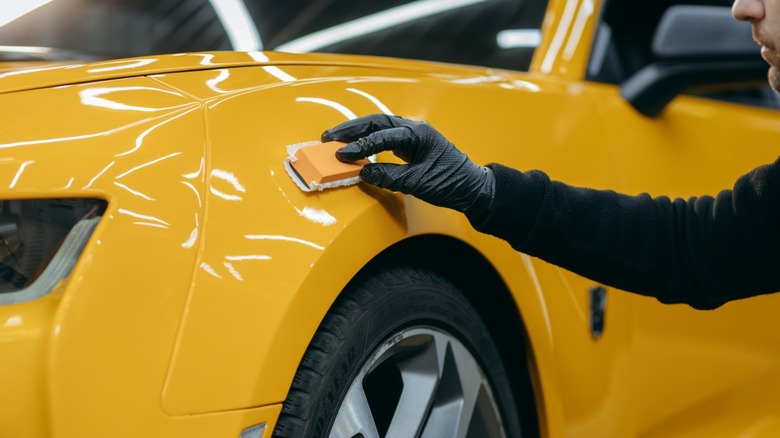
Ceramic coating is an impressive product, mainly because it lasts so long. That's a big deal to folks who find it inconvenient to wax their car every few weeks. Some people trade cars in more frequently than that, meaning they'll only have to have it applied once on each car that they own.
Ceramic coating is a pretty durable product, as well. Even though it bonds directly with the car's paint instead of sitting on top of it, it is still much thicker than wax. It also holds up really well in the weather, even when it's sitting out in the sun day after day, due to the high level of UV protection it provides. That's good news for your car's paint, especially if you don't have access to a garage or car port. Bird poop, snow, and road salt are not that menacing to a car with quality ceramic coating.
Ceramic coating is highly hydrophobic (by the way, here's the science behind hydrophobic coatings). This means that water will bead right on top of it and sheet right off with the slightest incline. That's especially important when dealing with acid rain. It's also highly resistant to heat and can withstand temperatures up to 1,000 degrees Fahrenheit before melting. Of course, the toughness of ceramic coating isn't that surprising, considering it is derived from quartz or sand.
Ceramic coating – the cons
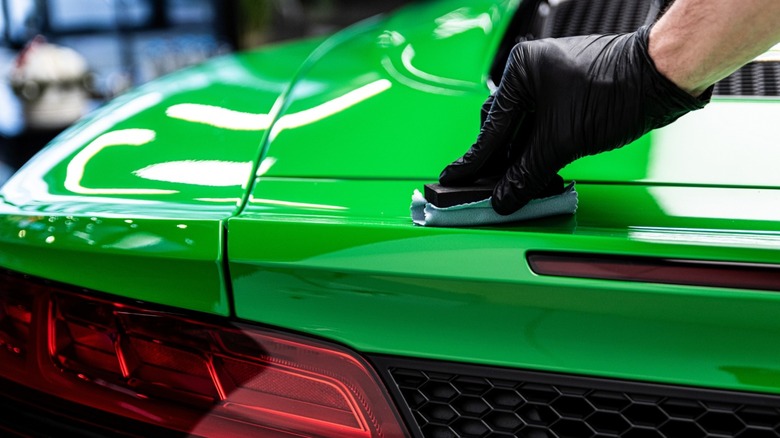
Ceramic coating isn't cheap. Professional installation can cost anywhere from $800 to $2,000 — just the tools and materials to get started can cost around $600. And you will want to have it installed professionally, considering how involved the prep work is. The surface of your car will need to be entirely rid of any contaminants and the paint will need to be completely smoothed out. It needs to be flawless, because the ceramic coating is unforgiving in how it shows up defects, and it will be on your car for a long time. It also needs a while to cure — 24 hours before exposure to water and multiple days before a car wash.
And while it might sound appealing not to have to wax your car several times a year, ceramic coating isn't exactly maintenance-free. Toppers will need to be applied from time to time. And you won't be able to drive it through just any carwash. You'll need to make sure the carwash uses only pH neutral soaps, and that it doesn't use brushes, which can harm the coating. Even certain mitts shouldn't be used when washing a car with ceramic coating, due to their abrasive nature.
It would also be a mistake to think of ceramic coating as an impervious coat of armor for your car. It provides some protection against minor marring, but it is not invulnerable to scratches and dings.
Car waxes – the pros
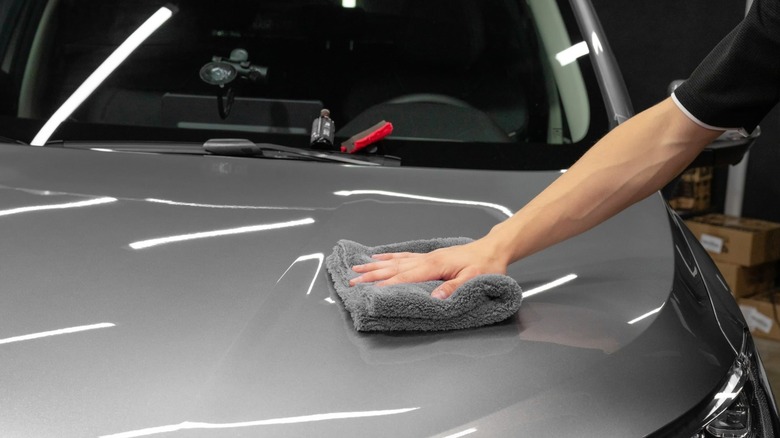
A lot of car owners, especially vintage car enthusiasts, prefer the brilliant shine that comes from a good carnauba wax. To help the wax coating last longer, some will first coat the car with a layer of synthetic wax — which is more durable — then apply the carnauba wax for that classic sheen.
Car wax is more forgiving than ceramic coating. If you don't like how the wax job turned out, it's not that hard to strip the wax and start over. That brings up another advantage — most people can learn to wax their cars themselves. Application is pretty simple. Just wipe it on, let it haze for a little bit, buff it, and it cures in just a few hours. There are plenty of instructional videos — like "Karate Kid" for instance — that show how to do it. There are even combination cleaner and wax products so that you can wash and wax in one step (though your car won't get as shiny). There are few things as satisfying as seeing the shine on your car after you've done a good wax job.
And, of course, car wax is relatively cheap, too. You can even find name-brand car waxes for less than $10, if you know where to look. That's pretty economical, considering that these containers will last multiple waxes. Even a professional wax job isn't that expensive, comparatively speaking, running from $50 to $100.
Car waxes – the cons
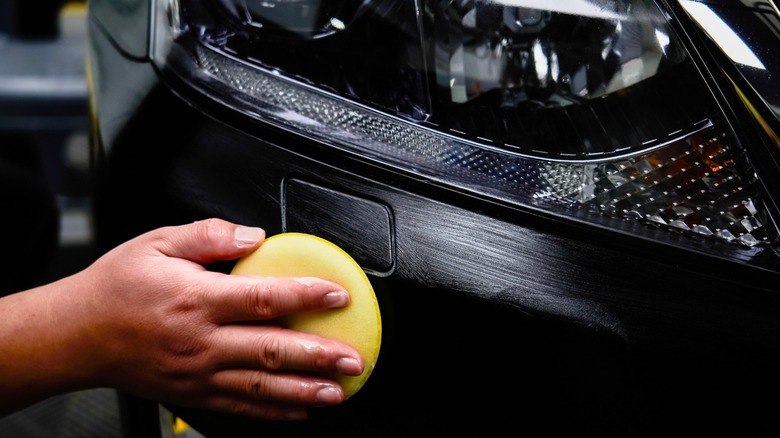
Car waxes — even synthetic waxes — are not nearly as durable as ceramic coating. Depending on weather, where you keep your car parked, and other conditions, a good wax job may last just one to three months. (Here's a guide on how often to wax your car for the best results.) It's not going to hold up against heavy rain and snow the way ceramic coating will. And while car waxes do provide some mild UV protection, they do fade in the sun. Synthetic waxes provide a little more protection against the elements, but they don't provide as rich of a shine as carnauba wax.
As with ceramic coatings, car washes are not always kind to wax applications. However, that is easily repairable with a touch-up wax or another complete wax job. Wax provides a much thinner, softer layer than ceramic coatings, which means it provides even less protection against scratches. Speaking of water, wax is less hydrophobic than ceramic coating. Water will bead on it for a little while after initial application, but will stop doing that after a few washes.
Wax also melts at a lower temperature than ceramic coating –- 180 degrees Fahrenheit. However, wax will soften long before it reaches 180 degrees, which makes it less durable and protective.
Ceramic coating vs. car waxes – the best uses for each
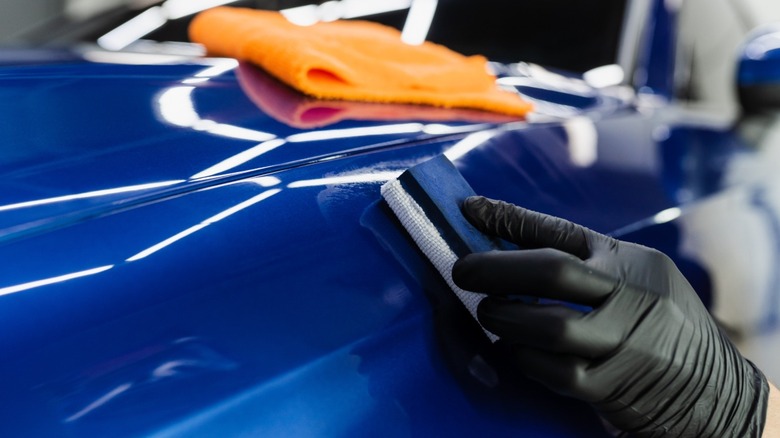
So, which should you use, ceramic coating or car wax? Let's consider cost first. If you normally wax your car yourself, getting ceramic coating likely isn't going to save you any money. On the other hand, if you get your car professionally waxed each time it needs it, ceramic coating might be more economical over time. You'll want to multiply however much you normally pay for a wash and wax, then multiply it by however many times you would get it done over the course of two to five years — compare that to what your local shop would charge to apply the ceramic coat.
Does your car stay parked out in the elements most of the time? Is it exposed to a lot of harsh weather? You're going to get better, longer protection from a ceramic clear coat. But if you keep your car parked in the garage most of the time, and the weather in your neck of the woods is relatively mild, your car will likely be fine with regular waxing. This would also be true if you own a classic car that stays parked inside most of the time, only to be taken out for shows. It's also easier to get that classic show car shine from carnauba wax than from ceramic coating.
There are upsides and downsides to both car wax and ceramic coating. Which is better depends on your circumstances.