

Here's Why Harley-Davidson's Knucklehead Engine Is So Valuable
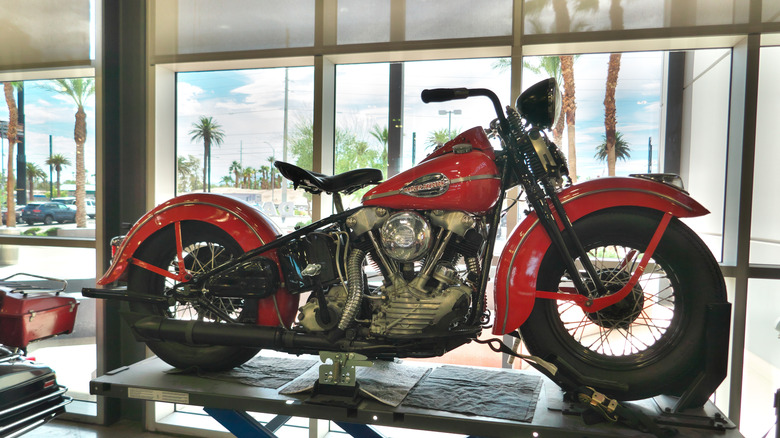
It's hard to gauge what will and what won't become a classic, whether you're into cars or motorcycles. Some are a given — whether they're a limited-run Ducati or a one-off Ferrari Daytona SP3 – but other models sneak up on us. After all, who would've thought the humble Ford Escort would become a six-figure car? In the world of two wheels, one particular engine has enjoyed proper classic status: The Knucklehead. And that status comes some seriously high values. To put things into perspective, Hagerty notes a cost of $220,000 as the highest price for a model with this engine.
That figure is backed up by recent auction results, too, with multiple examples in recent years. Experts seem to think part of the Knucklehead's enduring appeal and rising values is down to an impressive amount of interest from youthful riders. Hagerty reports that interest from millennials in the model has more than doubled in recent years, and that those sorts of enthusiasts will attribute higher values than what's typically given by those of older generations. But young riders aren't the only reason why the Knucklehead is worth a fortune in 2026, as the engine — and models it was equipped to — boasts some extra historical significance regarding its long-term influence and current rarity.
Historical significance of the H-D Knucklehead
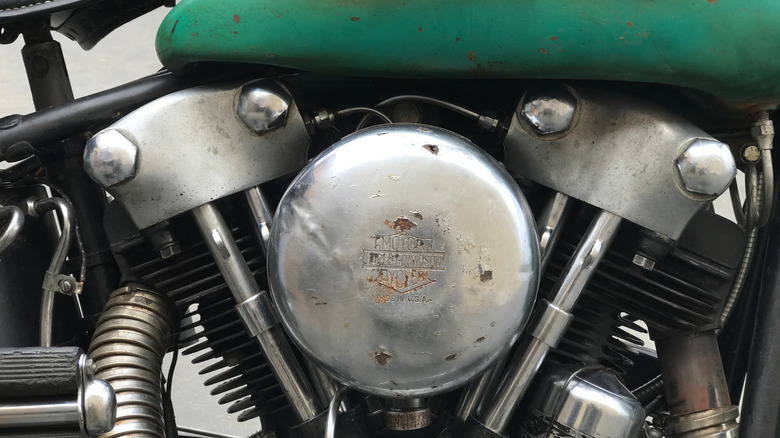
To understand why the Knucklehead commands such high figures in 2026, we need to wind the clock back a full 90 years to when the engine first debuted. This moment represented a huge turning point for Harley Davidson. It was the first of its overhead-valve engines, and it introduced better cooling methods and and horsepower. These changes laid the foundations for the brand's lasting big twin legacy, which has led to modern marvels like the 131-cubic-inch crate motor in the Street Glide Special. The older side-valve engines Harley was churning out previously were certainly reliable enough, but they weren't providing enough power to satisfy riders. An all-new design was needed, and the Knucklehead satisfied that need.
Further updates came in '41, which enabled the Knucklehead to produce even more power and torque. The low-end was toughened up, too, allowing for longer and harder riding. Come 1948, and the Knucklehead was replaced by the Panhead, which boasted numerous upgrades over its predecessor. But still, the Knucklehead would not be cast into the history books. Instead, it launched chopper culture and contributed to bobber culture, and its significance only grew as time progressed.
Naturally, many early Knucklehead bikes were stripped for parts — or modified excessively — which makes lasting original examples a real rarity in today's world. Now that it's apparent just how influential the engine was, collectors and enthusiasts alike are scrambling for the opportunity to add a Knucklehead to their collection. We sure aren't getting any more of them, so those surviving examples are seen as treasures that really defined Harley-Davidson history — classic V-Twins just don't get any better.