

These Are The 10 Most Popular Cars Millennials Drive

Since the very earliest generational commentary around millennials, they've been blamed for ruining everything from movie theaters to dinner dates to breakfast cereal. And amid all of that judgment and finger-pointing, they were also the first age cohort to be accused of not giving a damn about cars, which may or may not have contributed to the modern decline of the manual transmission, but certainly led to a bunch of Facebook memes about the stick shift as a "millennial anti-theft device."
Anyway, it turns out that the death of the auto industry at the hands of Gen Y (remember that?) was somewhat overstated, as evidenced by the fact that they not only own cars, but can't afford their auto loans. A study by Insurify looks under the hood even further, detailing the top vehicle choices by each generation, from Gen Z (yes, they're driving now) to boomers (yes, they're still driving). Broadly speaking, millennial preferences skew toward reliability, value, fuel economy, and MSRPs that won't compete with their lingering student loan balances. Buckle up for a tour of the 10 most popular vehicles for millennials.
10. Chevrolet Silverado
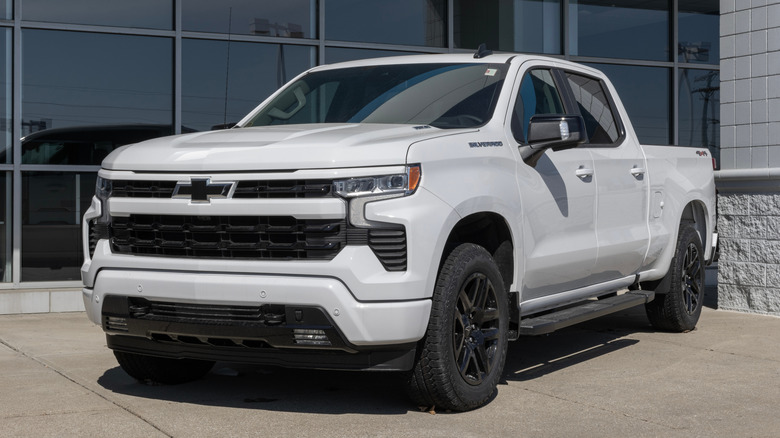
There's something almost poetic about the Silverado just barely sneaking into the millennial top 10. The lists for boomers and Gen X are topped by another full-sized pickup, the Ford F-Series. So while it's tempting to consider millennials to be an alien presence that showed up in the '80s to challenge everything that was routine and good in the world, it turns out that they're still driving trucks sometimes, just like everybody else. There's this one and the Ford that's going to make an appearance further down, just (spoiler alert) not at No. 1.
In fact, somewhere amid the coronavirus pandemic, millennials claimed the title of driving more pickup trucks than any other generation, perhaps evidence that a bit of space, practicality, and enough cargo capacity to handle a weekend Home Depot run are priorities that eventually come for us all. But before you criticize the cohort for choosing a large vehicle with questionable gas mileage despite a reputation for making a lot of noise about environmental advocacy, just remember that Chevy broke the EV range record with an electric Silverado.
9. Hyundai Sonata
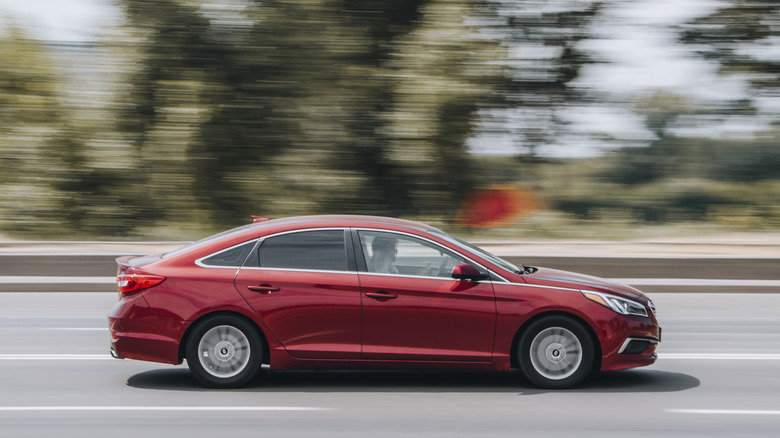
While some media outlets once fretted that the Hyundai Sonata would likely be dead by now, millennials might be leading a turning of the tide. It lands the No. 9 spot for them, but it places an incrementally better seventh for Gen Z, meaning that the humble Sonata might be on pace to be the Camry of the future, assuming Gen Alpha's list doesn't turn out to be seven rideshare platforms, two scooter rental apps, and grandma's old Taurus.
One thing that you can definitely say about millennials is that they do their homework when it comes to a purchase decision, and Hyundai's 10-year/100,000-mile warranty might count for a lot when cross-shopping. Considering that millennials apparently suck at maintaining their cars, that might come in handy, too, so it might not be the worst pick even if it might be a little uninspired as far as automotive enthusiasm goes. Of course, the bad news here is that as far as enthusiasts go, this list doesn't exactly take off in spectacular fashion at any point, so let's just get on with it.
8. Hyundai Elantra
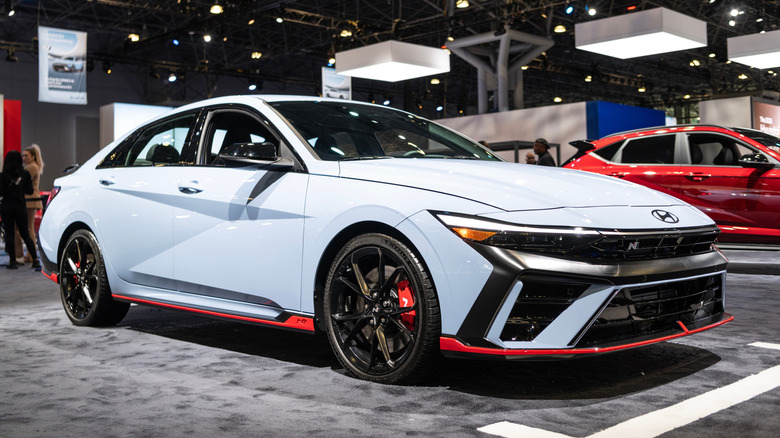
Yep. It's another Hyundai. So what can we say about the Elantra that the previous entry didn't adequately cover? Well, considering that an Elantra is pretty much just a cheaper Sonata, perhaps the dramatic conclusion is that millennials enjoy an inexpensive Korean car, but they enjoy a slightly less expensive Korean car a bit more. It's possible that there's more to it than that, though, and we'd just like to point out that the N performance package exists and it happens to be pretty exciting. Considering that the Elantra N is a bargain store M3, is it possible that the fourth spot on this list is actually concealing the greatest desires of millennial enthusiasts?
We're not sure. The data just says Elantra, so for all we know, it's just a whole bunch of DoorDashing base models out there, paying the bills and getting the kids back and forth to soccer practice.
7. Chevrolet Malibu
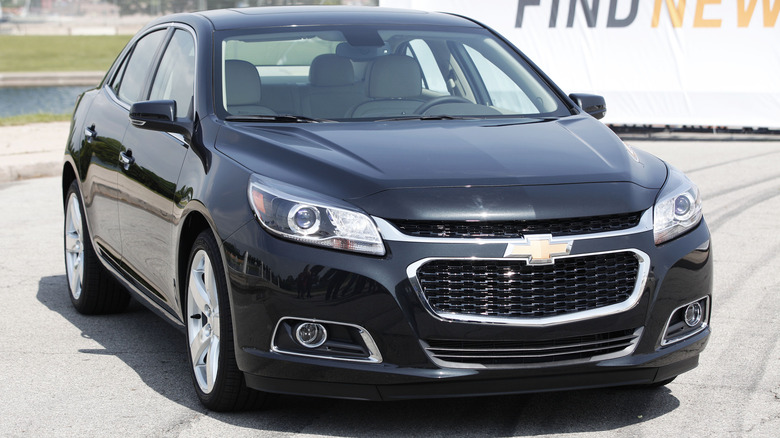
Just for transparency's sake, our first reaction upon seeing the Malibu on this list was mild surprise that the Malibu was still for sale. That said, after 30 seconds of research, it turns out that it is not. Except it didn't exactly end production in 2005, either. They were still making these things in 2024, which means you could have driven a new one off the lot last year. Time flies, or something. It's safe to say that the Malibu was a forgettable car.
Still, there's a story to be told here. Just as millennials arrived on the planet in time for the decline of landlines and shopping malls, they might be helping to usher in the end of the great American sedan. Ford made its last sedan in 2020, and Chevy's sedan lineage ends right here with the Malibu. You can still grab an American sedan in the form of a Cadillac, a Tesla, a Lucid, or whatever Dodge is up to these days, but you have to admit that none of that is quite the same thing. As it stands, sedan-loving millennials can hang onto their Malibus or maybe graduate to the German brands, assuming those continue their prestigious sedan legacies.
6. Ford F-Series Pickup
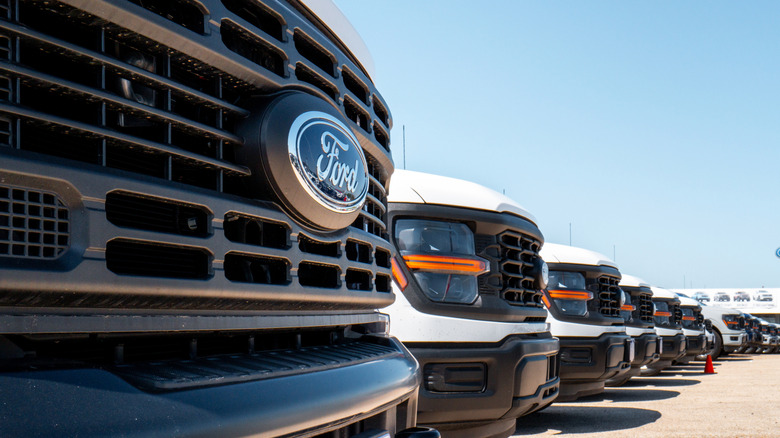
As promised, here we are: the F-Series. It's the most popular truck for boomers, it's the most popular truck for Gen Xers, and it's solidly in the middle of the pack for millennials. If we're being honest, that's about as good as it gets in terms of generational unity these days, though there is some more common ground to be found shortly here when we get to Japanese economy cars. Maybe it's a credit to Ford for learning that not all millennials are car-hating hipsters, but they seemed to have earned at least some share of the market.
Or have they? Because the math actually gets a little squirrelly here. Millennials are now the largest generational cohort, and the F-Series is the best-selling truck in the country. So while it appears that a bunch of publications seem to be latching onto millennials' F-Series enthusiasm, the largest buying demographic dropping the perennial favorite choice down to No. 6 doesn't necessarily bode well for the future of the product line. Gen Z has zero trucks in their top 10, by the way. We don't get a lot of credit around here as industry analysts or whatever, but still ... mark our words on this one.
5. Toyota Corolla
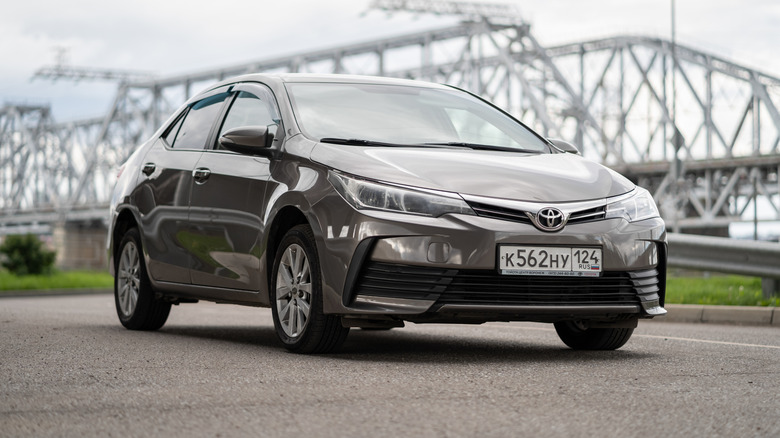
The Toyota Corolla is kind of the unofficial patron saint of "it just works," so it isn't super surprising that automotively skeptical yet review-oriented millennials would find their spirit animal in one. Of course, there's a little more going on here than that, and that's that millennials are feeling financially squeezed at every turn, from credit to housing to student loans. In fact, the greatest trend that might end with millennials is the concept of being better off financially than their parents, so you know ... that's fun for them.
Anyway, all we're trying to say here is that maybe it's not that surprising that this group would gravitate toward a fuel-efficient runabout that starts at $22,925. They're cheap to insure, cheap to maintain, and cheap to fuel. The Corolla doesn't promise transformation or status; it promises that it will start every morning, sip fuel conservatively, and still be worth something when it's time to move on.
4. Honda Civic
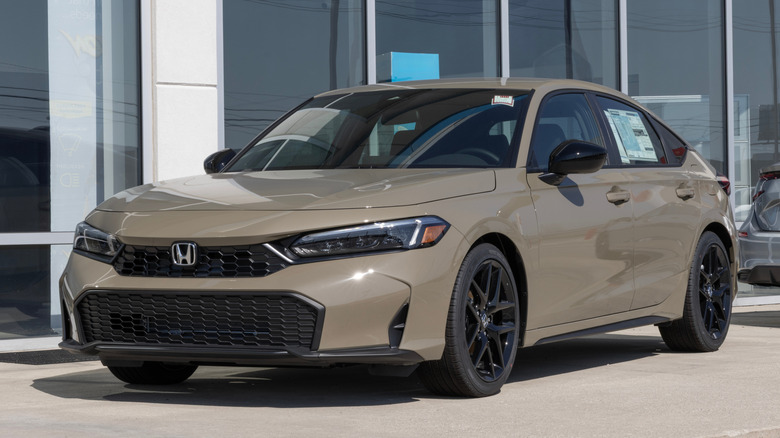
The first wave of millennials to get their driver's licenses was doing so just as "The Fast and the Furious" hit theaters, and everybody knows that the most realistic "Fast and Furious" cars were the three black Civics. So even though (most) modern millennials aren't out there rocking neon underglow and spoon engines from Hector, maybe it's not that surprising that the Civic would earn a spot near the top of this list.
It's not only a proven bulletproof commuter that can be seen as a step up from the Corolla we just covered, but performance variants like the Si and the Type R are there for all those 30-somethings just aging into enough income to buy a car that recaptures the one they had in high school.
That dual identity is the trick. The Civic grows with you. It can be the cheap used sedan you buy when money's tight, the reliable daily when your career stabilizes, or the responsible choice that still nods to the car culture that enthusiasts of a certain age grew up watching. For millennials balancing adulthood with a lingering appreciation for fun, the Civic doesn't force a choice between head and heart, but lets them keep a bit of both.
3. Toyota Camry
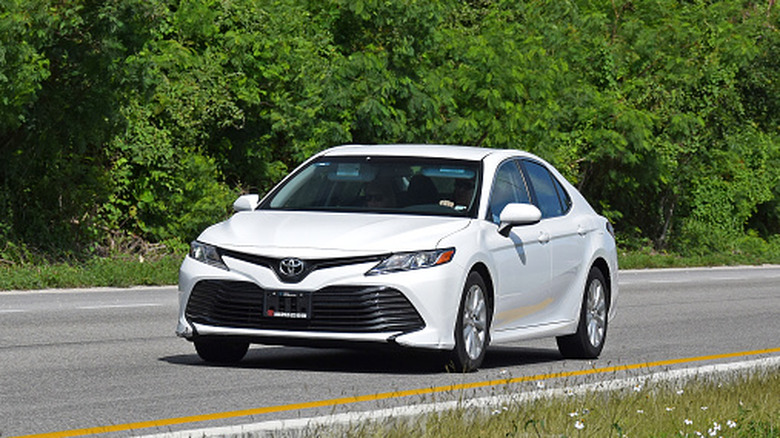
There are allegedly cars with better reliability than a Camry, but not really any with as strong a reputation for it. It's less a car than a shorthand. Say "Camry," and people don't think horsepower or Nürburgring lap times; they think 200,000-mile odometers and diligent service records. That kind of brand gravity matters for millennials. This is a generation that comparison-shops everything, reads owner forums at midnight, and has lived through enough economic whiplash to appreciate predictability.
For millennials, that predictability isn't boring, it's a coping mechanism. Entering adulthood during a financial crisis and maturing alongside rising housing costs and stubborn debt burdens has shaped a cohort that tends to value stability over spectacle. The Toyota Camry fits neatly into that calculus. It offers more space and presence than a compact without straying into luxury-car payments, and it carries decades of accumulated trust in the marketplace. Then again, maybe we're overthinking it. In the Insurify study, it's actually the only vehicle that lands in the top three for all four generational cohorts, so maybe it's just true that no matter when you were born, all roads lead to Camry.
2. Nissan Altima
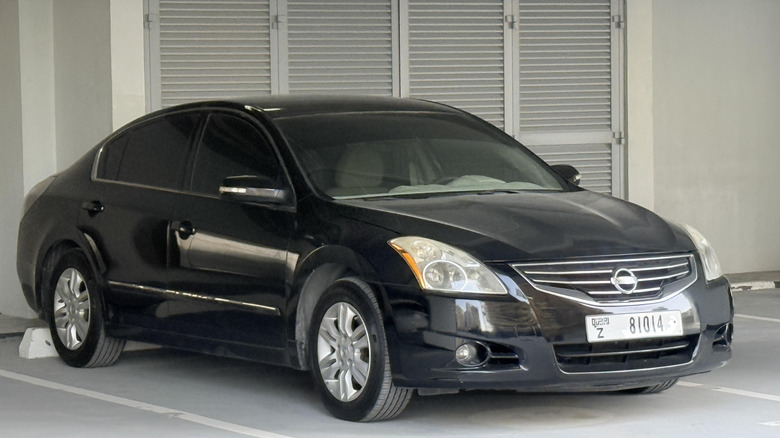
No generational group is a monolith. That means that for every responsible millennial who gets it together and picks up one of those Camrys at 4.00% APR, there's, well ... an Altima driver. (We're kidding. Sort of.) Fair or not, the Altima has a certain reputation in automotive circles, and it didn't come from nowhere. By all accounts a perfectly passable vehicle, it became a punchline after Nissan itself spent years going out of its way to stuff as many car buyers into Altimas as possible, regardless of credit score or financial situation. As a result, the Altima became an archetype not as a bad car, but as a bad purchase decision. Often characterized by shady subprime loans and an outsized presence on buy-here-pay-here lots, the Altima was the No. 1 grossing vehicle purchased with "bad credit" financing, according to Equifax.
So is it fair to say that there's a bit of romance to the idea that such a financially strapped generation would find its way so often to a car that could be characterized as the physical manifestation of bad debt, complete with factory-installed fake carbon fiber interior trim? Maybe. But perhaps it would be better for everyone if the future of the product line is limited to Nissan Altima rental fleets.
1. Honda Accord
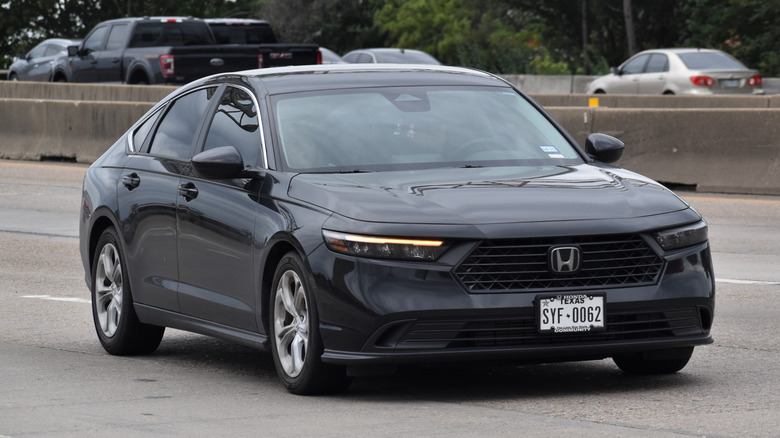
It's the Honda Accord. And of course it is. After decades of generational think pieces priming everyone to expect something bizarre, disruptive, or mildly irritating at the top of a millennial list, the real surprise is how unsurprising this is. People born in the '80s and early '90s are, it turns out, just people. They need transportation. They compare interest rates. They read reviews. They buy cars that work.
And maybe that's the quiet punchline to all the hand-wringing about millennials ruining everything. Their No. 1 vehicle choice isn't radical or ironic or algorithmically optimized for vibes. It's a thoroughly mainstream, time-tested sedan. The Accord has long occupied that sweet spot between sensible and aspirational. It's larger and more substantial than a Civic, a little sleeker than a Camry, and just polished enough inside to feel like progress without veering into luxury-brand payments.
Sure, the current generation Honda Accord got a makeover and looks great, but that's almost beside the point. It's an Accord, the same way every generation's Accord has been an Accord: practical, durable, quietly competent. As a bookend to a list that opened with a Silverado, tipped its hat to the F-Series, and then settled comfortably into a parade of Japanese sedans, the result feels almost defiantly normal.
No ironic minivan revival. No left-field cult classic. Just a car that makes sense. If millennials killed anything here, it might not have been the auto industry — it might have been the idea that their choices had to be dramatic in the first place.