

What Causes Gas Prices To Be So Different Around The Country?
We live in an era where the prices of goods and services are shaped by multiple interacting forces. As a result, the same product — like a can of Coca-Cola — may cost $2 in one store and $3 in another. At the core is price dispersion, a pragmatic economic concept that describes how identical goods sell at different prices across different sellers. This happens because retailers have specific operating costs (rent, wages, taxes, etc.), all of which influence the price you pay at the counter. Moreover, specific goods also have unique cost structures and regulatory frameworks.
Fuel is an important commodity that is highly market-regulated and in great demand. Given that an EV winter is coming, it is likely to stay that way until we are ready to embrace electrification on a larger scale. According to the U.S. Energy Information Administration (EIA), there are approximately 160,000 gas stations in the country, all of which operate within local and economic realities. So, what are those local and economic realities, and what causes gas prices to be so different around the country? The answer lies in the complex interplay of local markets, infrastructure, and economics.
Crude oil prices and regional access to supply
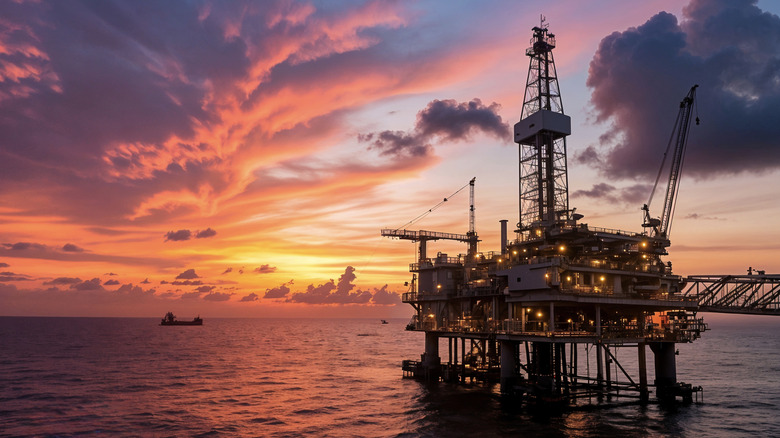
Crude oil is the raw input of gasoline in the same way milk is the raw input for cheese. This means that crude oil is the most important factor when it comes to price. If the costs of crude oil go up, fuel is likely to follow. Since oil is greatly susceptible to geopolitics and global events, its volatility and supply are often reflected in the price you pay at your local pump. According to the EIA (2023 EIA chart), about 52.6% of the average retail gasoline price in the U.S. is attributable to the cost of crude oil.
Geographically speaking, not every region has the same access to crude oil. Areas such as the Gulf Coast are situated near large crude oil fields. This means that it is effectively easier to supply crude oil – and cheaper. If we take a look at the AAA gas price map, you can immediately see how Oklahoma, Mississippi, Arkansas, Louisiana, and Texas (all Gulf Coast states or states near the Gulf Coast region) have the cheapest gasoline in the country.
In our 2025 Thanksgiving nation-wide gas price comparison, these were also some the states with the cheapest gas prices. It's a roughly similar story when you order Uber Eats – you are more likely to pay less if you live near the restaurant. Moreover, if you live near crude-oil-rich areas, there is more crude oil to go around, meaning that it is less susceptible to disruptions and other factors that can spike local fuel costs.
State taxes and environmental regulations
The federal excise tax rate on gasoline is 18.4 cents per gallon. However, when you add state and local taxes to the mix, the price changes. According to Consumer Affairs, California has the highest gas tax rate at 68 cents per gallon. On the other hand, Alaska, at just $0.0895, has the lowest state-imposed tax rate on gas. If we take a look at the AAA comparison, we can see that the price in California is set at $4.496 per gallon while Alaska is at $3.450.
Granted, taxes are only part of the equation, and the reasoning behind the gas prices in California and Alaska are a lot more complex, but, nevertheless, they make a difference. In the 2023 EIA chart, federal and state taxes represent 14.4% of the price you pay at the pump. Tax rates also change all the time, sometimes tied to factors such as inflation, wholesale fuel prices, or state budgetary needs, such as major road infrastructure projects. For example, some states are even considering taxing retail deliveries to pay for roads when gas taxes fall flat.
Environmental regulations also pay a big part, since refineries across the U.S. have to refine dozens of different fuel blends to satisfy local and state emissions standards. This is part of the federal reformulated gasoline (RFG) program that was mandated by Congress through the 1990 Clean Air Act amendments. Therefore, in major urban areas like Chicago, New York, or Houston, the gas sold must meet stricter emissions standards, and that raises prices further.
Refining capacity, market conditions, and seasonal demand
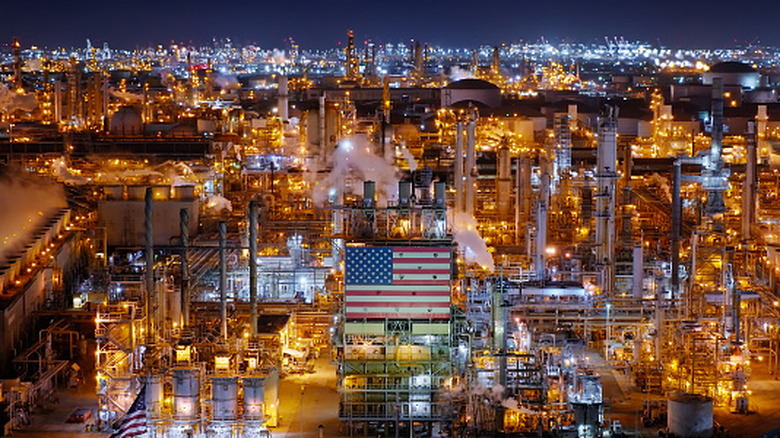
In order for crude oil to actually become gasoline, it needs to be refined, and that's where prices also differ. In the U.S., the refining capacity is unevenly distributed. According to EIA, more than half of U.S. refining capacity is situated at the Gulf Coast, but the regional consumption of fuel is less than one-third of its production. This also plays in with Oklahoma, Mississippi, and Louisiana having some of the cheapest fuel costs in the country.
On the other hand, refineries on the West Coast have a total capacity of roughly 2.55 to 2.87 million barrels per day, representing about 13.9% to 15.6 % of total U.S. refining capacity. This means that, in order to subsidize demand, gasoline needs to be imported. According to EIA data reported by OPIS/Dow Jones in 2025, gasoline imports into the West Coast averaged 129,000 barrels a day. Some areas of the West Coast also aren't connected to major pipelines, and that will further increase costs, since importing gasoline is more difficult.
In certain situations, West Coast markets will even import fuel from overseas. With Trump's tariffs, that could raise fuel prices by up to 70 cents per gallon. During the summer, fuel blends can also change, meaning that refineries in major population centers may have to switch to more emissions-friendly summer blends, and that can, you guessed it, push the prices up. When looking at our 2023 EIA chart, refining costs and profits account for 18.7% of the price at the pump.
Transportation infrastructure and distance from refineries
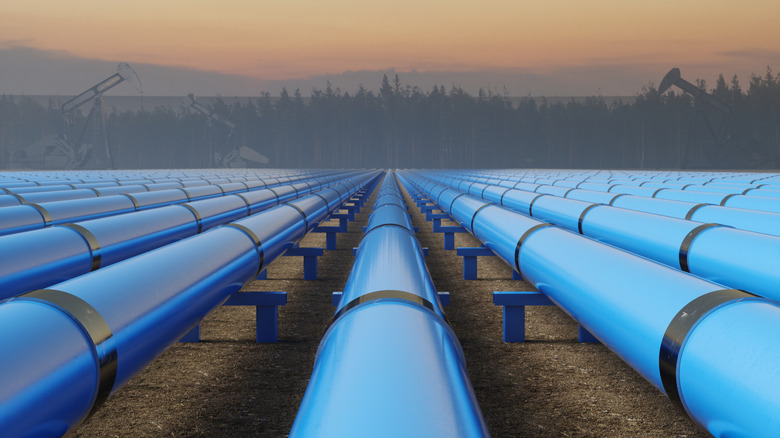
Regardless of where a refinery is situated, once it refines fuel, that fuel needs to be transported to terminals and gas stations. Understandably, distances, logistics, storage, and road costs differ. That can drastically affect the price you pay at the pump. We already talked about how Alaska has the lowest state-imposed gas tax in the country, but when you look at average fuel prices of $3.450, it's far from the cheapest in the country.
Most gasoline used on Alaska's roads is produced and refined within the state, though some crude oil is sent out of state for export or sale on the national market. Gas costs are also influenced by Alaska's crude oil prices being tied to West Coast oil rates and limited refining competition. This is also why the most expensive states to buy fuel are typically either on the West Coast or places like Alaska.
When looking at our 2023 EIA chart, distribution and marketing of fuel accounts for 14.3% of the price we pay at the gas station. Hawaii is in a similar position, meaning that, due to its geographical isolation, fuel prices are likely to be higher than in states that are more accessible for transport and pipelines. If we also add bad weather, pipeline disruptions, and shipping delays, the prices can climb even more.